

Last updated October 30, 2026
 Architectural shingles
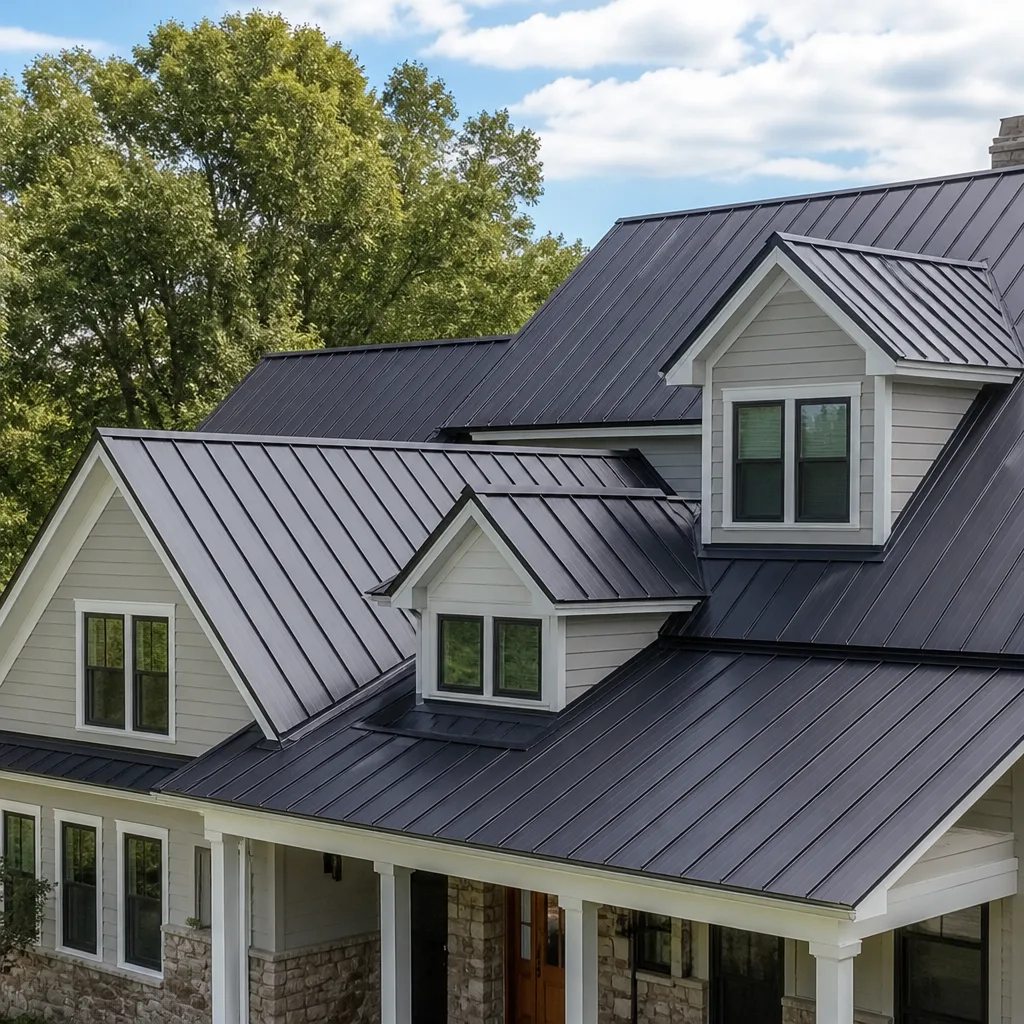 Metal roofing
 Tile roofing
 GAF
 Owens Corning
 Flat & low-slope
Free roof inspection with deck photos before we talk money - GAF and Owens Corning certified installation
Roof Repair Maintenance Checklist for Garden Grove Homeowners
The most expensive repair calls we see in Garden Grove aren’t from dramatic storm damage. They’re from homeowners who cleaned their gutters twice a year but never checked the kick-out flashing at the wall-to-roof transition. That three-inch piece of metal quietly directs water into the framing for years before anyone notices. By the time the stain appears on the ceiling, the sheathing is mush and the repair bill has quadrupled. This guide walks through a roof maintenance system organized by zone, not by season, because damage in Garden Grove almost always originates at one of five specific locations. Learn which zone to check first, what to look for in each, and how to document what you find so any contractor can give you an accurate estimate without standing on your roof.
Quick Answer
A proper roof maintenance checklist for Garden Grove homeowners means inspecting five zones: the field (main shingle surface), ridge, valleys, penetrations (pipes, vents, skylights), and perimeter (eaves, gutters, drip edge). Check these zones twice a year: once in late September before the Santa Ana wind season, and once in March after winter rain. Take photos of anything suspect, measure the affected area, and call a Roof Repair services contractor for a professional assessment before small issues become structural problems.
Styles & brands we work with
Table of Contents
- Zone 1: The Field – Main Shingle Surface
- Zone 2: The Ridge – Peak Ventilation and Cap Shingles
- Zone 3: Valleys – Where Water Concentrates
- Zone 4: Penetrations – Pipes, Vents, Skylights, and Flashing
- Zone 5: Perimeter – Eaves, Gutters, and Drip Edge
- The Garden Grove Maintenance Calendar
- Documentation Template: Photos and Measurements
- Common Mistakes to Avoid
- When to Call a Professional
- Frequently Asked Questions
Zone 1: The Field – Main Shingle Surface
The field is the large, open expanse of shingles that covers most of your roof. In Garden Grove, this zone takes the most direct hit from summer UV, which bakes shingles at surface temperatures well above 140 degrees Fahrenheit on August afternoons. The result is accelerated granule loss, curling at shingle corners, and eventual brittleness. When you inspect the field, you’re looking for evidence that the shingle has lost its ability to shed water and flex with temperature changes.
Start at the ground with a pair of binoculars. Walk the perimeter of your home and scan the field in sections. Look for shingles that appear lighter than their neighbors. That lightness means granule loss, and granules are the shingle’s UV shield. Once they’re gone, the asphalt substrate oxidizes rapidly. Check for curling corners, which signal that the shingle is drying out and losing flexibility. In our experience, south-facing and west-facing slopes on Garden Grove homes show this damage first, simply because they absorb more direct sunlight.
What to Check in the Field Zone
- Granule loss: Look for bare spots, color variation, or granules collecting in gutters below the field.
- Curling or cupping: Corners lifting away from the shingle below create channels for wind-driven rain.
- Cracking: Surface cracks along the shingle’s exposed edge are a sign of advanced age or severe thermal cycling.
- Missing shingles: Any gap in the field is an open invitation for water, especially during Santa Ana-driven rain.
- Blistering: Small raised bumps indicate trapped moisture in the shingle mat, often from manufacturing or poor attic ventilation.
If you find isolated damage, a repair may be straightforward. But if the granule loss is widespread across the field, the shingles are at the end of their service life. A brand-agnostic contractor who works with CertainTeed, Owens Corning, IKO, Atlas, and others can match your existing shingle system for partial repairs, preserving the manufacturer’s warranty continuity. If the field is failing broadly, replacement may be the more honest recommendation. The repair-first approach means we’ll tell you when patching is viable and when it isn’t.
Zone 2: The Ridge – Peak Ventilation and Cap Shingles
The ridge is the highest horizontal line of your roof, where two slopes meet. It’s covered with cap shingles, which are thicker and molded to bend over the peak. The ridge also often houses the roof’s exhaust ventilation system, either as a continuous ridge vent or a series of box vents near the peak. This zone matters for two reasons: cap shingles are the first line of defense against wind at the roof’s most exposed point, and ridge ventilation controls attic temperature and moisture levels that affect the entire roof system.
After a Santa Ana event, walk to a spot where you can see the ridge clearly. Look for cap shingles that have lifted, shifted, or disappeared entirely. Wind hits the ridge first and hardest, and a single missing cap shingle can peel back the entire ridge line during the next event. Check that the ridge vent, if present, is not clogged with dust or debris from Garden Grove’s dry summer winds.
Ridge Inspection Steps
- Stand back and scan the entire ridge line for any irregularity in profile. A straight ridge should look straight.
- Look for cap shingles that appear raised or out of alignment with their neighbors.
- Check for exposed nail heads along the ridge. Cap shingles are nailed differently from field shingles, and exposed fasteners are a leak point.
- If you have a ridge vent, run a gloved hand along it from the attic side to confirm no obstruction is blocking airflow.
- Note any dark staining along the ridge on the underside, which can indicate a slow leak working its way along the peak.
A healthy ridge protects the roof’s highest stress point. When cap shingles fail, we often find that the attic ventilation was never adequate, and the resulting heat buildup cooked the cap shingles from below. That’s a system problem, not a shingle problem. The fix may involve upgrading ventilation rather than simply replacing caps, which is where a professional roof inspection pays for itself.
Zone 3: Valleys – Where Water Concentrates
Valleys are the V-shaped channels where two roof planes meet. They concentrate water flow from two surfaces into one narrow path, making them the highest-volume water-handling zones on any roof. In Garden Grove, valleys on north-facing slopes stay damp longer after rain, which accelerates moss and algae growth that can work under shingles and lift them from the deck. This is the zone where small problems become big problems fastest.
Inspect valleys from the ground with binoculars and from inside the attic if accessible. Look for shingles that are torn, missing, or lifting along the valley centerline. Check for mineral staining on the valley metal or shingle underlayment. Debris builds up in valleys faster than anywhere else, especially with the eucalyptus leaf drop that Garden Grove neighborhoods experience. A clogged valley redirects water sideways under adjacent shingles, and that’s when leaks start appearing on ceilings below the valley line.
Valley-Specific Red Flags
- Debris accumulation: Leaves, palm fronds, and dirt sitting in the valley longer than one season.
- Granule washout: Heavy mineral deposits in the valley center indicate high water volume eroding shingle surfaces.
- Lifting shingle edges: Water running under shingle tabs at the valley edge is a classic leak precursor.
- Rust or corrosion: On valley metal flashing, surface rust signals advanced age and potential pinhole leaks.
- Ceiling staining below: If you see water marks on ceilings beneath a valley line, the valley is the first place to inspect.
Valley repairs require matching the existing shingle system precisely. The angle of a valley cut and the shingle’s flexibility vary by manufacturer. A contractor certified across seven major brands, including Atlas and IKO, can match your existing shingles so the repair integrates cleanly with the surrounding field. We work with your roof’s existing materials, not against them.
Zone 4: Penetrations – Pipes, Vents, Skylights, and Flashing
Every hole cut through a roof is a potential leak, and Garden Grove homes have more penetrations than most. Plumbing vent pipes, bathroom exhaust fans, kitchen vents, skylights, chimneys, and attic vents all interrupt the shingle field and need flashing and sealant to stay watertight. In our experience, penetrations account for the majority of roof leaks we repair, and the two most common culprits are pipe boots and skylight flashing.
Pipe boots are the rubber or neoprene collars that seal plumbing vent pipes. Garden Grove’s intense summer UV and dry heat cause this rubber to crack and shrink, sometimes within five to seven years. A cracked pipe boot lets water run straight down the pipe into the attic and often manifests as a water stain in a hallway or bathroom ceiling, far from the pipe’s actual location on the roof. Skylight flashing failures are equally common. The metal flashing around a skylight expands and contracts with temperature swings, and after enough cycles, the sealant joints can separate by fractions of an inch. Enough room for water.
How to Assess Sealant and Caulking Around Penetrations
- Inspect pipe boots from the attic side first. Run a flashlight around each plumbing vent and look for water staining on the sheathing around the pipe.
- From the ground, look for cracked, curled, or missing rubber around pipe boots. The rubber should sit flush against the pipe.
- Check skylight flashing from inside if possible. Water staining on the drywall at the skylight’s lower corners suggests flashing separation.
- Look at the sealant bead around any penetration. Hard, cracked, or shrinking sealant is losing its watertight bond.
- Note any gap between the flashing and the roof surface. Even an eighth-inch separation can admit water during a wind-driven rain.
Penetration repairs are usually localized and cost-effective, especially when caught before water reaches structural framing. A targeted repair to a pipe boot or skylight flashing can extend the life of the surrounding roof by years. This is the repair-first philosophy in practice: fix what’s fixable before recommending replacement. If you’re unsure whether a penetration is leaking, a Roof Inspection in Rowland Heights follows the same zone-based protocol we use in Garden Grove, providing a professional assessment with no obligation attached.
Zone 5: Perimeter – Eaves, Gutters, and Drip Edge
The perimeter zone includes everything at the roof’s edge: the drip edge, fascia, gutters, and downspouts. This is where the roof system hands water off to the drainage system, and it’s where many Garden Grove roofs fail silently. The drip edge is a metal strip that directs water from the shingle edge into the gutter. If the drip edge is missing, bent, or rusted through, water can wick back under the shingles and into the fascia board. By the time the fascia shows rot, the underlying rafter tails may already be compromised.
Canary Island palms and eucalyptus trees are beautiful, but they’re relentless debris producers. In Garden Grove, gutter systems carry a heavy load of palm frond fragments, eucalyptus leaves, and fine organic dust that compacts into a water-blocking slurry. A gutter that overflows during rain sends water cascading down the wall and pooling at the foundation. Over time, this causes fascia rot, soffit staining, and even foundation settlement issues that have nothing to do with the roof itself but are triggered by roof drainage failure.
Gutter and Downspout Inspection Criteria
- Sagging or pulling: Gutters that pull away from the fascia are holding too much weight, often from compacted debris.
- Overflow during rain: Water spilling over the gutter edge during moderate rain signals a clog or incorrect slope.
- Downspout discharge: Confirm that downspouts empty at least three feet from the foundation and don’t erode soil at the discharge point.
- Drip edge condition: Look for rust, bends, or gaps between the drip edge and the gutter. Water should drop cleanly into the gutter channel.
- Fascia and soffit staining: Dark streaks on these surfaces indicate water is getting behind the gutter or under the drip edge.
- Pest activity: Birds nesting in gutters or rodents using downspouts as pathways are signs of chronic moisture and neglect.
The perimeter zone is the easiest to inspect from the ground and the one most homeowners overlook because it lies outside the roof’s main visual field. A quick walk around the house after a rainstorm, watching where water exits the gutter system, takes ten minutes and reveals more about your roof’s health than an hour on a ladder. If the perimeter zone is failing, repairs are usually fast and inexpensive compared to what happens when water reaches the structure.
The Garden Grove Maintenance Calendar
Garden Grove’s climate is mild but hard on roofs. The maintenance calendar below is built around three local weather patterns: the Santa Ana wind season from October through December, the winter rain events concentrated from December through March, and the intense summer UV from June through September. Each season stresses a different zone, and the maintenance tasks should match.
September: Pre-Santa Ana Wind Check
- Clear all gutters and downspouts before fall leaf drop.
- Inspect the ridge zone for loose cap shingles and exposed nails.
- Trim tree branches that overhang the roof. Eucalyptus limbs are brittle and can drop during Santa Ana events.
- Check pipe boots and sealant around penetrations before winter rain arrives.
- Photograph the entire roof for baseline documentation.
October to December: Wind Season Monitoring
- After each significant Santa Ana event, walk the perimeter and check for shingles or debris in the yard.
- Look for lifted ridge caps and field shingles using binoculars from the ground.
- Clear valleys of eucalyptus and palm debris that wind events deposit.
- Check gutter brackets. Santa Ana winds can loosen fasteners over time.
January to March: Rain Season Inspection
- During the first heavy rain, check the attic for leaks around penetrations and valleys.
- Watch gutter flow. Overflow means a clog or slope problem.
- Inspect interior ceilings after rain for water staining, especially under valley lines and skylights.
- Check the drip edge. Water should not be wrapping under the shingle edge.
April to August: UV and Heat Management
- Inspect the field zone on south and west slopes for curling and granule loss.
- Check attic ventilation. Excessive heat in the attic accelerates shingle aging from below.
- Inspect caulking and sealant around skylights and vents for heat-related cracking.
- Clean gutters mid-summer. Palm fronds and eucalyptus leaves continue dropping year-round.
- Plan any needed repairs before the fall wind season returns.
Following this calendar keeps you ahead of the damage curve. Each season’s tasks target the zone most likely to fail under that season’s specific stress. It’s a practical rhythm that matches how Garden Grove’s weather actually behaves, not a generic seasonal checklist built for a different climate.
Documentation Template: Photos and Measurements
When you find something concerning, good documentation saves time and money. A contractor can often provide an accurate remote estimate from clear photos and measurements, which means you might not need anyone on the roof for an initial assessment. Here’s what to capture.
Photos to Take
- Wide shot: A photo of the entire roof slope from the ground, showing the damaged area in context.
- Close-up: The specific concern, shot from the closest safe vantage point. Use zoom to fill the frame.
- Interior reference: If there’s a leak, photograph the interior water stain from straight on and from an angle showing its location relative to walls, windows, or fixtures.
- Attic view: If accessible, photograph the underside of the roof deck at the corresponding location. Water staining on plywood is more definitive than ceiling staining.
- Gutter evidence: Photograph granule accumulation in gutters. This is a key diagnostic clue for field zone wear.
Measurements to Record
- Location by zone: Note which zone the issue is in (field, ridge, valley, penetration, perimeter) and which slope (north, south, east, west).
- Approximate size: Estimate the affected area in feet. A curling shingle area might be two feet by three feet.
- Distance from landmarks: Measure from ridge, eave, or a visible penetration. ‘Three feet below the ridge and four feet right of the bathroom vent’ is far more useful than ‘on the back slope.’
- Ceiling stain dimensions: Measure the interior stain. Its size and shape (ring pattern suggesting long-term moisture, streak suggesting active flow) tells a story.
- Gutter granule volume: Note whether granule accumulation is light, moderate, or heavy. This correlates with field shingle condition.
With this documentation, a Roof Repair in Rowland Heights contractor or a Garden Grove-based specialist can assess whether the repair is urgent, approximate the scope, and give you a working price range before anyone schedules a site visit. It also protects you: if the condition worsens between documentation and repair, you have a record of what you found and when.
Common Mistakes to Avoid
- Cleaning gutters but ignoring valleys. Gutters get the attention because they’re visible. Valleys carry more water than gutters and fail more catastrophically. In Garden Grove, eucalyptus debris packs valleys quickly. Check both on the same schedule.
- Assuming newer roofs don’t need inspection. We’ve repaired leaks on three-year-old roofs. Installation errors, especially around flashings and penetrations, can fail early. Newer roofs also carry warranties that require documentation of maintenance. Skipping inspections can void coverage.
- Using sealant on active leaks without addressing cause. Smearing caulk over a leaky flashing buys a few months at best. Water is still getting behind the sealant and finding another path. The fix is to repair the flashing or penetration properly, not to paint over the symptom.
- Ignoring interior staining as ‘old damage.’ A water stain that doesn’t grow might be from a previous leak that was fixed. But stains that darken, expand, or appear in new areas after rain are active. Garden Grove’s intermittent rain pattern means leaks may only show during the few heavy rain events each year.
- Checking only the south side. The south and west slopes take the most UV, but the north slope stays damp longer and is more prone to moss, algae, and organic growth under shingles. Both need attention for different reasons.
- Waiting until a leak appears to inspect. By the time water reaches the ceiling, it has passed through the roof deck, insulation, and framing. The visible stain is the end of the water’s journey, not the beginning. Most roof damage is well advanced before it becomes visible indoors.
- Replacing shingles without checking the underlayment. Shingles are the visible layer, but the underlayment below is the waterproofing membrane. If underlayment is compromised, new shingles are cosmetic armor over a failing system. A proper repair assesses what’s beneath.
When to Call a Professional
Some roof issues are DIY-inspectable but not DIY-fixable. Call a roofing professional when you find active leaking, missing shingles across more than an isolated area, valley or flashing damage, structural sagging, or widespread granule loss across the field zone. Also call if you’re buying or selling a home in Garden Grove and need a documented roof condition report for the transaction. Working on a roof means working at height, and walking a shingle roof without proper knowledge can cause additional damage to the roof and serious risk to the person on it. Crown Line Roof Repair offers free estimates in Garden Grove, with roof inspection available as a standalone service so you get a professional assessment before any repair or replacement commitment. Call (844) 966-3891 to schedule yours.
Frequently Asked Questions
Inspect your roof twice a year: once in late September before Santa Ana wind season and once in March after the winter rain. Garden Grove’s climate concentrates roof stress into these two periods, and the inspection should target the zones each season affects most. A professional inspection once every two to three years supplements your own visual checks. Call (844) 966-3891 to schedule an inspection with no obligation attached.
Roof repair costs in Garden Grove vary widely by scope. Minor penetration repairs like pipe boot replacement can be a few hundred dollars. Valley repairs, flashing replacement, or localized shingle repair can run higher depending on access and materials. The most accurate way to price a repair is through documentation and a professional assessment. Crown Line Roof Repair provides free estimates in Garden Grove, so you’ll know the exact cost before any work begins. Call (844) 966-3891 for your estimate.
The most common roof problems we see in Garden Grove are cracked pipe boots from UV exposure, skylight flashing separation from thermal cycling, valley clogging from eucalyptus and palm debris, and ridge cap damage from Santa Ana winds. These are zone-specific failures that occur predictably in this climate. Knowing which zone to check for each problem makes maintenance faster and more effective.
You can document and inspect your own roof from the ground, but repairs should be handled by a professional. Roof work involves height, structural knowledge, and material-specific installation requirements. Walking on shingles without proper training can cause additional damage and put you at risk. A professional repair also preserves your manufacturer warranty, which often requires certified installation. For help deciding, browse more guides & resources on our blog. Crown Line Roof Repair works with seven major shingle brands, so repairs match your existing system correctly.
The answer depends on the zone and the scope of damage. Isolated damage in one zone, like a cracked pipe boot or a few lifted shingles, usually calls for repair. Widespread granule loss across the field zone, multiple failed penetrations, or structural sagging suggests replacement may be the better investment. A professional inspection separates diagnosis from sales pressure. Crown Line Roof Repair is repair-first, meaning we’ll tell you when repair is the right call and when the math favors replacement.
Yes. Most shingle manufacturers including CertainTeed, Owens Corning, IKO, and Atlas require evidence of reasonable maintenance for warranty coverage. Documenting your inspections and repairs creates a paper trail that protects your claim. Repairs must be installed correctly and matched to the existing system to maintain warranty continuity. Using a contractor certified across major brands ensures this. Call (844) 966-3891 for a professional assessment that keeps your warranty intact.
The Bottom Line
Roof maintenance in Garden Grove is zone-specific, not season-generic. The five zones of your roof: field, ridge, valley, penetration, and perimeter, each fail in predictable ways under local weather patterns. Check the ridge before Santa Ana season, the valleys before and after rain, the field during summer UV, and the perimeter year-round. Document what you find with photos and measurements. When something needs attention, call a specialist who can match your existing materials and give you an honest recommendation. Roof Replacement in Rowland Heights and Garden Grove homeowners alike benefit from the same principle: repair first, replacement only when the numbers justify it. For a free estimate in Garden Grove, call Crown Line Roof Repair at (844) 966-3891. Or start with a professional roof inspection and get a clear picture of your roof’s condition before making any decisions. Seven major brands. One honest recommendation. Visit the Crown Line Roof Repair home page to learn more about our repair-first approach.
Written by the team at Crown Line Roof Repair, serving Garden Grove since 2015.
See the difference
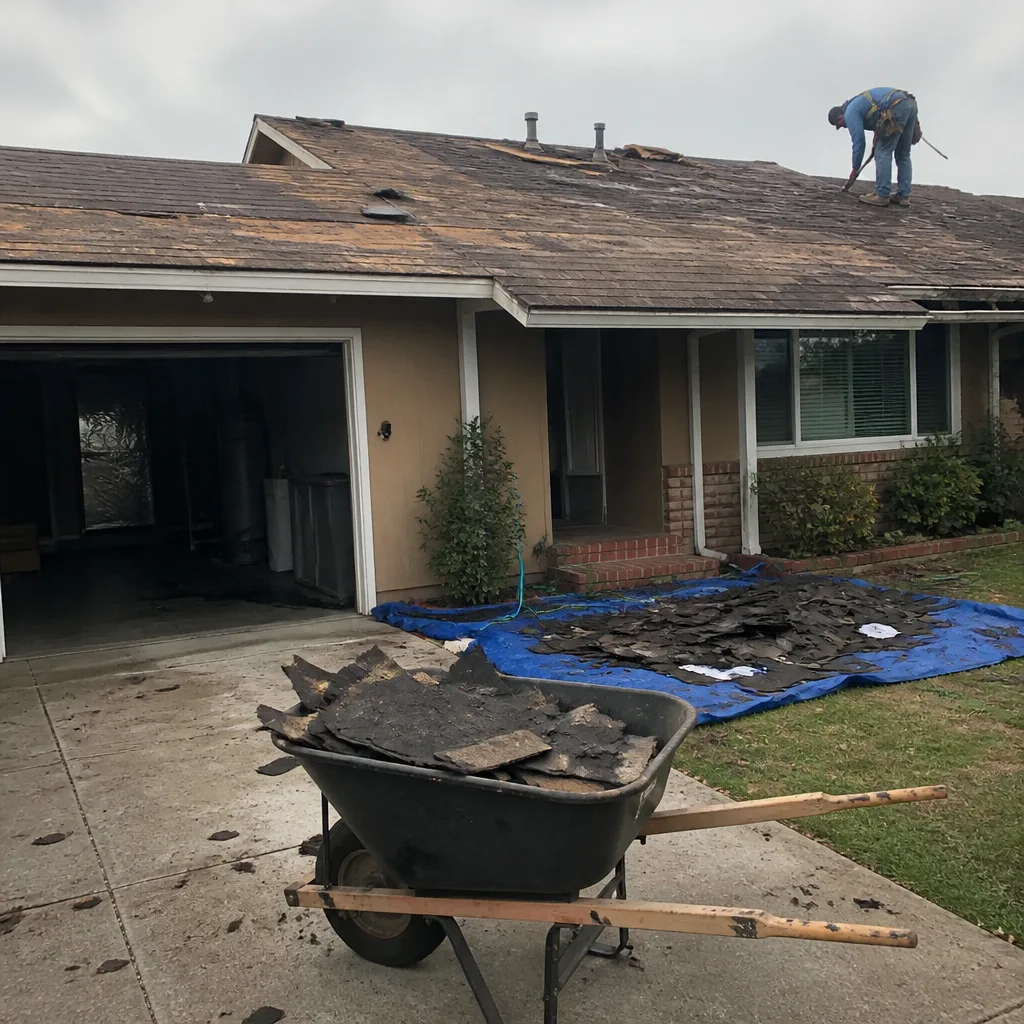 Before
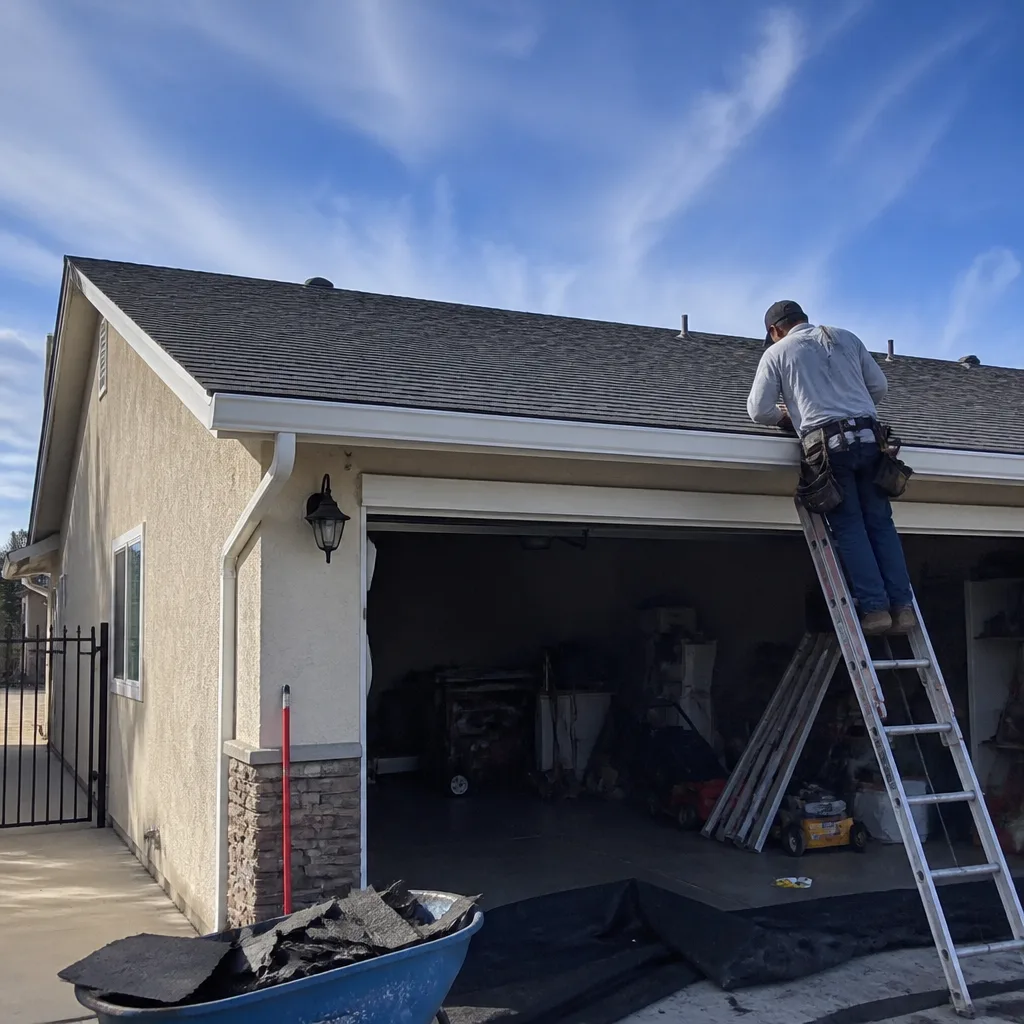 After
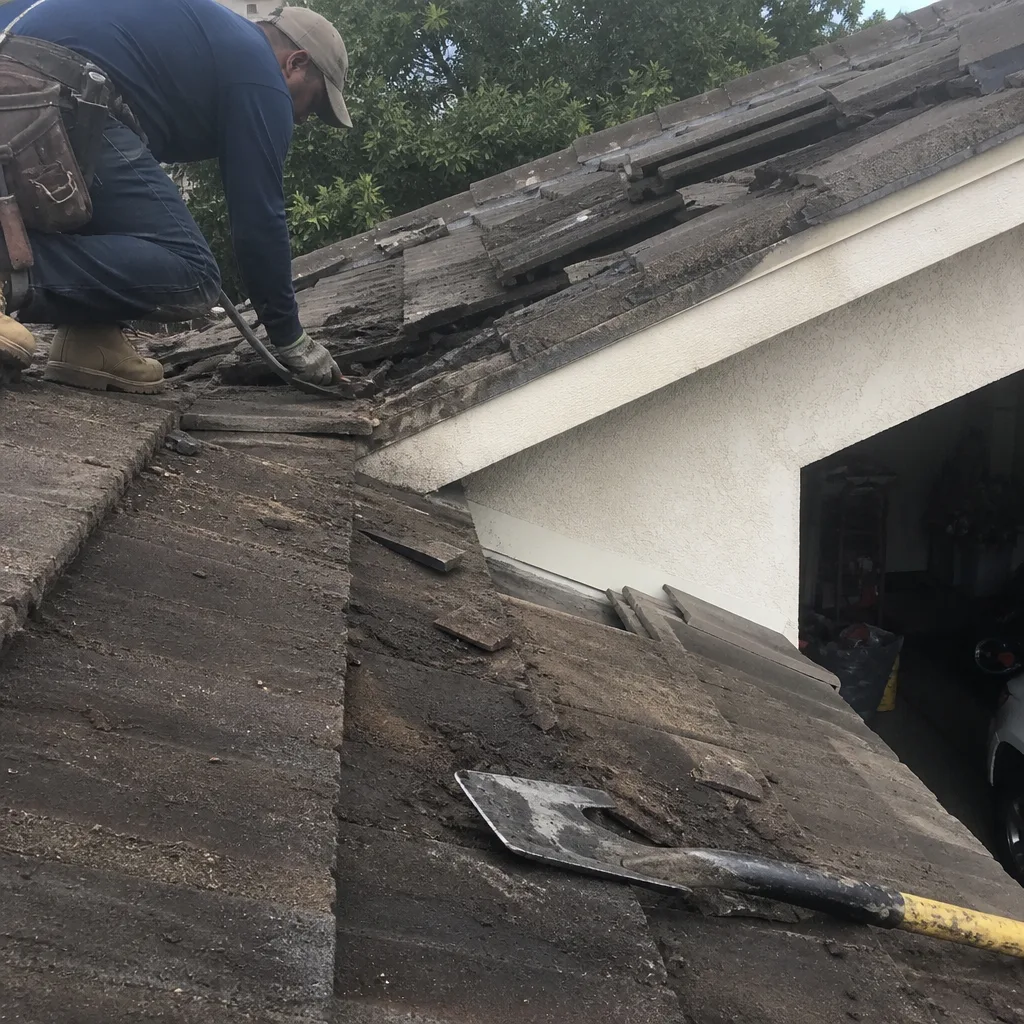 Before
 After
 Before
 After