
Last updated October 30, 2026
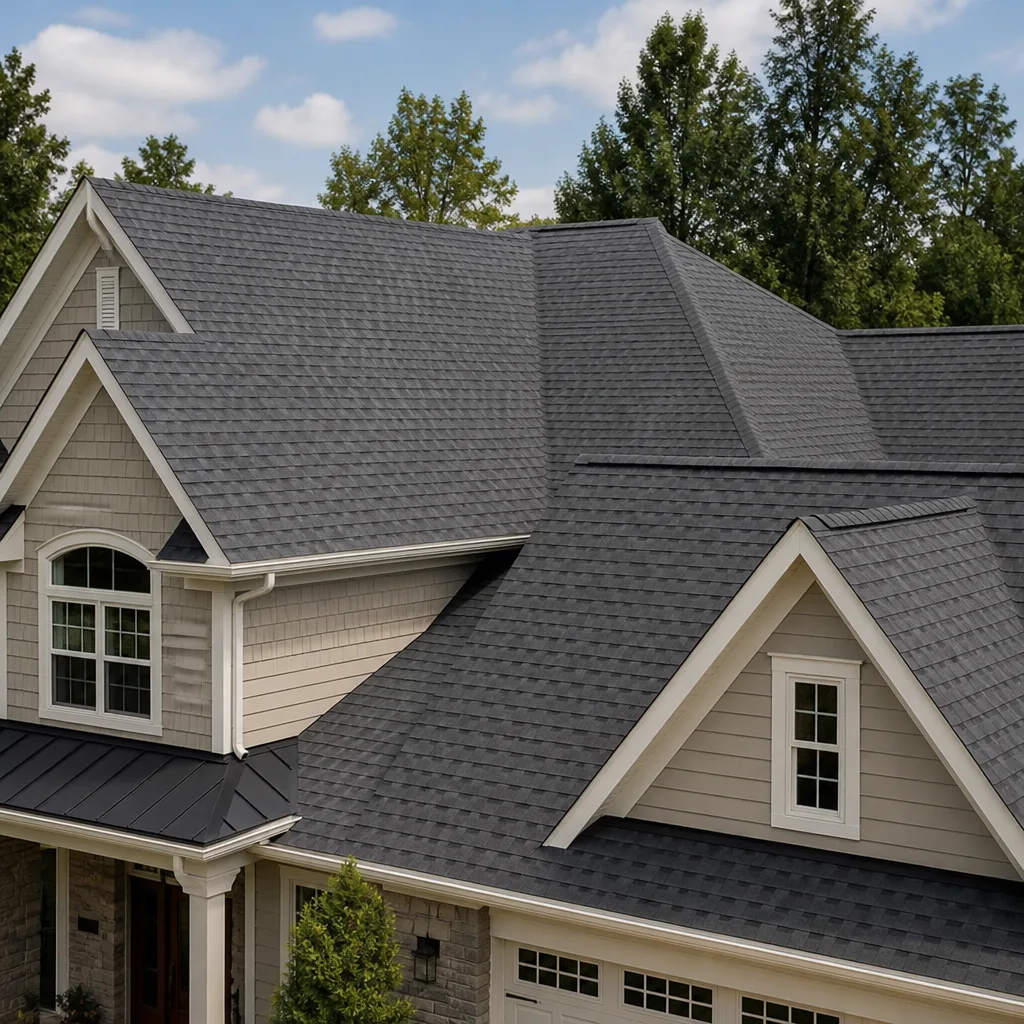 Architectural shingles
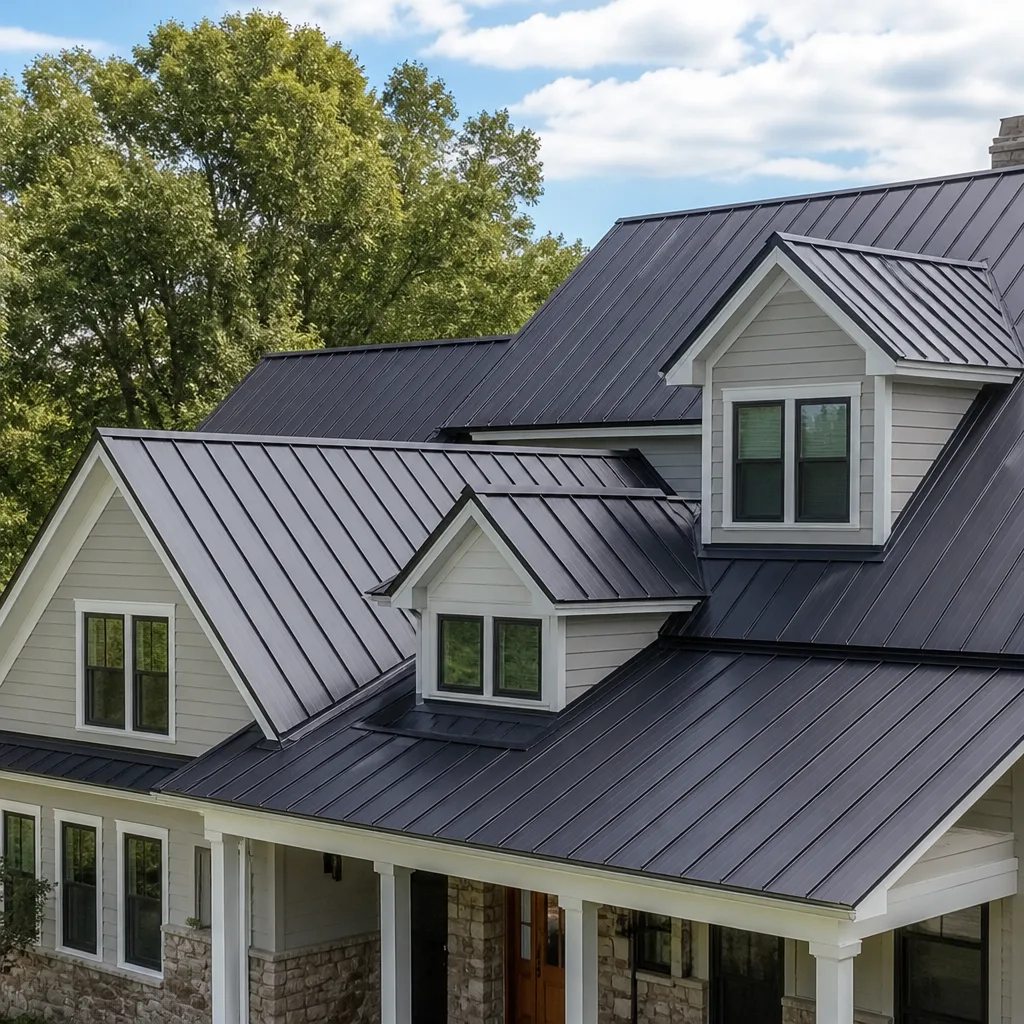 Metal roofing
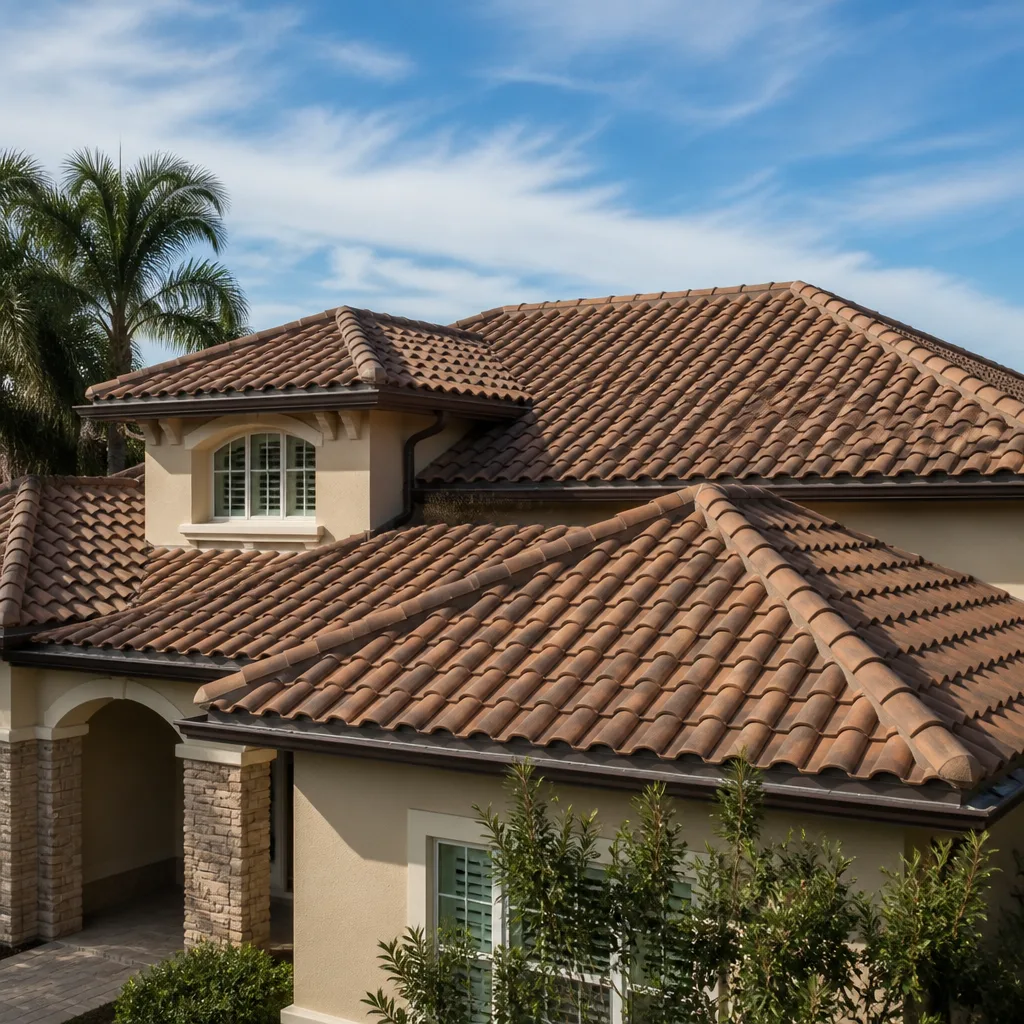 Tile roofing
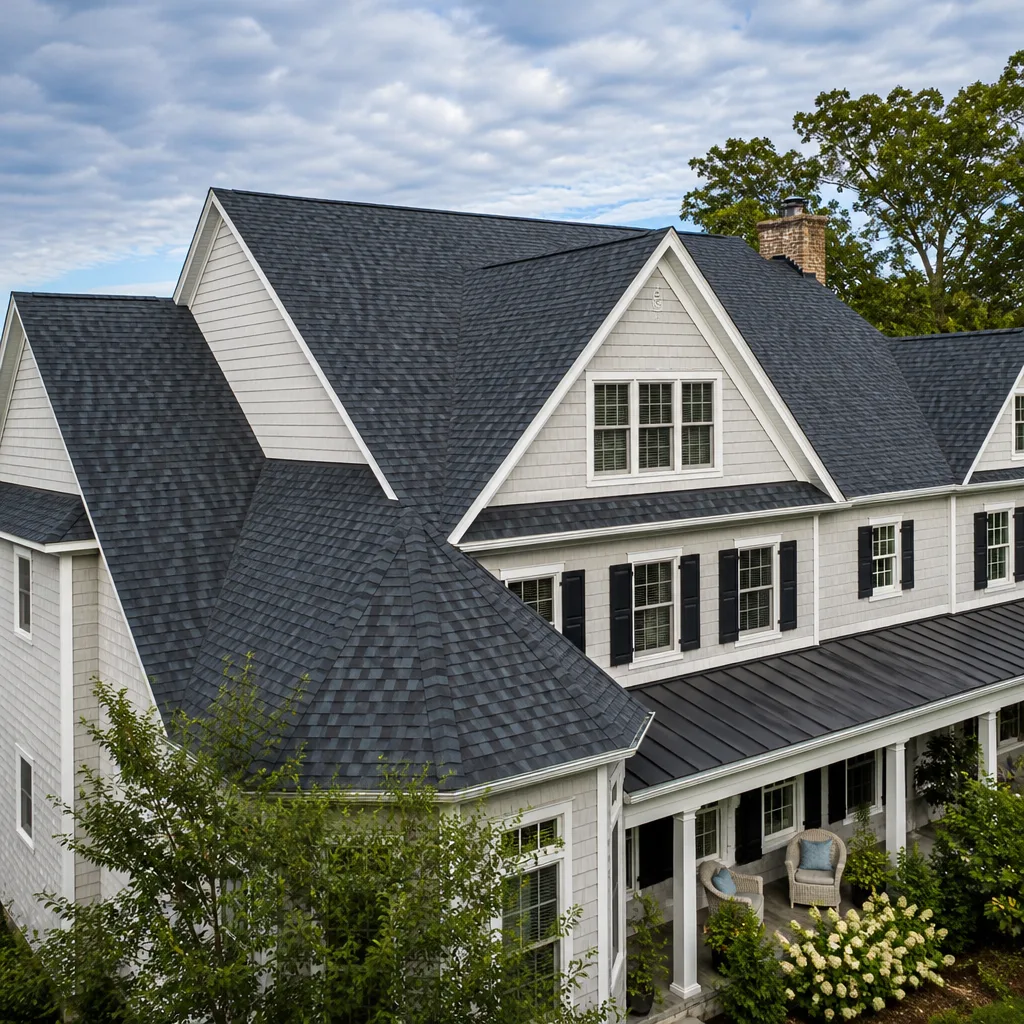 GAF
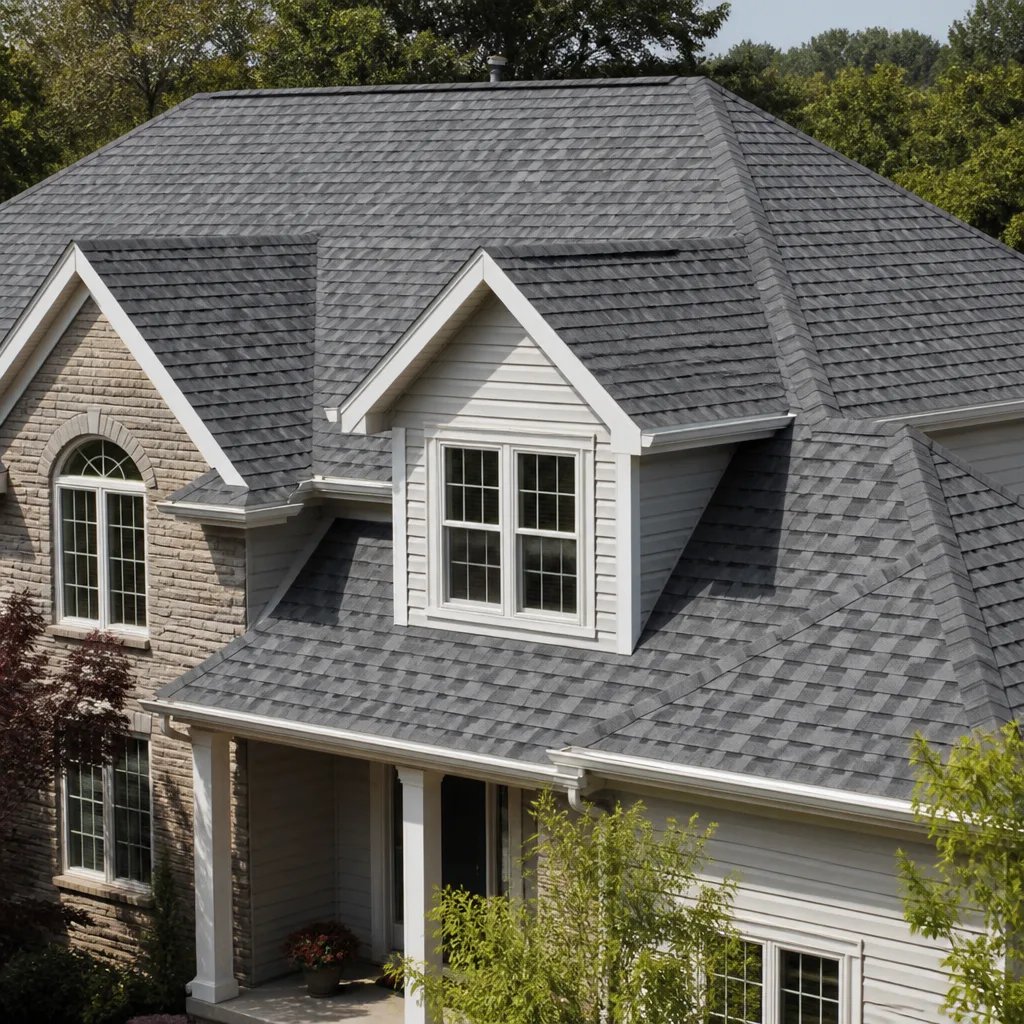 Owens Corning
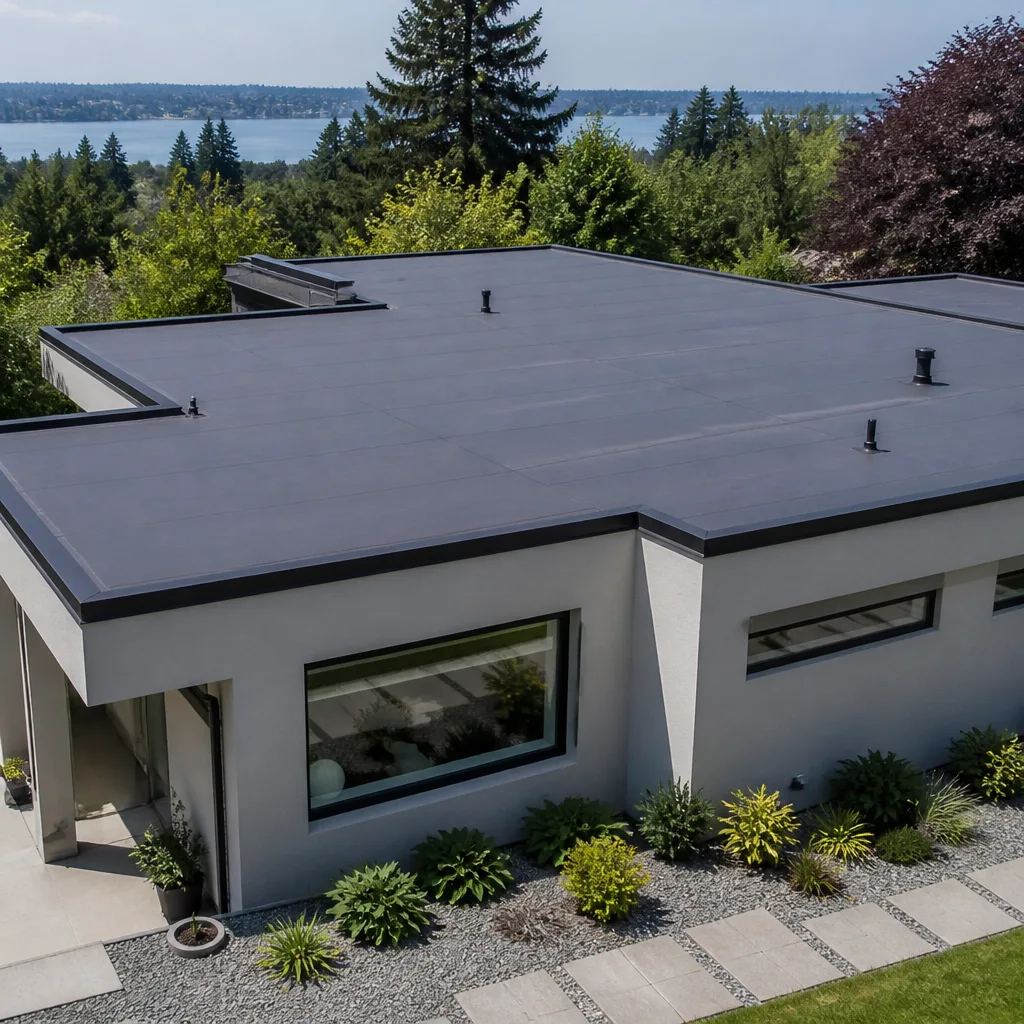 Flat & low-slope
Free roof inspection with deck photos before we talk money - GAF and Owens Corning certified installation
Roof Repair Troubleshooting: Common Problems and How to Fix Them
A water stain on your ceiling is almost never directly below the entry point. In a typical gable roof, water can travel 6 to 10 feet horizontally along a rafter before dripping, which is why the patch goes in the wrong place half the time. We’ve watched Garden Grove homeowners spend thousands fixing one section of shingles only to have the leak reappear two months later because the actual breach was at a pipe boot near the ridge. This guide teaches you the diagnostic logic roofers use to work backward from damage to source. You’ll learn how to trace leaks, read flashing failures, test for granule loss, and know when a problem is actually your attic ventilation instead of your shingles. For Roofing Cost Breakdown: The Garden Grove Homeowner’s Reference for 2026, see our dedicated breakdown.
Styles & brands we work with
Quick Answer
Roof Repair services start with tracing the leak from where the water appears back to where it enters the roof, which is usually a penetration like a vent pipe, chimney, or valley rather than the shingles themselves. The most common causes are failing flashing, aged pipe boots, and attic condensation that mimics a roof leak. The fix depends on the failure point: flashing gets replaced or re-sealed, pipe boots get swapped for new ones, and condensation gets addressed with improved ventilation rather than roof work.
Table of Contents
- The Three-Zone Tracing Method: Ridge, Penetrations, Field
- Condensation vs. Active Infiltration: When the Attic Is the Problem
- Flashing Failure Patterns: Aluminum vs. Galvanized Steel
- The Granule Loss Self-Test: Finding Bad Shingle Tabs Without a Ladder
- Common Misdiagnoses When the Attic Inspection Gets Skipped
- What Garden Grove’s Climate Does to Roofs
- Warranty Considerations: Why Patch Materials Matter
- Common Mistakes to Avoid
- When to Call a Professional
- Frequently Asked Questions
- The Bottom Line
The Three-Zone Tracing Method: Ridge, Penetrations, Field
Roofers don’t guess where a leak starts. We divide every roof into three zones and work through them in order of probability. The ridge is the top horizontal line where two slopes meet. Penetrations are anything that pokes through the roof: vent pipes, chimneys, skylights, attic fans, plumbing stacks. The field is the broad expanse of shingles between the ridge and the eaves.
The order matters because of the numbers. Penetrations account for over 60% of localized leaks regardless of shingle brand. That’s not a brand problem. It’s physics. Every penetration interrupts the shingle system and requires a secondary waterproofing layer, which is flashing. Flashing fails faster than shingles because it’s thinner, exposed to more movement stress, and often installed with roofing cement that breaks down in UV exposure.
Here’s the tracing sequence a competent roofer runs:
- Start at the water stain and go up. Find the spot on the ceiling or wall. Now move directly upward to the roofline above it. That gives you a starting zone, not the answer.
- Sweep sideways along the slope. Water follows rafters and sheathing seams. The entry point can be 6 to 10 feet to either side of where the stain shows.
- Check penetrations first. If there’s a vent pipe, chimney, or skylight anywhere within that lateral sweep, inspect that before blaming shingles.
- Inspect the ridge only if no penetrations exist. Ridge vents and cap shingles fail at the seam, and a lifted ridge cap in wind can channel water down the interior slope without touching field shingles.
- Move to the field last. If ridge and penetrations are clean, then look at shingle tabs for missing, cracked, or wind-blown pieces.
In Garden Grove, where we get long dry stretches followed by Santa Ana wind events, field shingle damage often shows up weeks after the wind that caused it. A tab lifts slightly during a gust, the adhesive strip breaks, and the tab sits there looking normal until the first real rain. That’s why a post-wind inspection matters even when the rain hasn’t tested the roof yet. Crown Line Roof Repair’s Roof Inspection in Rowland Heights service exists because this delayed-failure pattern is so common in Southern California.
Condensation vs. Active Infiltration: When the Attic Is the Problem
Before assuming the roof is leaking, check whether the water came from inside the attic. In Garden Grove’s climate, the difference matters because our nights cool down enough to cause condensation in under-ventilated attics, especially during winter mornings when indoor humidity rises. See our Roofing Emergency Preparedness Guide for Garden Grove Homes for seasonal checklists.
Condensation damage presents differently than active infiltration. Here’s how to tell them apart:
- Condensation wets multiple surfaces broadly. You’ll see moisture on the underside of the roof sheathing, on nails, on the attic floor insulation. A leak wets one path downhill.
- Condensation appears on cool mornings. It shows up when the temperature drops overnight, then dries by afternoon. A leak keeps dripping after the sun comes out.
- Condensation runs down rafters rather than through framing. Water from a leak travels through holes, seams, and gaps. Condensation beads on cold surfaces and then drips.
- Condensation leaves nail tip rust and mold bloom. When you look at the sheathing from inside the attic, condensation produces a pattern of dark dots around the nail heads. That’s moisture condensing on the metal.
When attic ventilation is insufficient, warm moist air from the house rises into the attic, hits the cooler sheathing, and condenses. The fix is more airflow: ridge vents, soffit vents, or a powered fan depending on the attic geometry. Not roof shingles. We’ve seen homeowners replace entire roofing systems when the real problem was three blocked soffit vents.
This is why the attic inspection is non-negotiable before any Roof Repair in Rowland Heights work. If a contractor tells you the roof needs replacing without going into the attic, that’s a red flag. Get a second opinion.
Flashing Failure Patterns: Aluminum vs. Galvanized Steel
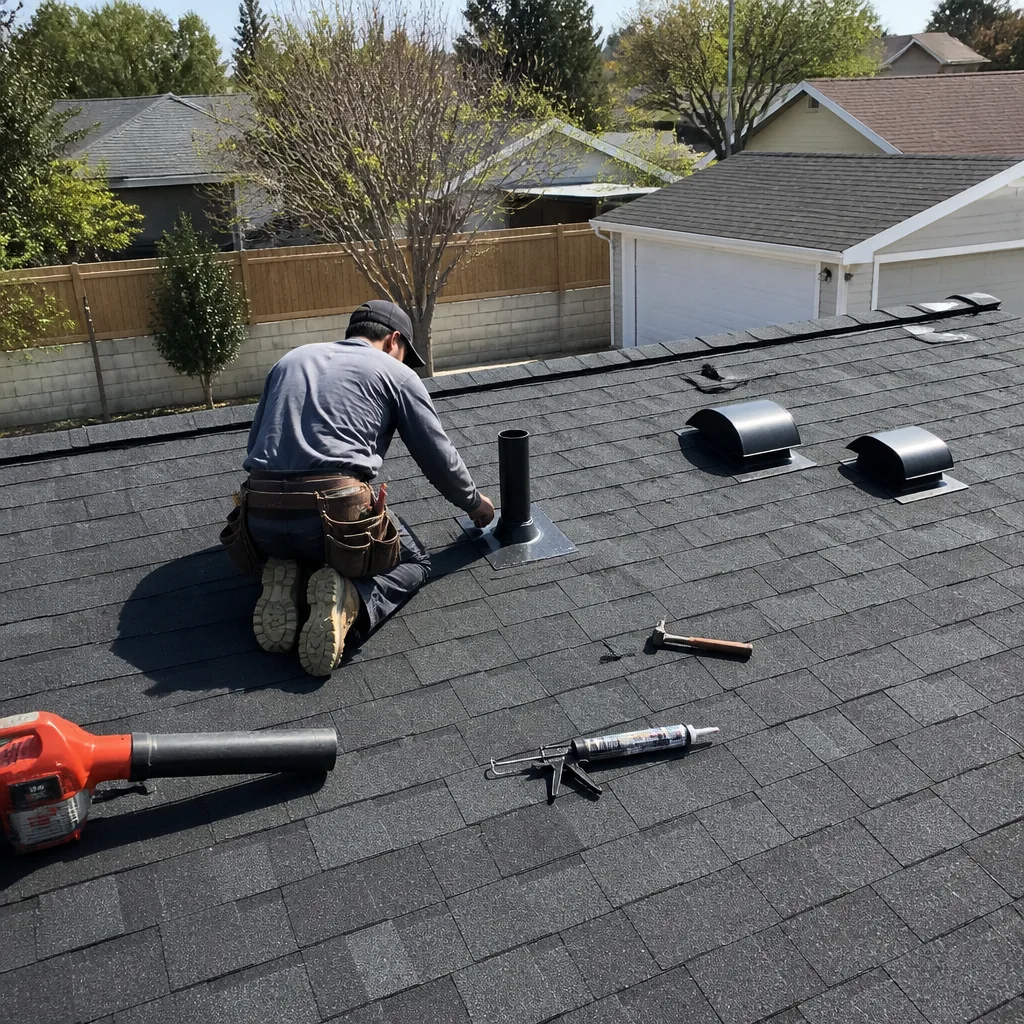
Flashing is the thin metal or synthetic material that seals the roof’s transitions: where shingles meet a wall, around a chimney, at the valleys where two slopes join, around pipes. It’s the most common failure point because it moves with temperature cycles, gets exposed to direct UV, and often gets installed with materials that age poorly.
But not all flashing fails the same way. Aluminum and galvanized steel, the two most common materials in Southern California residential roofing, have distinct failure signatures:
Aluminum step flashing fails by corroding from contact with incompatible materials. Aluminum reacts with alkaline materials like concrete, mortar, and pressure-treated lumber. When aluminum step flashing sits against a concrete chimney crown or a mortar wall, electrochemical corrosion eats it from the hidden edge inward. The visible face looks fine until the metal suddenly has holes where it touches the masonry. This is why chimney leaks are so persistent: the flashing looks intact, but the buried edge is gone.
Galvanized steel fails by zinc depletion and rust-through. Galvanized flashing has a zinc coating that protects the underlying steel. That coating wears away over time, faster near the coast because salt air accelerates the depletion. Once the zinc is gone, rust spreads from exposed edges. Galvanized flashing telegraphs its age visibly. You’ll see orange-brown staining along the edges, rust spots, and eventually rust-through holes that start small and grow.
We work with roofs using both materials across Garden Grove, and the repair approach depends on what’s already installed. Matching materials matters because mixing aluminum and steel in contact creates a galvanic cell that accelerates corrosion in both. Some manufacturers like GAF and CertainTeed offer specific flashing accessories designed for their shingle systems, but the fundamental compatibility rules apply across all brands.
When flashing fails at a penetration, the repair is replacement of the affected piece, not just caulking over it. Roofing cement and sealant are temporary measures. They buy a season, not a decade.
The Granule Loss Self-Test: Finding Bad Shingle Tabs Without a Ladder
Asphalt shingles shed granules their whole life. A little granule loss in the gutters after a new roof is normal, but accelerated loss signals aging or defective tabs. You can test for this without getting on the roof.
Here’s the process:
- Wait for a dry day. Wet shingles hold granules differently than dry ones, and you want a clean reading.
- Clear the gutter downspout. Put a bucket or a screen under one downspout outlet.
- Run a garden hose at the roof surface above that gutter section. Aim the water so it flows down the shingle slope naturally, not blasted at high pressure. You’re simulating rain, not power washing.
- Watch what lands in the bucket. A few granules is normal. A tablespoon or more per downspout suggests the shingles are losing their protective surface faster than they should.
- Repeat at different gutter sections. Granule loss is not always uniform. South and west-facing slopes in Garden Grove take more UV and lose granules faster than north-facing slopes.
- At night, shine a flashlight up the slope. Shingles with heavy granule loss reflect light differently. They look glassy or shiny instead of matte. The polymer coating underneath shows through.
Heavy granule loss means the shingle’s asphalt waterproofing layer is exposed. The tab still sheds water today, but it’s aging fast. This is the moment to schedule an inspection before the first wet winter blows in from the coast. Granule loss is not brand-specific. We’ve seen premature granule loss on Tamko, Boral, and Atlas roofs in Garden Grove, usually tied to a specific batch, installation issue, or extreme sun exposure on a shallow-pitch slope.
Common Misdiagnoses When the Attic Inspection Gets Skipped
The attic tells you what the roof surface can’t. When a contractor skips it, they’re guessing. Here are the misdiagnoses we’ve had to correct for Garden Grove homeowners:
- Replacing shingles when the decking is rotted. If the sheathing under the shingles is water-damaged or delaminated, new shingles nailed into it won’t hold. The nails pull loose, and the new shingles start blowing off. The attic inspection reveals decking damage from the underside.
- Patching a leak that’s actually at the HVAC unit. Roof-mounted HVAC units have their own drain pans. When that pan overflows, water runs downhill under the shingles and shows up inside looking like a roof leak. The attic inspection finds the wet path starting at the unit, not at the roof deck.
- Blaming the roof for plumbing vent condensation. Plumbing vents run through the attic. In cold mornings, the metal pipe sweats, and the moisture drips onto the attic floor or insulation. Without looking in the attic, this looks like roof leakage.
- Replacing one slope when the leak is in the valley above. Valleys, where two roof planes meet, handle the highest water flow of any roof feature. A minor valley flashing failure channels water diagonally down the sheathing and into the interior at a point far from the valley itself. Only the attic inspection shows the water path coming from the valley line.
- Ignoring raccoon or squirrel entry. In Garden Grove, roof rats and squirrels enter through chewed soffit vents or gaps at the eave. They damage insulation, chew wiring, and their waste shows up as ceiling stains that look exactly like roof leaks. The attic inspection reveals the real cause.
Before hiring any contractor for a Roof Replacement in Rowland Heights or a repair, ask this question: “Did you inspect the attic from the inside?” If the answer is no, get another contractor. A full diagnostic includes both the roof surface and the attic interior. That’s the standard we hold ourselves to at Crown Line.
What Garden Grove’s Climate Does to Roofs
Garden Grove sits inland enough to get real summer heat but close enough to the coast to get marine layer mornings and cool nights. That combination stresses roofs in specific ways:
Thermal cycling. Summer roof surface temperatures here can hit 160°F or higher in the afternoon, then drop to 60°F by morning. That’s a 100-degree swing every day during heat waves. Shingles expand and contract constantly, and the adhesive strips that hold shingle tabs down eventually lose their grip. Sealed tabs start lifting, and lifted tabs catch wind. That’s why we see more wind blow-off after sustained heat waves than during storms.
Moisture cycles at the eaves. Marine layer mornings deposit moisture on the roof surface for months of the year, especially near the 22 Freeway and the western parts of Garden Grove. That moisture works its way into the fine gaps at the eaves and accelerates rust on the eave flashing, which is the longest horizontal strip on most roofs. Galvanized eave flashing in Garden Grove typically shows rust before the rest of the flashing does.
Short, intense rain events. When it does rain in Garden Grove, it comes hard. Southern California storms drop a lot of water in a short time. A small flashing gap that would never leak in a light drizzle becomes a real problem during a winter downpour. That’s why even tiny gaps get sealed before winter. It’s also why we recommend Crown Line Roof Repair home inspections in the fall, before the first big storm.
Warranty Considerations: Why Patch Materials Matter
Most homeowner warranty disputes come down to one thing: the original shingle system was altered using incompatible materials. Shingle manufacturers write their warranties assuming a continuous system installed to their specifications. When a repair patches damaged shingles with a different brand, the warranty language often gets muddy.
This is where multi-brand material fluency matters. A GAF roof needs GAF-compatible materials for repairs if you want the manufacturer warranty to remain intact. Same for CertainTeed, Owens Corning, and the rest. The shingle weight, granule adhesion, and nailing pattern all interact with the underlayment and flashing. Mixing brands on a partial repair can void the warranty on the entire slope, even if the repair itself is technically fine.
Our position is straightforward: we work with your roof’s existing materials, not against them. If you have a Boral roof, we source Boral or Boral-compatible repair materials. If you have a Tamko roof, same logic. The brand doesn’t matter to us beyond what’s already on your roof. What matters is that the repair preserves the system’s continuity.
Before hiring a contractor for a repair, ask whether they can match your existing shingle brand. Some contractors only stock one brand and will tell you it doesn’t matter. It does, both for appearance and for warranty. Matching the shingle color, profile, granule type, and weight matters when the repair sits in a visible section of the roof.
Common Mistakes to Avoid
- Caulking over failed flashing instead of replacing it. Roofing cement and sealant degrade in Garden Grove’s UV exposure within a season or two. The leak comes back, but now it’s hidden behind the old caulk.
- Assuming the leak is above the stain. Water travels laterally along rafters and sheathing seams. If you patch directly above the ceiling stain, you’re fixing the wrong spot roughly half the time.
- Ignoring the attic because it’s inconvenient. The attic is where the water path reveals itself. Skipping it turns diagnosis into guesswork, and guesswork gets expensive.
- Replacing the roof when ventilation is the problem. Condensation damage looks like a roof leak to the untrained eye. New shingles won’t fix a humid attic. You’ll spend thousands and still see the stains return.
- Mixing incompatible flashing metals. Aluminum against galvanized steel in direct contact creates corrosion that eats both materials faster than either would fail alone. The repair has to use compatible metals.
- Waiting through one more winter because the leak is small. Small leaks keep working even when they’re not dripping. A slow leak rots decking, feeds mold inside walls, and doubles the repair cost by the time it’s visible enough to act on.
- Accepting a quote without a written diagnostic. If a contractor can’t tell you exactly where the roof is failing and why, they haven’t done the diagnostic work. A written diagnostic should name the specific penetration, flashing type, or shingle section involved.
When to Call a Professional
Some roof problems you can diagnose from the ground or from inside the attic. The actual repair is almost always professional work. Working on a roof involves heights, steep slopes, and materials that don’t forgive mistakes. If the leak is active, the flashing has visible rust or holes, the roof is over 15 years old, the attic shows water staining on the sheathing, or multiple slopes are involved, call a roofer with diagnostic experience.
Crown Line Roof Repair offers free estimates in Garden Grove. Call (844) 966-3891 and we’ll trace the problem to its actual source, not just its visible symptom.
Frequently Asked Questions
Most localized roof repairs in Garden Grove run between $350 and $1,800 depending on the failure point. A simple pipe boot replacement stays on the low end. A chimney flashing rebuild or valley replacement with decking repair moves toward the higher end. The only way to know is a diagnostic inspection that identifies the exact failure point. Call (844) 966-3891 and we’ll give you a written line-item quote before any work starts.
You can diagnose a roof leak yourself by tracing water paths in the attic and checking for condensation, but the actual repair belongs with someone who works on roofs regularly. The risk of a fall is real, and an incorrectly applied patch often makes the next repair more expensive. We’d rather you call us for the repair and save your DIY energy for what it does well: identifying the problem.
Most single-point repairs in Garden Grove take half a day to a full day. The work itself might be two to three hours, but the diagnostic, material matching, and cleanup add time. If the repair involves multiple penetrations or a full flashing replacement, plan for a day. We don’t rush the diagnosis because the diagnosis is the job.
We carry or can source materials from GAF, CertainTeed, Owens Corning, IKO, Atlas, Tamko, and Boral, so we can match most residential roofs in Garden Grove. Color matching gets trickier on older roofs where the original shingles have faded, but we’ll tell you honestly if an exact match is impossible before you commit to the repair.
Most localized repairs in Garden Grove don’t require a permit, but larger structural repairs and full replacements do. We handle permit paperwork when it’s required and only do work that passes inspection. If a contractor tells you permits are never needed for roof work, that’s a red flag.
The decision comes down to three numbers: the square footage of damaged area, the age of the existing roof, and the condition of the decking underneath. If the damage is localized and the roof structure is sound, repair makes sense. If the shingles are failing across multiple slopes or the decking is compromised, replacement becomes the honest recommendation. That’s the “repair first, replacement only when the numbers justify it” standard we hold. Get a Roof Inspection in Rowland Heights and you’ll get a straight answer with no pressure.
The Bottom Line
Roof repair troubleshooting is detective work. The water stain is the clue, not the answer. The entry point is usually at a penetration, not in the field of shingles. The attic is where the water path reveals itself. The flashing fails before the shingles do. And condensation from poor ventilation fools homeowners more often than any actual roof defect. Browse our more guides & resources for deeper dives on each topic.
When you understand these patterns, you can describe the problem accurately to any contractor, and you can tell the difference between someone who diagnosed the roof and someone who just looked at it from the sidewalk. In Garden Grove, where our marine layer mornings and hot afternoons age roofs in specific, predictable ways, that knowledge saves you money. The fix starts with the right diagnosis. Call (844) 966-3891 to schedule a free estimate and get the answer that’s actually right for your roof.
Written by the team at Crown Line Roof Repair, serving Garden Grove since 2015.
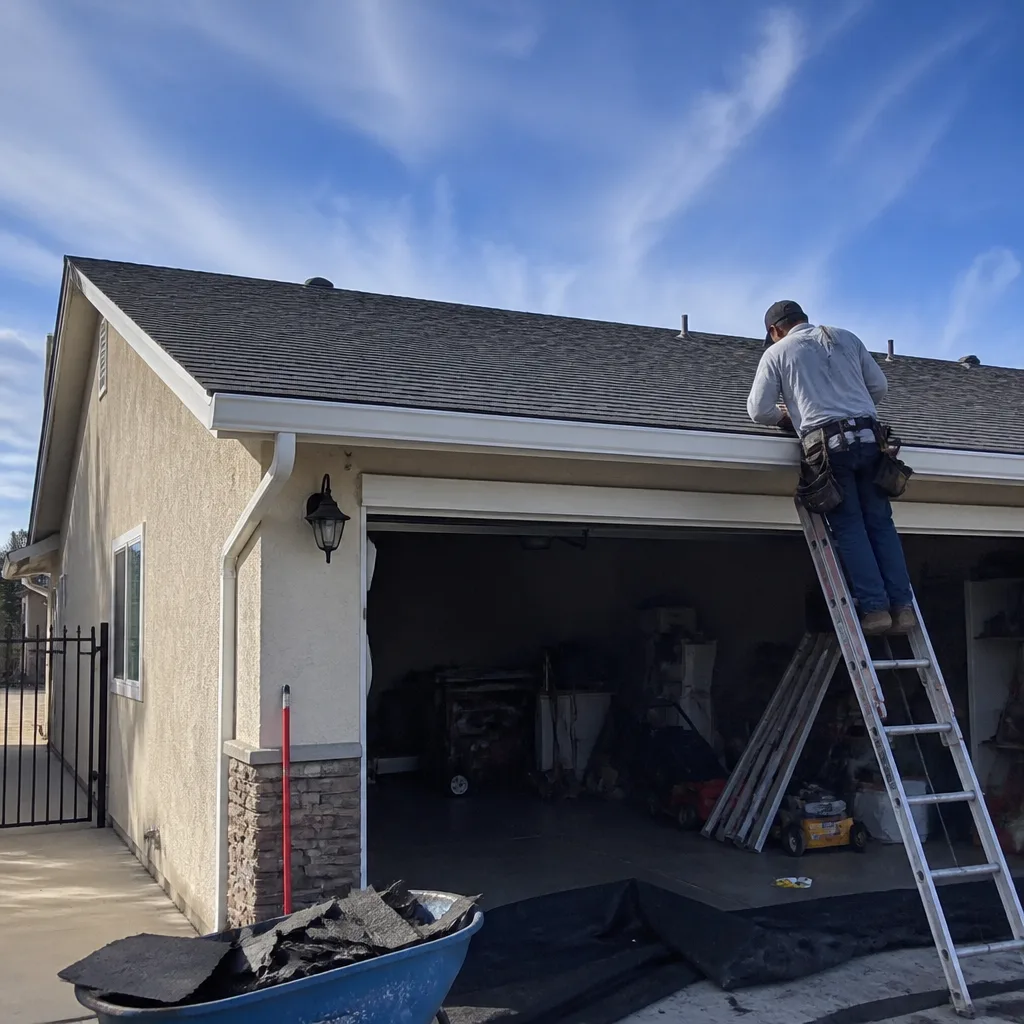
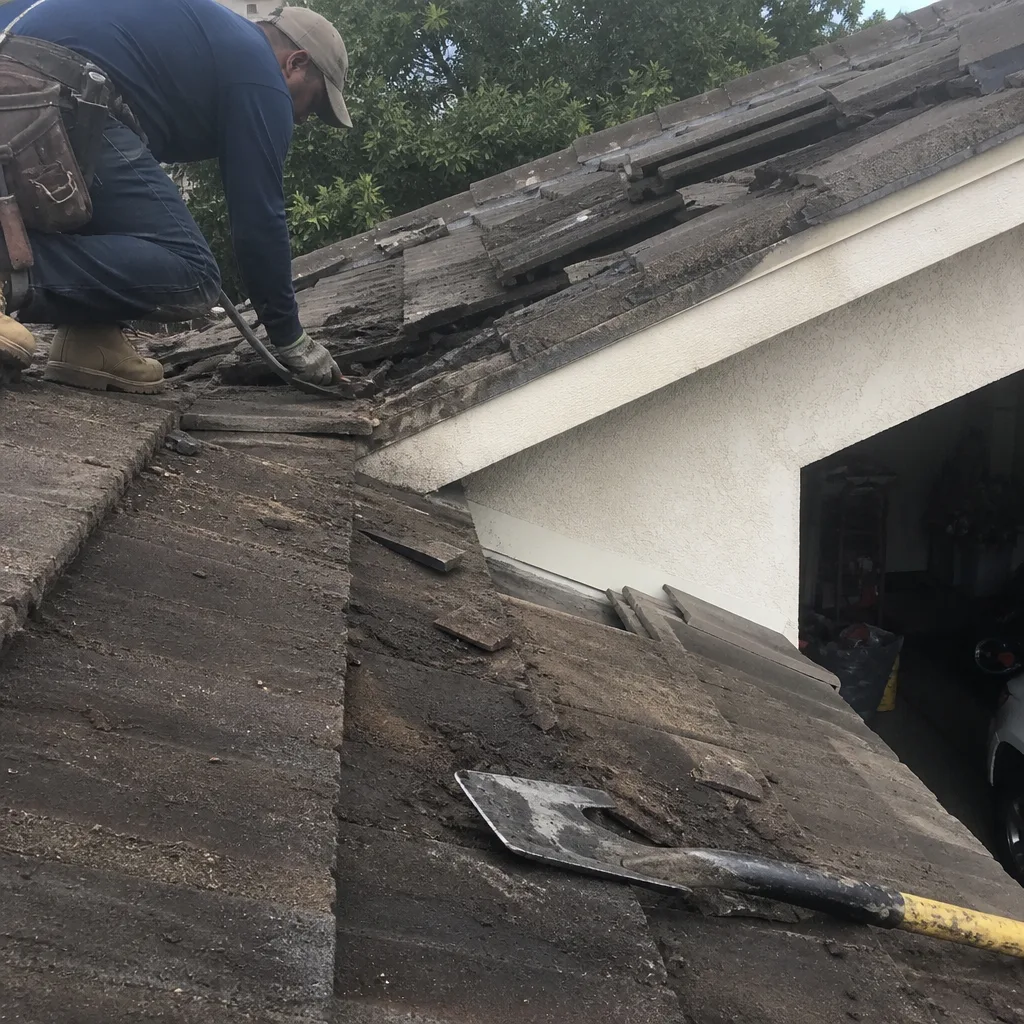
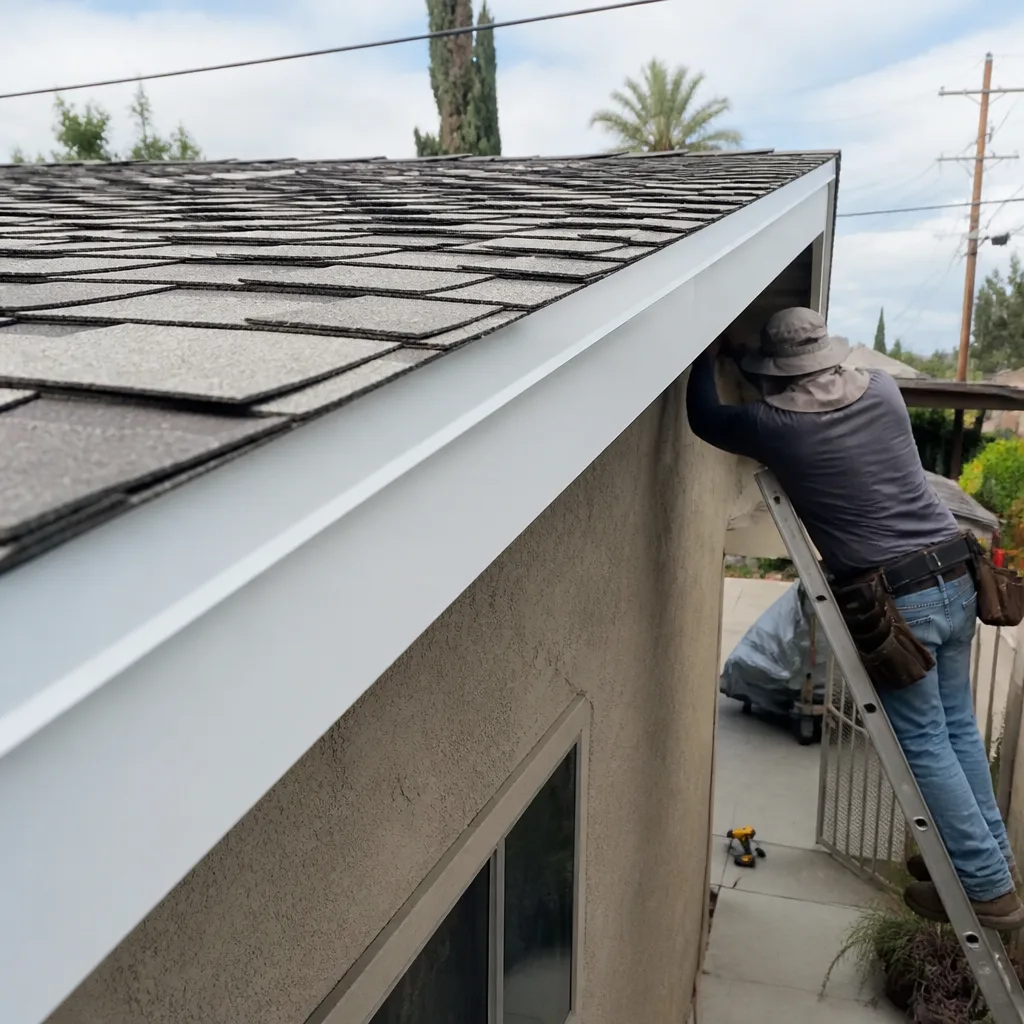
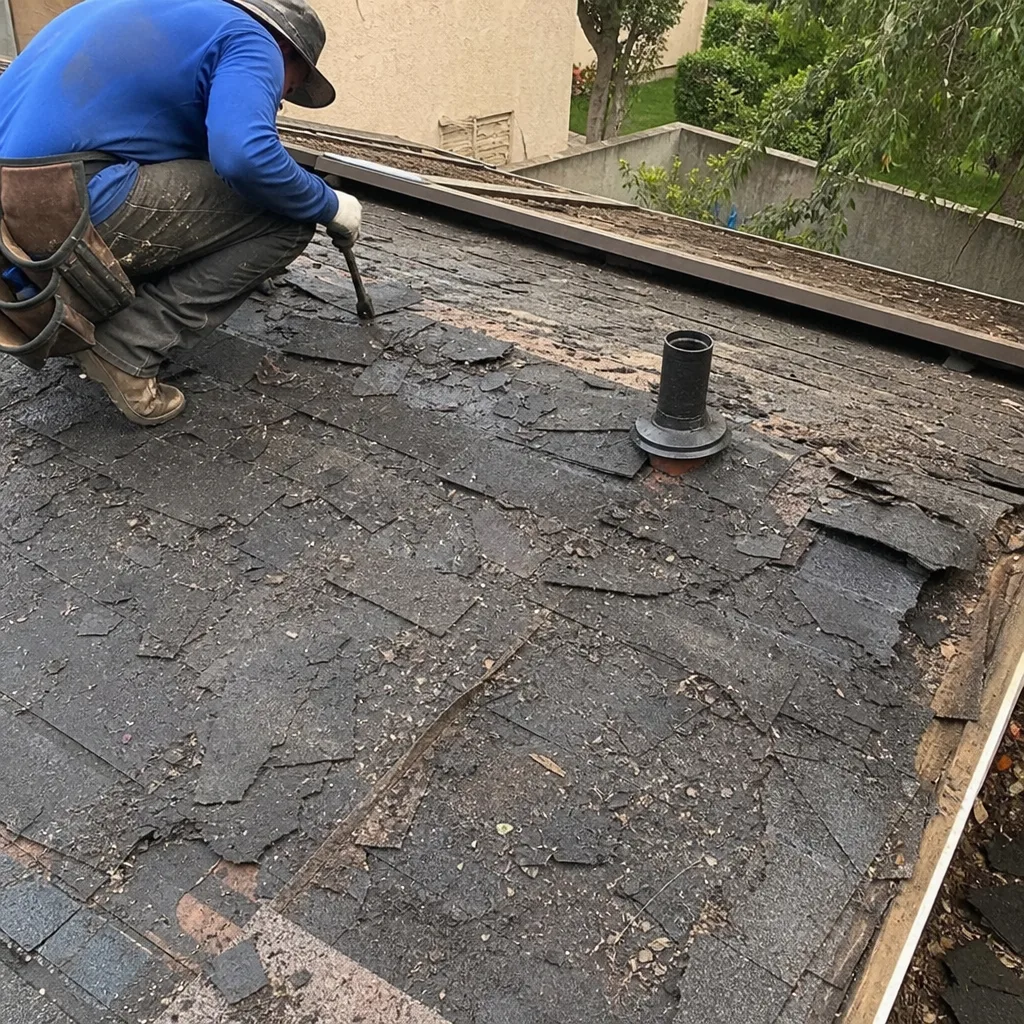
See the difference
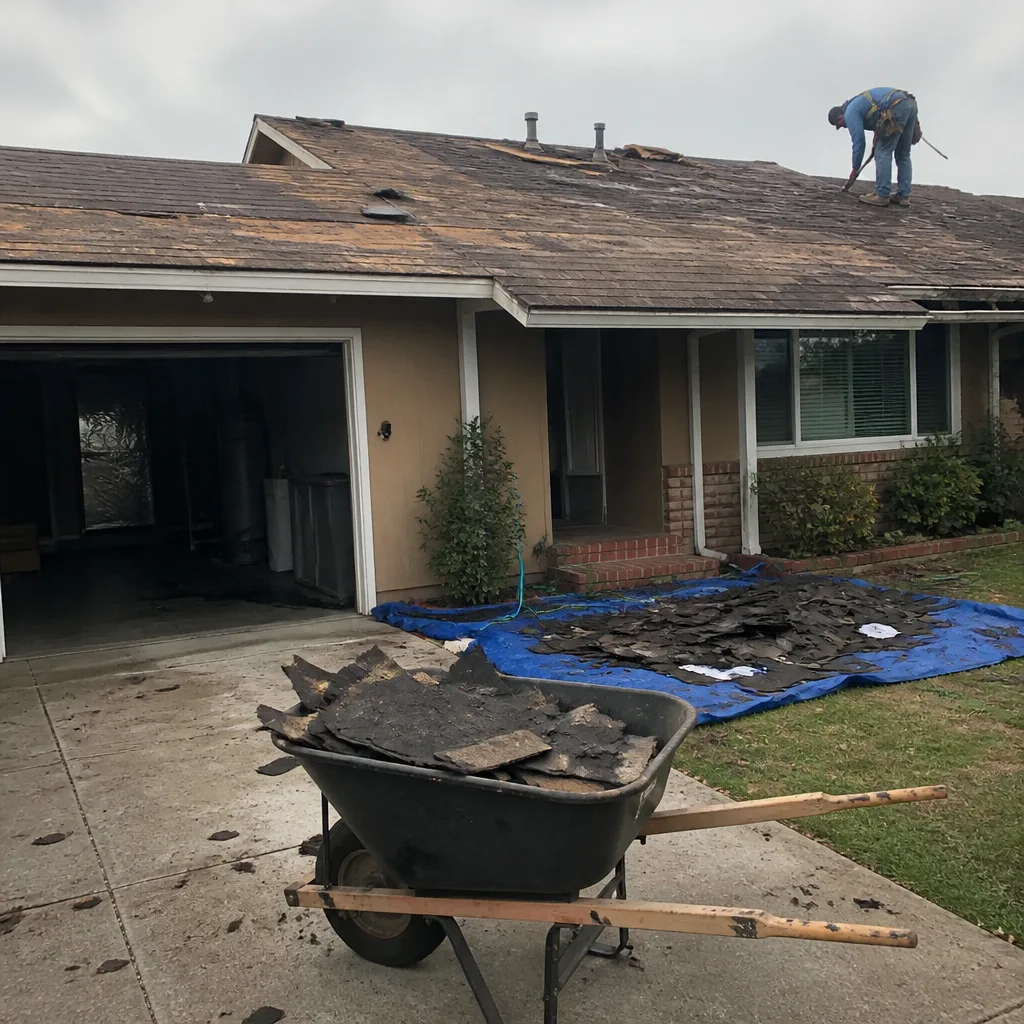 Before
 After
 Before
 After
 Before
 After