
Last updated October 30, 2026
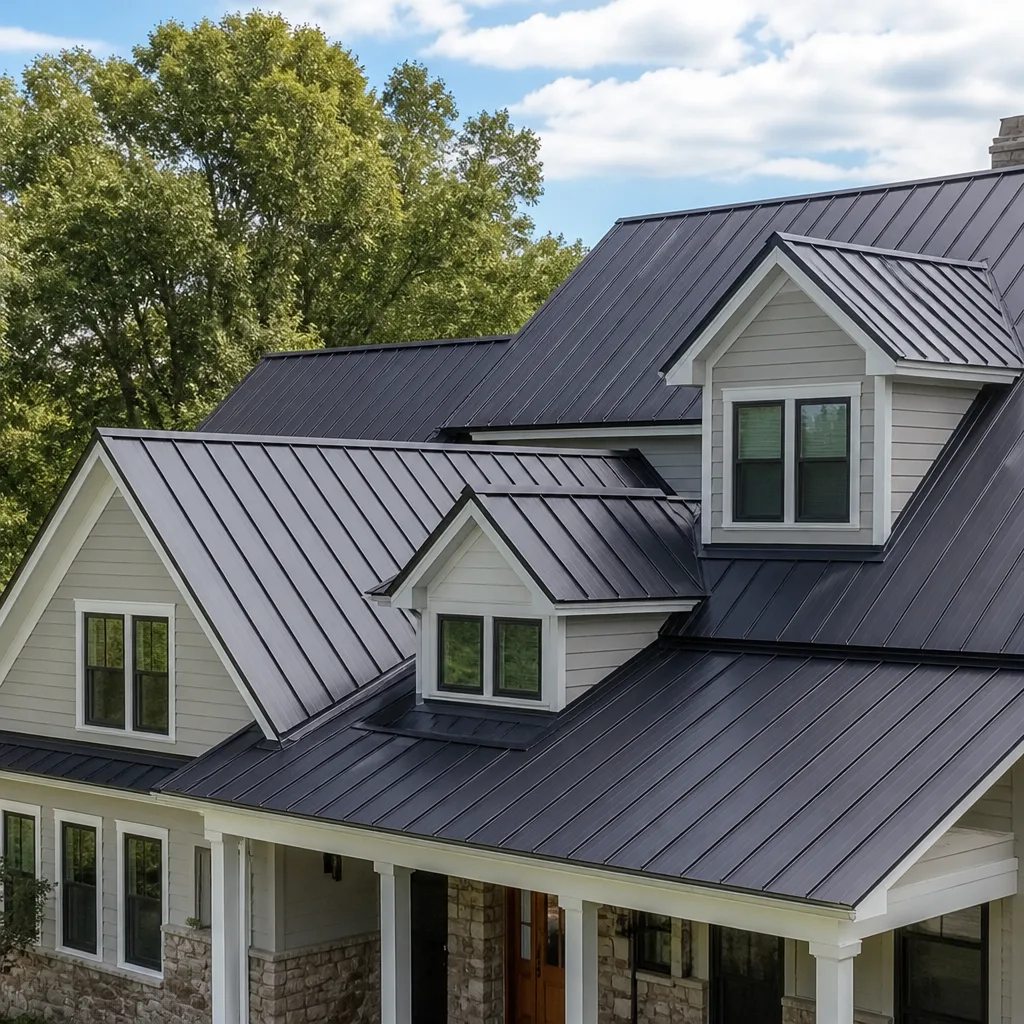 Metal roofing
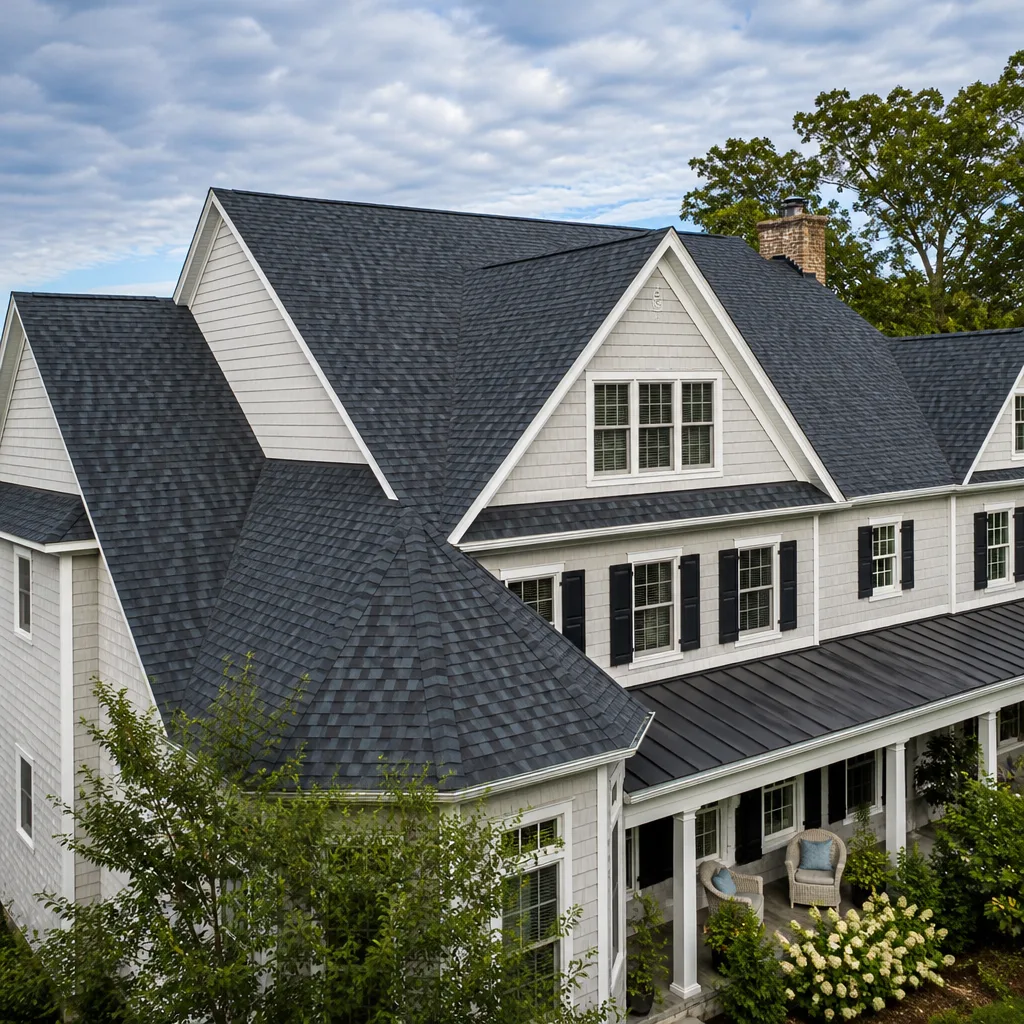
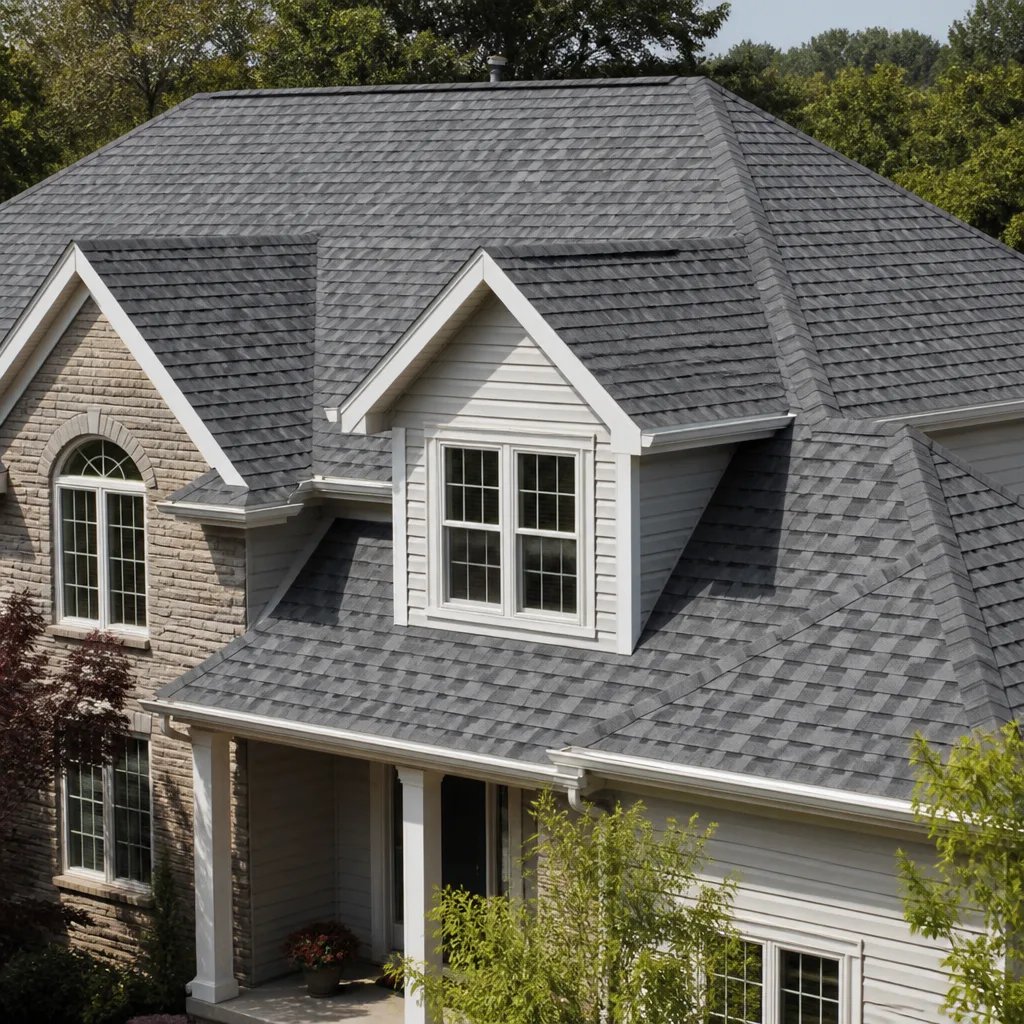
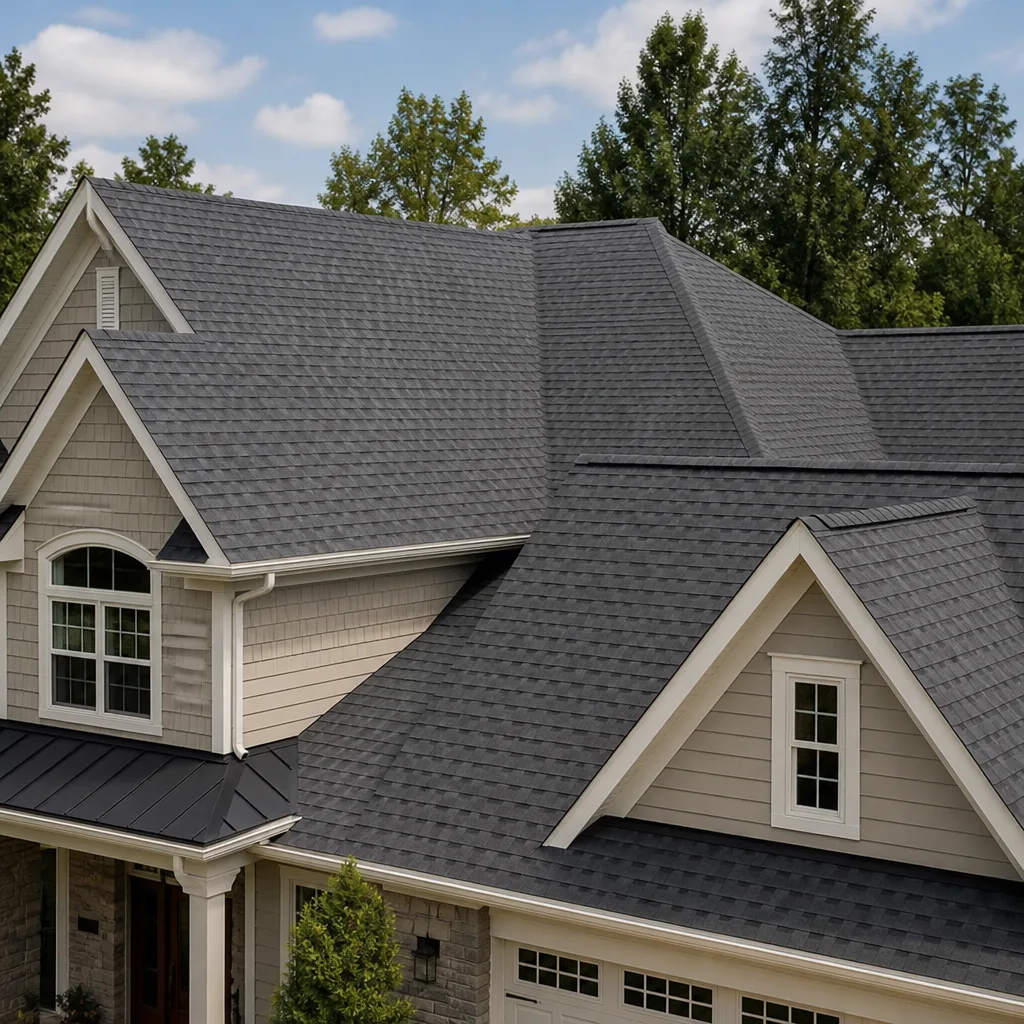 Architectural shingles
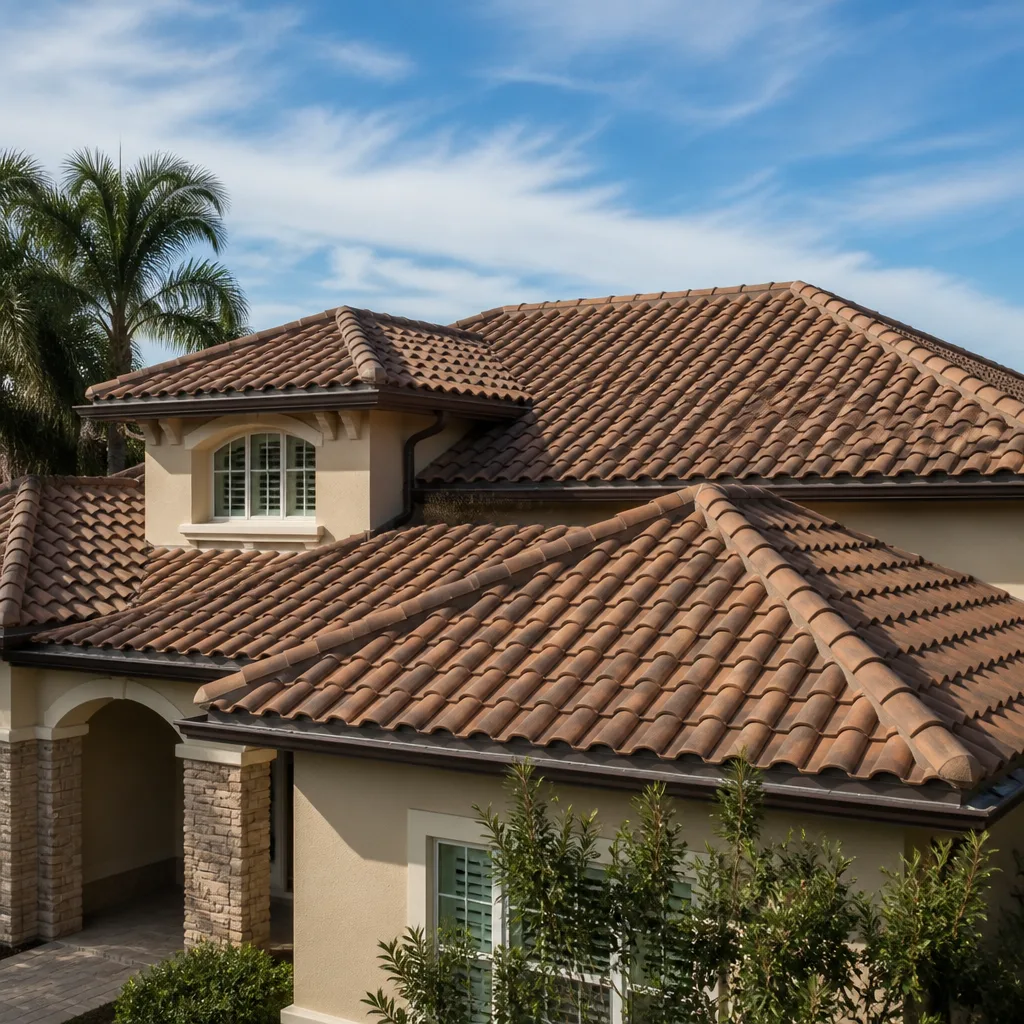 Tile roofing
 GAF
 Owens Corning
 Flat & low-slope
Free roof inspection with deck photos before we talk money - GAF and Owens Corning certified installation
Seasonal Roofing Care for Garden Grove: Year-Round Homeowner’s Guide
Garden Grove averages only 14 inches of rain annually, but nearly 60% of that falls in a compressed 90-day window between December and February. That means a roof that looked perfectly fine in September is suddenly asked to shed water continuously in January, with zero gradual transition. Our Complete Guide to Roofing in Garden Grove walks through a two-phase seasonal model for local roofing care: the dry-heat UV period that quietly degrades materials, and the short, intense rain season that exposes every deferred repair. You’ll learn what to check, when to check it, and which problems are worth a closer look versus which ones are cosmetic.
Styles & brands we work with
Quick Answer
Seasonal roof care in Garden Grove means preparing before the November-to-March rain window with sealant checks, valley clearing, and flashing inspection after summer heat, then monitoring during storms for early leak signs, and finally assessing granule loss and moisture damage in March and April. The dry-heat months from May through October are when UV degradation and thermal cycling quietly do their damage, so that’s when sealants, flashing, and ventilation should be checked. A professional roof inspection in Garden Grove costs little compared to what a single winter leak can do to drywall, insulation, and framing—see our Complete Roof Repair Guide for Garden Grove Homeowners for what to watch for.
Table of Contents
- Why Garden Grove’s Climate Punishes Roofs Differently
- Pre-Rain Season Checklist: September and October
- During-Rain Monitoring: November Through March
- Post-Rain Assessment: March and April
- Summer UV and Heat Management: May Through October
- Santa Ana Wind Protocol: What to Check After Every Event
- How Garden Grove’s Climate Affects Different Shingle Brands
- Common Mistakes to Avoid
- When to Call a Professional
- Frequently Asked Questions
- The Bottom Line
Why Garden Grove’s Climate Punishes Roofs Differently
Most roofing advice blogs are written for places with four distinct seasons, snow loads, and freeze-thaw cycles. Garden Grove has none of that. What it has is a pattern that catches homeowners off guard because the damage happens slowly, invisibly, and then appears all at once when the rain finally arrives. Understanding this two-phase reality is the foundation of every smart maintenance decision you’ll make about your roof.
From May through October, Garden Grove sees sustained temperatures above 85°F with direct, intense UV exposure. Asphalt shingle surfaces can reach 140°F to 160°F on a 95°F day, which accelerates two things: granule loss and sealant breakdown. The granules embedded in shingle surfaces are your roof’s primary UV shield. As they erode, the asphalt beneath is exposed directly to sunlight, which causes it to become brittle and crack. Sealants around flashing, pipe boots, and vents dry out and pull away from the surfaces they’re supposed to protect. None of this is visible from the ground, and none of it causes a leak until rain enters the equation.
Then November arrives. Garden Grove’s rain comes in concentrated bursts, often with several consecutive days of wet conditions. A roof with degraded sealants, cracked flashing collars, or worn shingle edges now has to perform at full capacity with no break-in period. Water finds every small opening. The result is what roofing contractors in Garden Grove see every winter: a spike in leak calls during the first sustained rain event of the season, and most of those leaks trace back to problems that existed in August.
This is why we structure our maintenance guidance around two phases, not four seasons. The calendar months matter less than what the weather is doing to your roof, and knowing which phase you’re in tells you exactly what to look for.
Pre-Rain Season Checklist: September and October
The most important roof maintenance you’ll do all year happens before the first storm. September and October in Garden Grove are still warm enough for comfortable attic work and roof access, and the summer’s thermal cycling has just finished its annual assault on your roof’s sealants and flashing. This is the window to catch problems while they’re still hypothetical.
- Inspect every sealant point on the roof. Pipe boots, vent collars, skylight frames, and chimney flashing all rely on sealant to stay watertight. After a full summer of expansion and contraction, these seals are often cracked, pulled away, or missing chunks entirely. Sealant failure is the single most common source of winter leak calls in Garden Grove, and it’s a ten-minute fix in October versus an emergency call in January.
- Clear valleys and gutters of accumulated debris. Garden Grove’s older neighborhoods, like areas around Euclid Street and Chapman Avenue, have mature trees that drop leaves, needles, and seed pods throughout the year. Valleys are the roof’s drainage arteries, and when they’re blocked, water backs up under shingle courses and finds its way into the decking. Even a small pile of debris in a valley can create a dam that forces water sideways into places it was never meant to go.
- Re-examine all flashing after summer thermal cycling. Flashing around chimneys, skylights, and wall-to-roof intersections expands and contracts all summer long. Lifted flashing edges, missing fasteners, or separated step flashing are common findings in October inspections. Pay particular attention to south-facing flashing, which absorbs the most direct sun in Garden Grove.
- Check shingle edges for curling or lifting. Asphalt shingles curl when the mat has degraded or when the shingle has lost its flexibility through heat exposure. Lifted edges become wind catch-points and water entry points. Walk the roof or have it inspected, and note any shingles that don’t lie flat.
- Test your attic ventilation. A properly ventilated attic runs cooler and drier, which extends shingle life and prevents condensation. Make sure ridge vents, soffit vents, and any powered ventilation systems are unobstructed and functioning. Hot, stagnant attics bake shingles from underneath, accelerating granule loss.
This pre-rain checklist is the highest-value couple of hours you’ll spend on your home all year. Every item is inexpensive to address when caught early, and every item becomes exponentially more costly once water is actively entering your home. If you’re not comfortable on a roof or don’t have the time, this is exactly what a professional roof inspection is designed for. At Roof Inspection in Rowland Heights, our team does the same systematic walk-through for homeowners who’d rather have experienced eyes on the details.
During-Rain Monitoring: November Through March
Once the rain starts in Garden Grove, the focus shifts from prevention to detection. You’re no longer trying to stop problems; you’re trying to catch them at the first sign before a small leak becomes a ceiling stain, a ruined insulation batt, and a mold remediation bill. Most active leaks can be identified within the first 24 hours if you know where to look.
The most reliable leak-detection method is an attic inspection during or immediately after a rain event. Water takes the path of least resistance, and what you see inside is often far from the actual entry point on the roof, but the interior evidence tells you a problem exists, and that’s what matters first.
- Look for darkened spots on the roof decking. Plywood or OSB that’s absorbed water shows as darker patches against the dry surrounding wood. These are your earliest, most reliable indicator of an active leak.
- Check the insulation for dampness or compression. Fiberglass batt insulation that’s absorbed water feels heavy and clumps together. Blown-in insulation will show visible wet spots that spread over time. Wet insulation loses its R-value immediately and can hold moisture against framing for weeks.
- Look for water stains on rafters or trusses. Water traveling along a rafter leaves a trail, often ending in a small drip point. The stain tells you the path water took, which points you toward the source.
- Check for daylight through the roof deck. If you can see sunlight from inside the attic, water can enter through the same gap. This is most common around pipes, vents, and chimney penetrations.
- Listen for dripping sounds during heavy rain. Not every leak shows visible stains immediately. Water can enter and pool on top of the ceiling drywall for hours or days before staining shows through. If you hear dripping in the attic while it’s raining, you have an active leak, even if there’s no ceiling stain yet.
One of the more useful habits in Garden Grove is to set a reminder on your phone to check the attic after the first big rain of the season, and then after any storm that dumps more than an inch in 24 hours. Consistent monitoring catches problems when the fix is a tube of sealant and a shingle, not when the ceiling has fallen in.
Post-Rain Assessment: March and April
Once the rain window closes, Garden Grove enters the ideal inspection period. The roof has just been tested under real conditions, the weather is mild, and everything you see is current information, not speculation. This is the best time of year for a comprehensive assessment, and it’s when we recommend homeowners in Garden Grove schedule a professional inspection if they’ve skipped the fall checkup.
Three specific checks during March and April reveal more about roof health than almost anything else:
- Granule loss measurement in downspouts. Grab a handful of the accumulated grit at the bottom of any downspout or gutter outlet. A light dusting of granules is normal, especially on shingles less than five years old. A visible pile of granules, or a gutter trough that’s noticeably sparkly with mineral sediment, tells you the shingles are shedding at an accelerated rate. On a 20-year architectural shingle from a manufacturer like GAF or CertainTeed, aggressive granule loss in year 8 or 10 is a meaningful warning sign that roof replacement planning should start soon.
- Moss and algae early-stage identification. Garden Grove’s north-facing roof slopes and areas shaded by mature trees don’t dry out quickly after rain, creating conditions where moss spores can take hold. Early-stage moss looks like small green-tinted patches, often in the shade lines between shingle tabs. Algae appears as dark streaks or staining that some homeowners mistake for dirt. Both can hold moisture against the shingle surface and accelerate degradation. Catching them in March, before summer heat bakes them into the shingle pores, makes removal far simpler.
- Gutter sediment analysis. The sediment composition in your gutters tells a story. Fine, dark grit is asphalt particles breaking down, normal to a degree. Sand-like granules are shingle surface material wearing off. And if you find wood fibers or shreds of felt underlayment, you have a more serious condition that deserves professional attention. Garden Grove homeowners who track gutter sediment from year to year have the clearest possible early-warning system for roof aging.
This March-April window is also the time to document everything with photos. A dated photo record of granule accumulation, flashing condition, and shingle appearance gives you a baseline to compare against next year, and it makes any eventual insurance or warranty conversation much easier. If you’re covered under a manufacturer warranty from Owens Corning or IKO, for instance, documentation of regular maintenance is part of keeping that warranty valid.
Summer UV and Heat Management: May Through October
The summer months in Garden Grove are not your roof’s resting season. They’re the period when the most cumulative damage occurs, even though no water is involved. Heat and UV radiation work on asphalt shingles the way sunlight works on car paint: slowly, relentlessly, and invisibly until the failure is obvious.
Sustained 90°F+ temperatures, which Garden Grove sees consistently from June through September, push shingle surface temperatures into the 140°F to 160°F range. Different shingle formulations respond to this heat differently. Standard three-tab shingles, with their thinner profile and lighter construction, tend to curl and crack sooner under sustained heat exposure. Architectural or dimensional shingles, which use a thicker mat and heavier asphalt saturation, generally hold up better, but they still shed granules at an accelerated rate when attic temperatures climb.
Attic ventilation is the single biggest variable in how fast summer heat degrades a Garden Grove roof. A well-ventilated attic keeps the shingle decking closer to ambient temperature, reducing the thermal stress on the shingles above. An under-ventilated attic acts like an oven, baking shingles from below while the sun bakes them from above. The result is premature failure, and it’s one of the most common findings when we inspect roofs in older Garden Grove homes that were built before ridge vents and soffit venting became standard code practice.
Here’s what to check during the summer months:
- Attic temperature during the hottest part of the day. If your attic is noticeably hotter than the outside air at 3 p.m. on a July afternoon, your ventilation is underperforming. Properly ventilated attics in Garden Grove should stay within 10 to 15 degrees of outside air temperature.
- Ridge vent and soffit vent airflow. Ridge vents work on a siphon principle: hot air exits the ridge, pulling cooler air in through the soffits. Blocked soffit vents, often from insulation that’s been pushed too far into the eaves, break this cycle. Check that every soffit vent is unobstructed.
- Shingle surface condition in direct-sun areas. South-facing and west-facing slopes take the brunt of afternoon heat. Look for any visible change in shingle texture: a loss of the granular sparkle, a faded or patchy appearance, or edges that have begun to look brittle rather than pliable.
Garden Grove homeowners who keep attic ventilation in good condition can expect to add meaningful years to a roof’s functional life. Shingles from manufacturers like Tamko or Atlas, which have specific ventilation requirements in their warranty language, fail prematurely when those requirements aren’t met, and that failure is typically not covered because the installation wasn’t in compliance.
Santa Ana Wind Protocol: What to Check After Every Event
Santa Ana winds are a recurring feature of Garden Grove’s fall and winter, and they don’t behave like normal weather events. The winds come from the northeast, opposite the direction most roofs are designed to shed water. They’re dry, gusty, and they can hit sustained speeds of 40 to 60 mph with gusts higher. After every significant Santa Ana event, a quick roof check is worthwhile, and it takes about fifteen minutes.
- Inspect ridge caps along the entire ridgeline. Ridge caps are statistically the most wind-vulnerable feature on any residential roof. They sit at the highest point, catch the most wind force, and are often the first shingles to lift or blow off entirely. Walk or view the ridgeline from the ground and look for any caps that are missing, lifted, or visibly out of alignment.
- Check rake edges and eaves for lifted shingles. The rake edge, where the roof meets the gable end, is the second most vulnerable zone. Wind catches the shingle edge and peels it back, often damaging the shingle and the seal strip beneath it. Lifted shingles can’t be simply pushed back down; the seal has been broken, and the shingle needs to be re-sealed or replaced.
- Examine flashing around chimneys and vents. Santa Ana winds are often strong enough to visibly bend or displace metal flashing. Even a 1/4-inch gap that wasn’t there before is enough to let water in during the next rain event.
- Look for wind-blown debris on the roof surface. Palm fronds, branches, and even loose shingle tabs from other properties can land on your roof during Santa Ana winds. Debris blocks drainage and can abrade shingle surfaces when the wind shifts it around.
- Check the gutters for shingle tabs or granules. After a high-wind event, finding scattered shingle pieces in the yard or gutter tells you the wind found a weak point. Even if the roof looks fine from the ground, those shingle parts came from somewhere, and a closer look is warranted.
Santa Ana damage is often not immediately obvious. Shingles that have had their seal broken by wind will remain in place until the next storm, when they finally lift enough to let water under the course. If you’ve experienced a significant wind event in Garden Grove, taking the time to look closely beats waiting for the next rain to reveal the problem.
How Garden Grove’s Climate Affects Different Shingle Brands
Not all asphalt shingles respond to Garden Grove’s heat-and-rain cycle the same way. The major manufacturers have different formulations, mat designs, and granule bonding processes, and those differences become visible after a few years of Southern California sun. Understanding how the brands behave helps you make a smarter decision when it’s time to repair or replace; our Choosing the Right Roofing Brand: A Buyer’s Guide for Garden Grove breaks down the key differences.
GAF shingles, especially the Timberline line, are known for a granule layer that’s bonded with a proprietary sealant. In our experience inspecting roofs in Garden Grove, GAF shingles tend to hold their granules reasonably well through the summer UV season, but their seal strips can release under extreme heat, which shows up as shingles that lift easily at the corner when tugged.
CertainTeed architectural shingles use a thicker mat and a more aggressive granule embedment process. They’re generally strong performers in high-heat climates, and we see fewer curling issues with CertainTeed roofs in Garden Grove compared to some competing brands. Their weakness, in this climate, tends to be at the seal strip under prolonged exposure to extreme heat.
Owens Corning shingles, especially the Duration line with SureNail technology, have a wide nailing zone that reduces blow-off risk during Santa Ana events. The granule adhesion is good, and we see consistent performance from Owens Corning roofs in Garden Grove, though their color retention under intense UV exposure can vary by product line.
Boral offers premium options that include some of the most UV-resistant formulations on the market. Boral’s higher-end products are engineered for exactly the kind of sustained heat that Garden Grove dishes out from May through October, but they come at a premium price that sometimes exceeds what a straightforward repair budget requires.
The practical takeaway is this: no brand is categorically better for every Garden Grove roof. The right choice depends on the roof’s pitch, orientation, ventilation configuration, and the homeowner’s timeline. That’s why Crown Line Roof Repair maintains certification to work with GAF, CertainTeed, Owens Corning, IKO, Atlas, Tamko, and Boral. Repair first, replacement only when the numbers justify it, and when replacement is the right call, the material recommendation comes from what the roof needs, not from a brand relationship. For a deeper look at how repair decisions get made, see our Roof Repair in Rowland Heights page, which walks through how we evaluate repair versus replacement.
Common Mistakes to Avoid
- Waiting for a leak to start before thinking about the roof. By the time water is dripping through your ceiling in Garden Grove, the problem has been developing for months. The damage path includes the shingle layer, underlayment, decking, insulation, and drywall, and every stage of that path multiplies the repair cost. A pre-rain inspection costs a fraction of what a single leak repair typically runs.
- Ignoring the roof because it’s “only a few years old.” Newer roofs fail too. Installation defects, sealant failures, and storm damage don’t respect age. A five-year-old roof with a failed pipe boot sealant will leak just as surely as a 20-year-old roof with worn shingles.
- Painting over or patching interior water stains without fixing the roof. A ceiling stain that’s been painted over is the same leak, now hidden. When the next rain comes, the damage resumes behind the paint, and now you’ve lost the early-warning signal that told you to look up.
- Cleaning gutters once a year and considering the roof “maintained.” Gutters need attention more often than annually in Garden Grove, especially if you have mature trees. But gutters are drainage, not roofing. A clean gutter does nothing for failed sealants, lifted flashing, or granule loss.
- Assuming all shingle brands are interchangeable for repairs. Matching a partial repair to existing shingles matters more than most homeowners realize. Different brands have different dimensions, nailing patterns, and color blending, and mismatched patches can void the existing roof’s manufacturer warranty. At Crown Line Roof Repair home, we work across seven major brands specifically so partial repairs can be matched to the existing system.
- Waiting until the rainy season to schedule an inspection. Every roofer in Garden Grove is busiest between November and March. If you wait until you have a leak, you’re competing for scheduling with every other homeowner who waited. Scheduling your inspection in September or October means faster availability and lower urgency pricing.
- Skipping ventilation checks when replacing a roof. A new roof on an under-ventilated attic is a new roof that will fail early. The shingle manufacturer’s warranty typically requires proper ventilation, and in Garden Grove’s heat, that requirement isn’t a suggestion. Addressing ventilation during a replacement is the most cost-effective time to do it. If you’re in the market for a full system, see Roof Replacement in Rowland Heights for what a complete replacement involves.
When to Call a Professional
Most of what this guide covers can be done safely by a homeowner with a ladder, a flashlight, and a willingness to look carefully. But some situations genuinely require professional attention. If you see water staining on multiple ceiling locations at once, you likely have a systemic problem, not a single point failure. If you find granule loss that’s visibly aggressive, especially across multiple slopes, the roof is communicating that its useful life is ending. If you’ve experienced a significant Santa Ana wind event and can see lifted shingles or missing ridge caps from the ground, the damage often extends beyond what’s visible. And if you’re simply not comfortable working at height or navigating an attic, that’s a valid reason to call someone. Crown Line Roof Repair offers free estimates in Garden Grove. Call (844) 966-3891 to schedule yours, and we’ll tell you exactly what we find, whether that’s a simple repair, a recommended replacement, or nothing at all.
Frequently Asked Questions
Once a year is sufficient for most Garden Grove homes, and the ideal timing is September or October before the rain season starts. Homes with mature trees overhead, older roofs (15+ years), or a history of leaks benefit from twice-yearly checks, once in the fall and once in the spring after the rain window closes. Call (844) 966-3891 to schedule your next inspection, and ask about our standalone inspection service with no repair obligation attached.
Minor repairs like sealant replacement around a pipe boot or vent collar typically fall in the $150 to $400 range depending on accessibility and how many points need attention. More involved repairs involving shingle replacement, flashing work, or decking repairs run higher, often $500 to $1,500 depending on scope. The only way to know your specific cost is to have the roof evaluated. Call (844) 966-3891 for a free estimate in Garden Grove.
A repair is justified when the roof’s overall condition is sound and the problem is localized: a damaged shingle, a failed sealant point, a lifted flashing section. Replacement becomes the right call when granule loss is widespread, shingles across multiple slopes are curling or cracking, the roof is past 75% of its expected service life, or repairs would cost more than roughly 30% of a full replacement. We work with your roof’s existing materials, not against them, and our repair-first approach means we’ll tell you if repair is the honest option.
A ground-level visual inspection with binoculars is safe and useful for spotting obvious issues like missing shingles, lifted edges, and visible flashing problems. An attic inspection during daylight is also safe and informative. Walking the roof itself is where injuries happen, and we don’t recommend it for homeowners without proper fall protection and roof-walking experience. Our team handles roof-level inspections professionally, and you’re welcome to review the findings with us afterward.
Yes, and more than most homeowners expect. An under-ventilated attic in Garden Grove can push shingle temperatures 20 to 30 degrees higher than a properly ventilated attic, which accelerates asphalt aging, granule loss, and sealant breakdown. Proper ventilation is also a warranty requirement for shingle manufacturers like GAF and Owens Corning, meaning a roof installed over poor ventilation may not be covered for premature failure.
Yes, a new roof is consistently among the top return-on-investment home improvements in Southern California real estate. It improves curb appeal, eliminates inspection objections during a sale, and signals to buyers that deferred maintenance hasn’t been neglected. For Garden Grove homeowners planning to stay in the home, the more meaningful return is functional: a properly installed roof with good ventilation will simply last longer and require less intervention. Call (844) 966-3891 to discuss replacement options and get written pricing.
The Bottom Line
Garden Grove’s roofing calendar has two seasons that matter: the hot, dry months that degrade materials quietly, and the narrow rain window that exposes every deferred repair. The homeowners who stay ahead of roof problems are the ones who inspect in September, monitor during storms, and assess in March. The homeowners who wait for a leak to announce itself end up paying for emergency repairs, interior damage, and often a full replacement that could have been postponed for years. A professional inspection costs little compared to what a single winter leak can cost. For more guides & resources on keeping your roof in top condition, repair what’s fixable, replace what’s not, and inspect every year. That’s how roofs last in Garden Grove.
Written by the team at Crown Line Roof Repair, serving Garden Grove since 2015.
See the difference
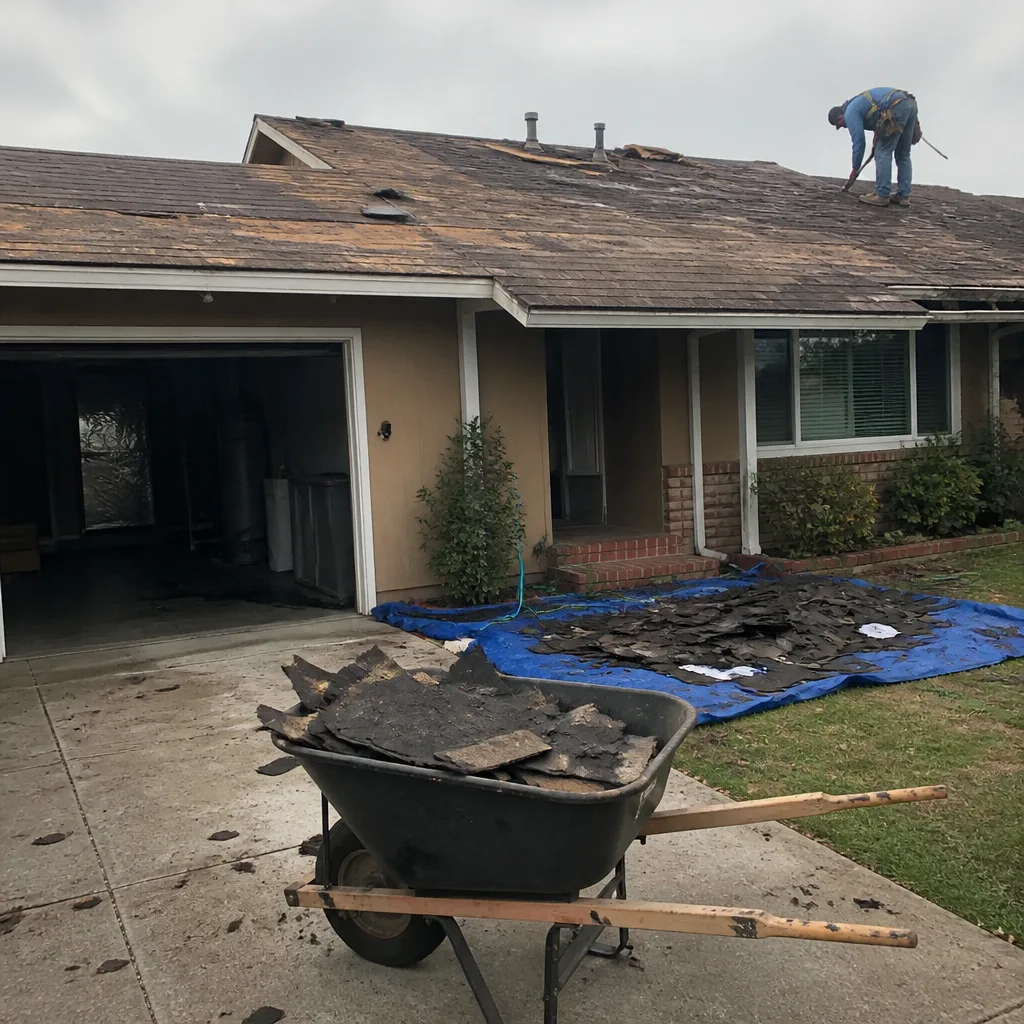 Before
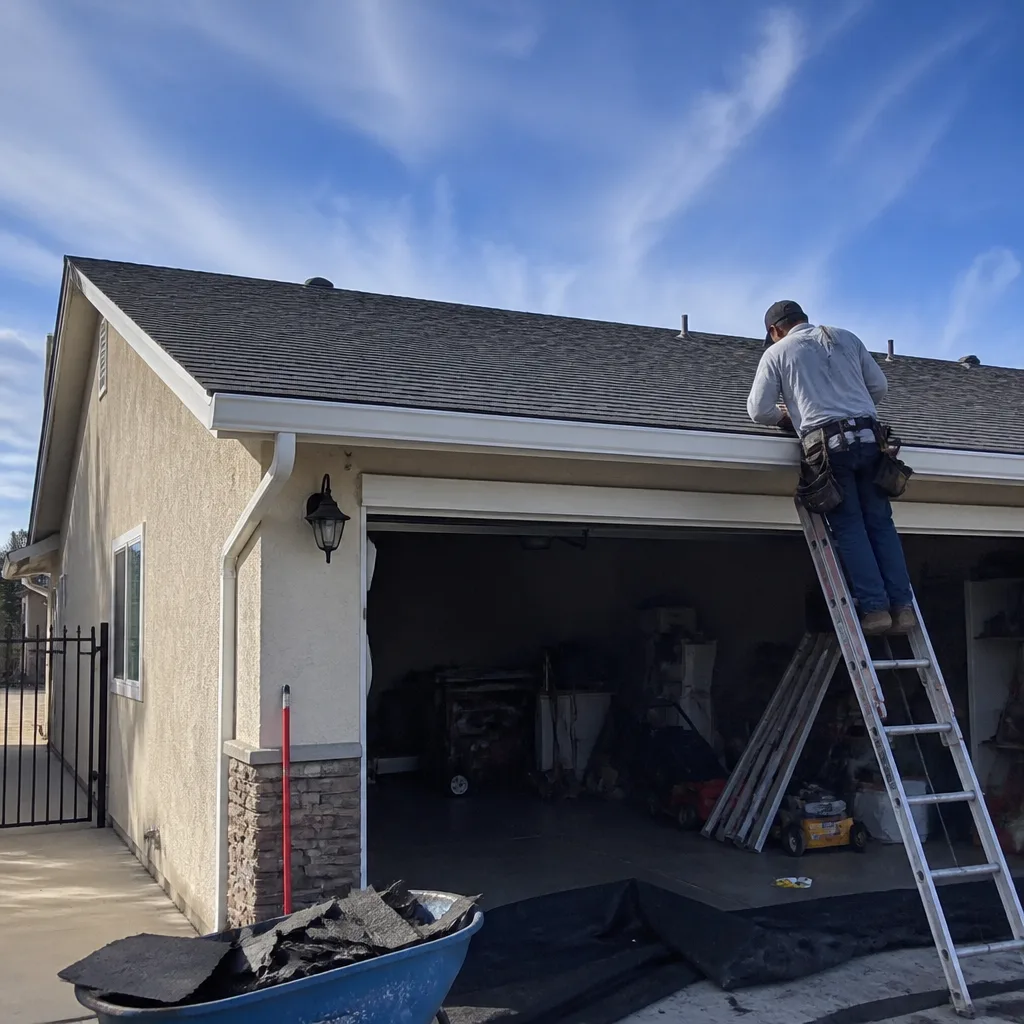 After
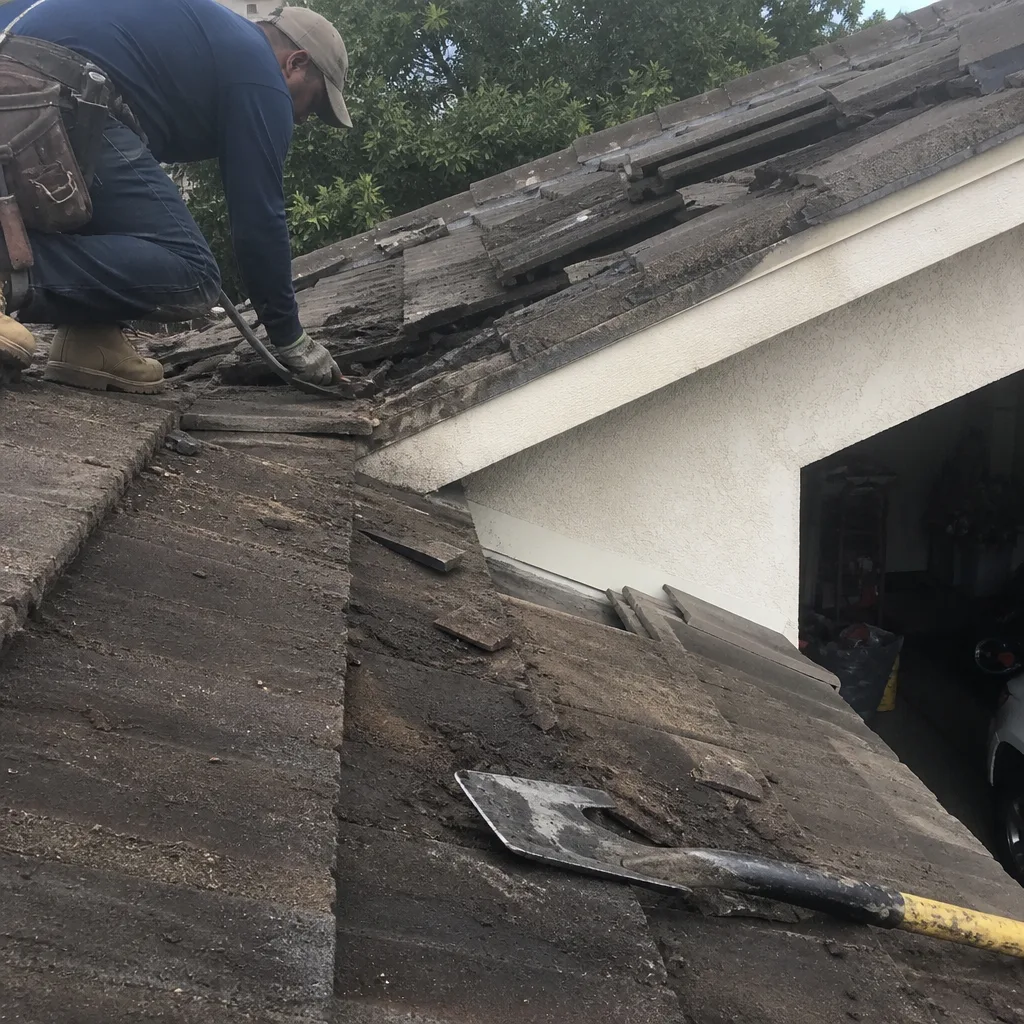 Before
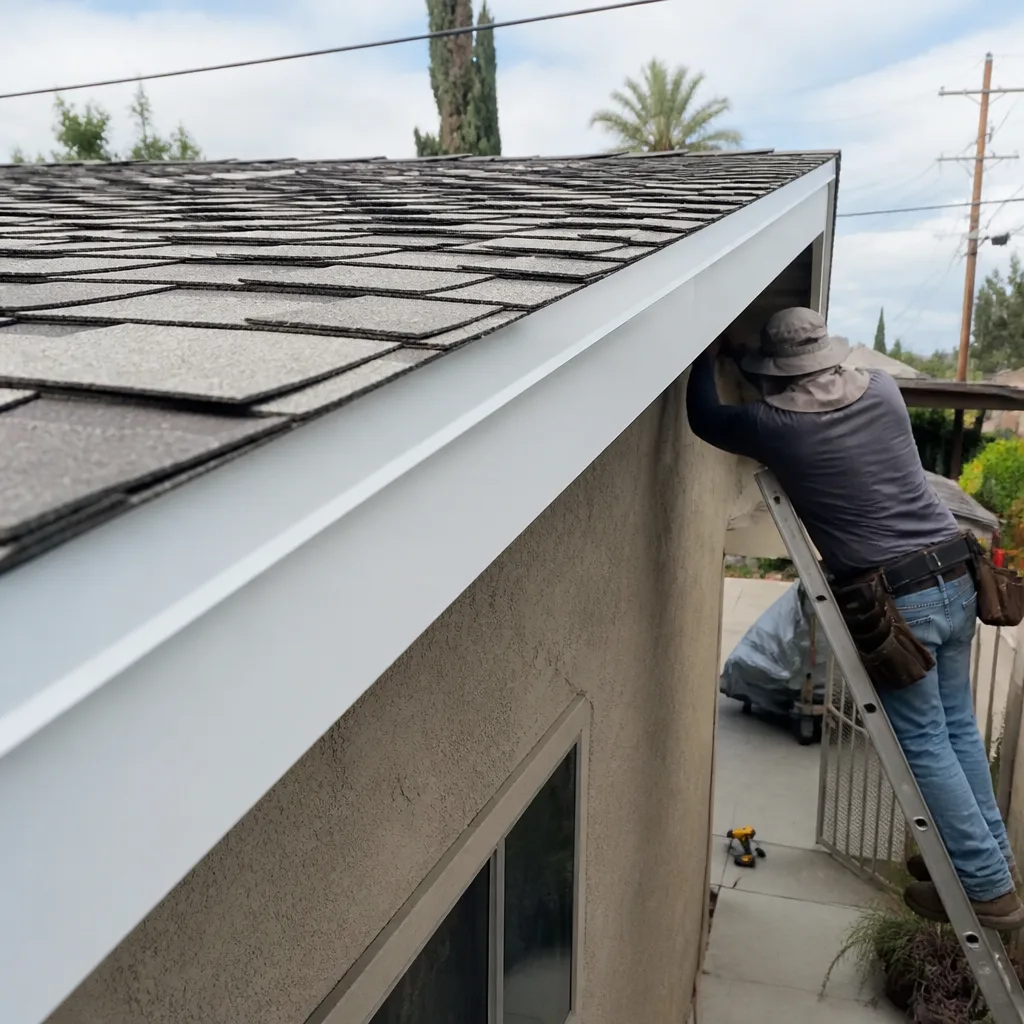 After
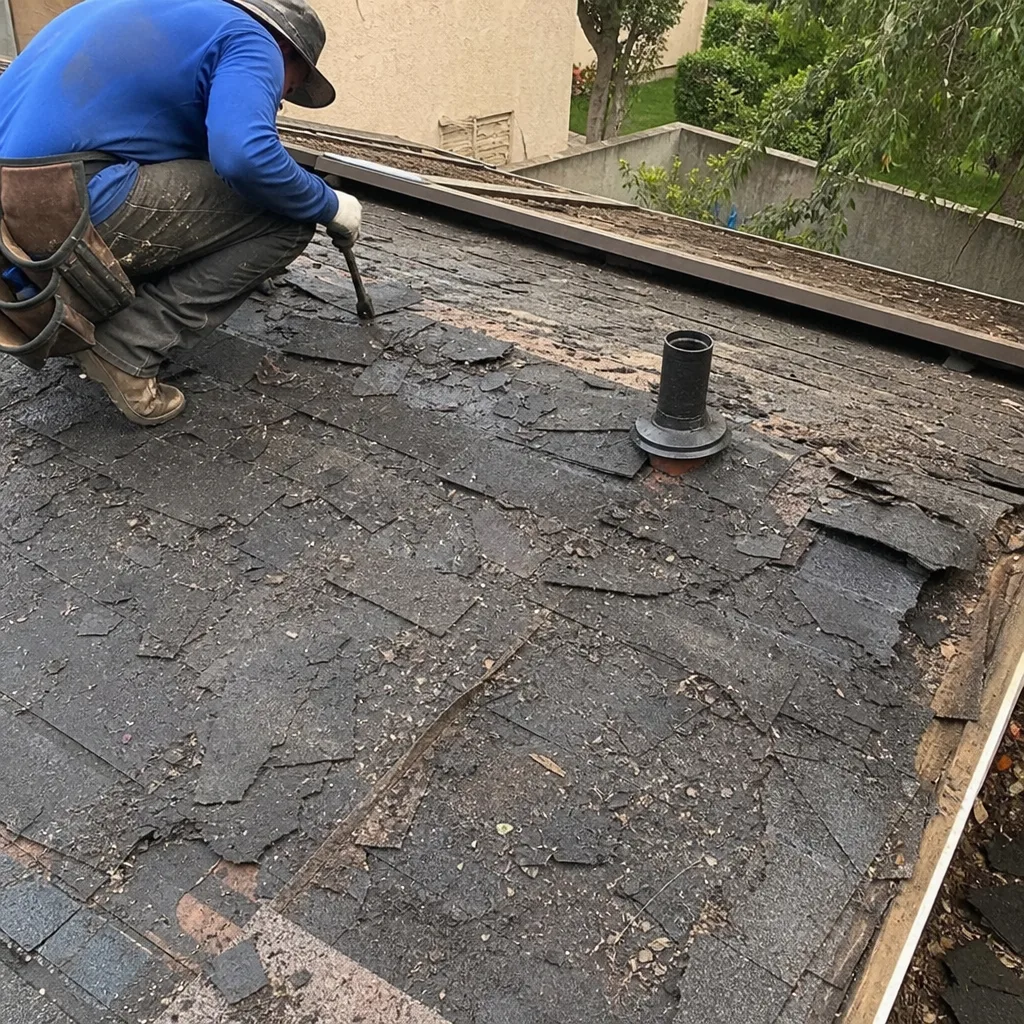 Before
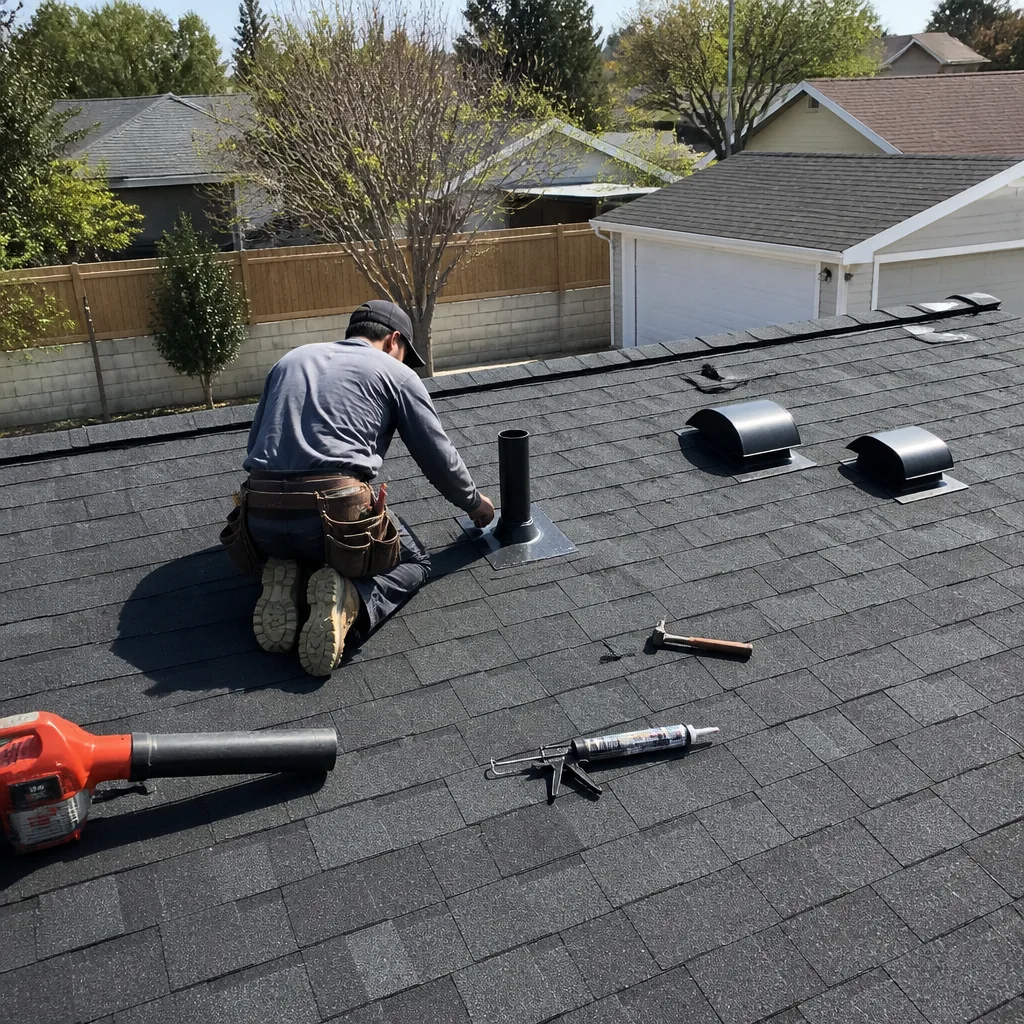 After