
Last updated October 30, 2026
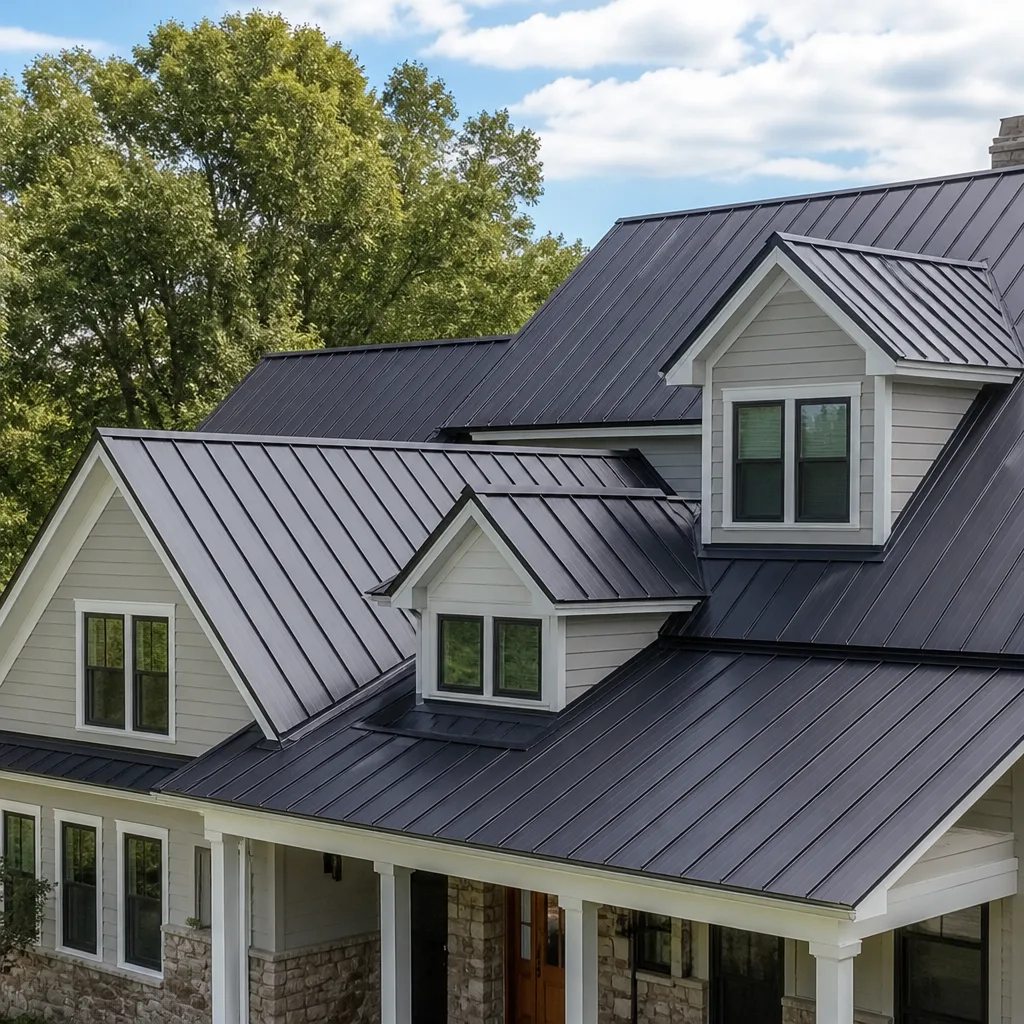 Metal roofing
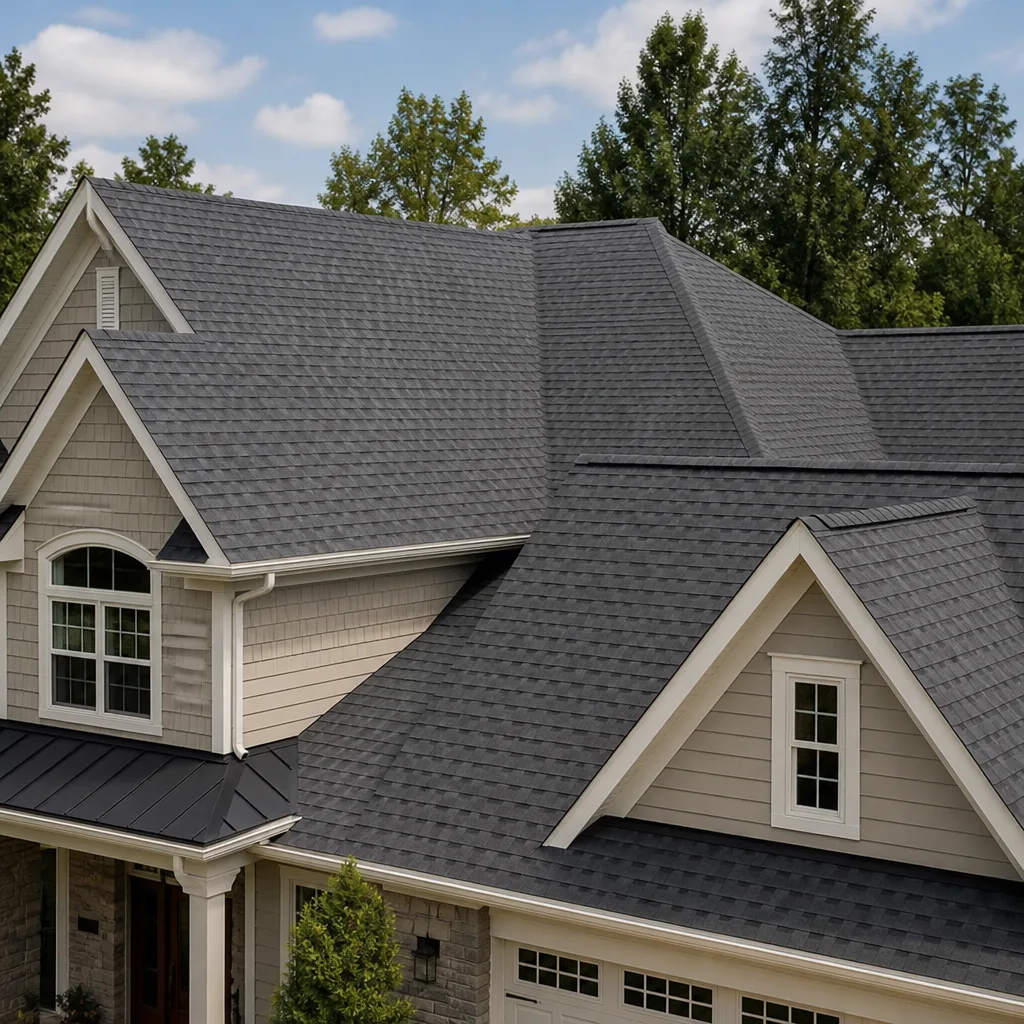 Architectural shingles
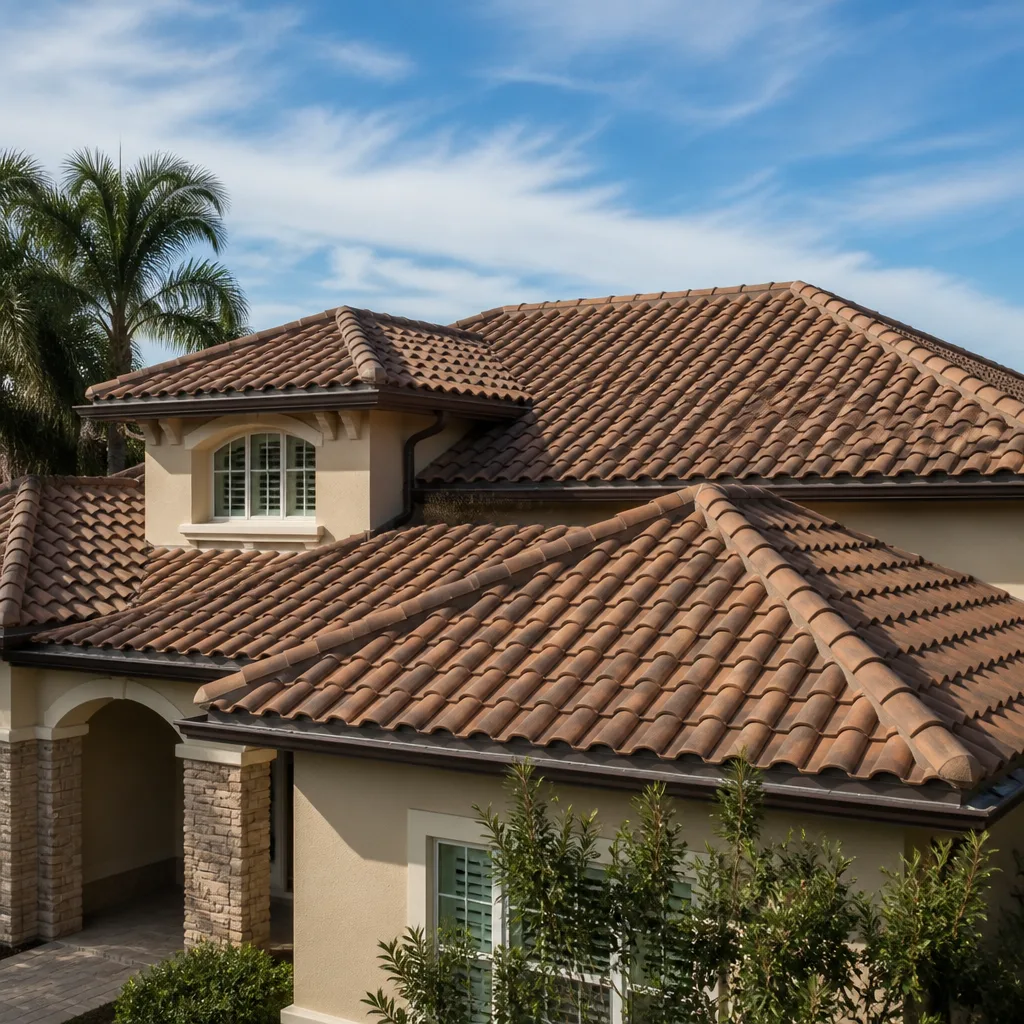 Tile roofing
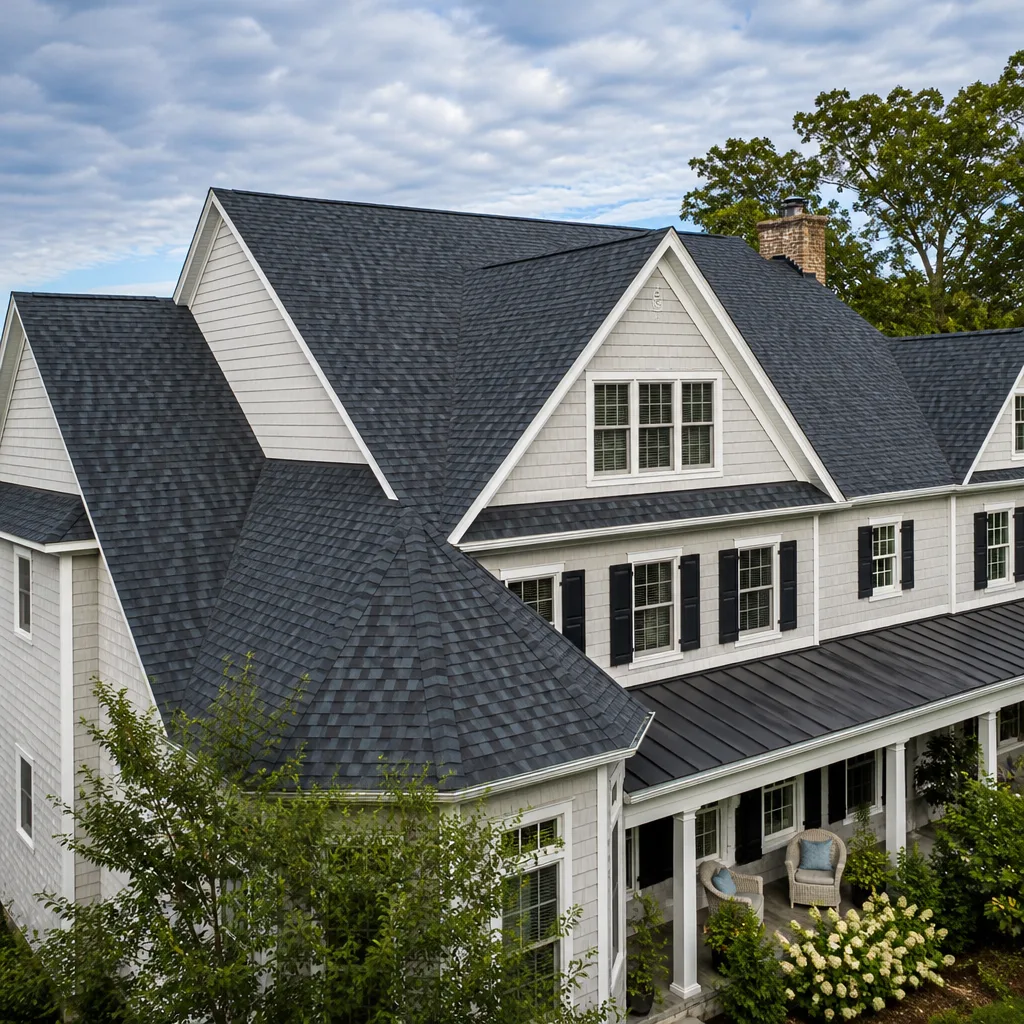 GAF
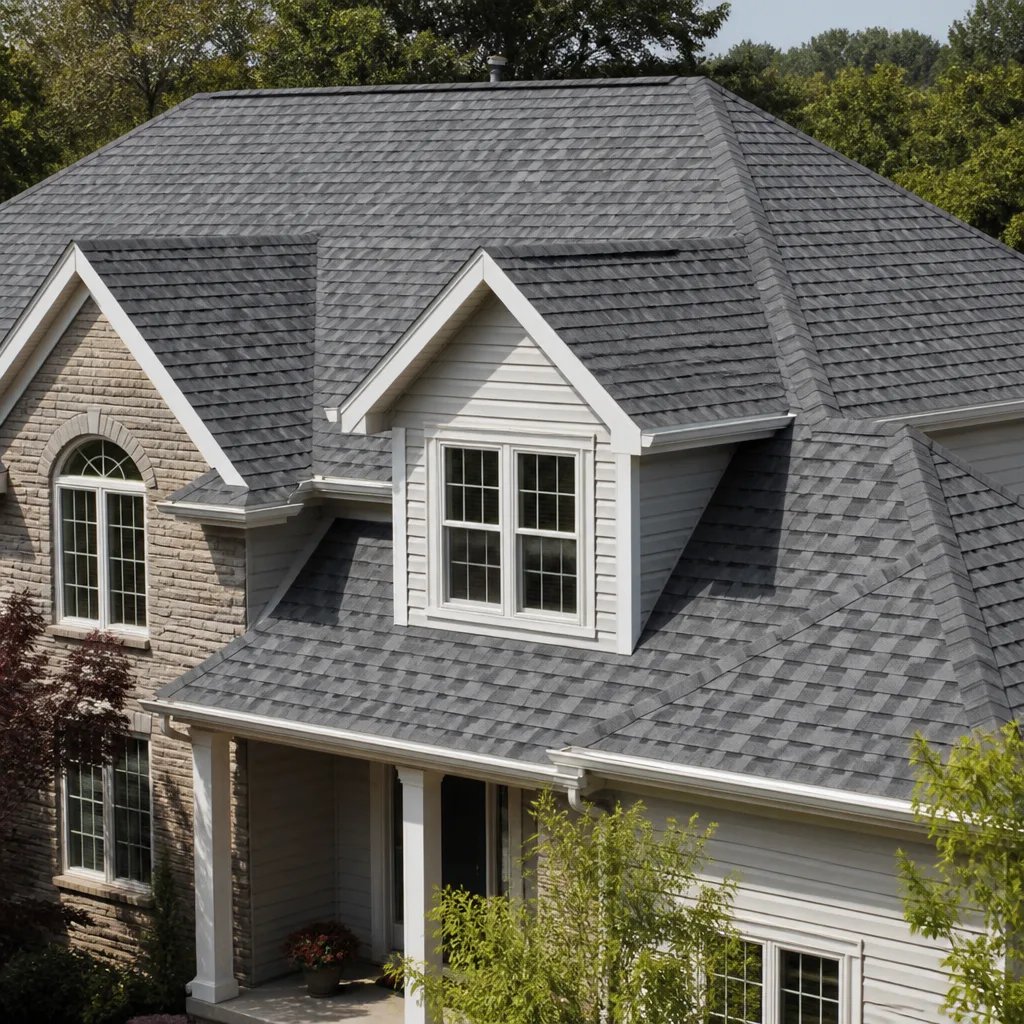 Owens Corning
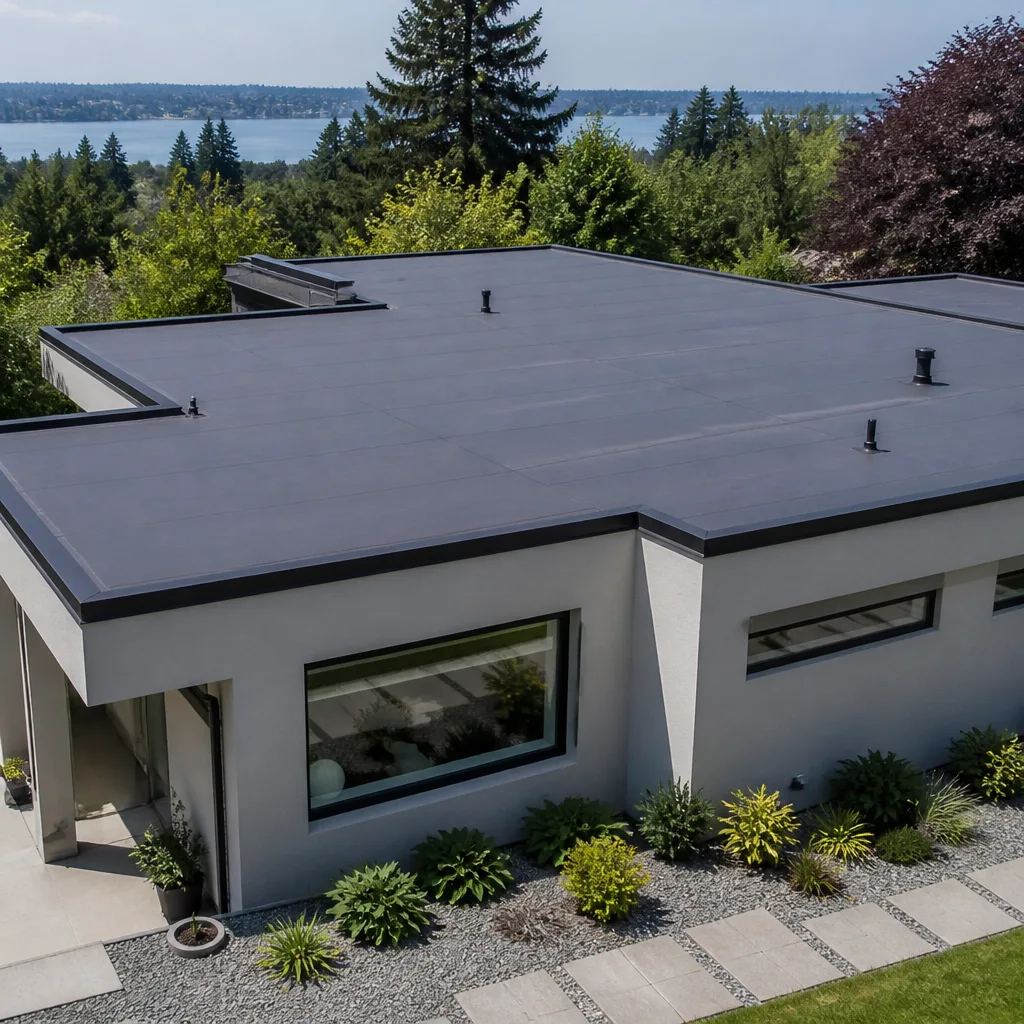 Flat & low-slope
Free roof inspection with deck photos before we talk money - GAF and Owens Corning certified installation
Roofing Cost Breakdown: The Garden Grove Homeowner’s Reference for 2026
Most Garden Grove homeowners don’t realize that a roofing estimate is a set of assumptions, not just a number. The cheapest estimate you receive is probably not including deck repair, a permit, or a dumpster. Three line items that together can add $2,500 to $4,500 to a job, and that every honest contractor either includes upfront or discovers mid-project. This guide—along with our Roofing Warning Signs: A Garden Grove Homeowner’s Reference Guide—breaks down every line item so you can compare estimates that are actually comparing the same scope, not estimates where the low bid simply pretends those line items don’t exist. By the end, you’ll know what a fair 2026 roof cost looks like in Garden Grove, where the hidden money goes, and how to make three different bids speak the same language.
Quick Answer
A full roof replacement in Garden Grove in 2026 typically runs between $14,000 and $28,000 for an average 1,800-square-foot single-family home, depending on shingle tier, deck condition, and roof complexity. Entry-level 3-tab shingles land on the low end around $12,000 to $16,000, architectural shingles run $16,000 to $24,000, and premium designer systems start around $24,000 and can exceed $35,000. Repairs are a different category entirely, usually ranging from $450 to $2,800 depending on whether you’re fixing flashing, a valley, or a section of underlayment and shingles.
Styles & brands we work with
Table of Contents
- The Line-Item Breakdown: Where Every Dollar Goes
- Shingle Tiers and What They Actually Cost Per Year
- Deck Condition: The Hidden Variable No Estimate Should Ignore
- Garden Grove and Orange County Permit Fees: Look Them Up Before You Sign
- How to Build a Fair Comparison Matrix When Three Estimates Don’t Match
- Repair vs. Replacement: When the Numbers Actually Justify Each
- Warranty Structure and Why It Changes the Real Price
- Hidden Costs and How to Ask About Them Directly
The Line-Item Breakdown: Where Every Dollar Goes
A roof estimate is a stack of assumptions about what’s under the shingles you can see. In Garden Grove, where summer heat bakes south-facing slopes and winter rain tests every seam, those assumptions matter more than the shingle price. Here’s what a properly itemized 2026 estimate should show for an average Garden Grove home with a straightforward 1,800-square-foot roof, tear-off included. These are ranges we see across the city, from tract homes near Lampson Avenue to the larger lots on the west side.
Tear-off and disposal: $2,200 to $4,500. This covers removing existing shingles, felt, and any layers beneath, plus the dumpster or haul-away. Single-layer tear-off sits at the low end. Two or three layers of old roofing, common on Garden Grove homes built before the 1990s that never had a full tear-off, pushes the high end because of added weight, time, and dump fees.
Decking inspection and repair: $0 to $3,500. This is the line item most estimates either omit or leave as a “if needed” note. Decking is the plywood or OSB beneath the shingles. If it’s rotted, cracked, or delaminated, it has to be replaced before new shingles go down. More on this below because it’s the single biggest source of mid-project cost surprises in Garden Grove.
Underlayment: $1,400 to $2,800. The water-resistant barrier between deck and shingles. Most Garden Grove roofs use synthetic underlayment now because it outlasts traditional felt and holds up better in the high heat that bakes roofs on streets like Buaro Street or along the 22 corridor.
Shingles: $4,500 to $12,000. The material cost depends entirely on tier. Entry 3-tab runs $100 to $140 per square (a square is 100 square feet). Architectural shingles from manufacturers like GAF, CertainTeed, or Owens Corning run $160 to $260 per square. Premium designer lines from Boral or Tamko can run $350 to $600 per square. An 1,800-square-foot roof is 18 squares, so the spread is real.
Flashing: $600 to $1,800. Flashing is the metal that keeps water out of valleys, chimneys, skylights, and wall joints. Replacing it during a reroof is non-negotiable. Some contractors reuse old flashing to shave cost. That’s a repair waiting to happen.
Ridge cap: $300 to $700. The shingles that run along the peaks and hips of the roof. They wear faster than field shingles because they’re exposed on two sides. Any honest estimate includes them as a separate line.
Permits and city fees: $250 to $600. Garden Grove uses Orange County permit schedules. We’ll break this down in its own section.
Labor: $5,000 to $9,000. Roofing labor in Orange County runs higher than most of the country because of cost of living, safety regulations, and the sheer physical toll of working on 120-degree slopes in August.
Here’s the honest math on a typical Garden Grove roof, using architectural shingles as the midpoint:
- Low estimate (bare-bones, no deck assumptions, cheapest materials): $13,700
- Mid-range estimate (architectural shingles, full tear-off, all flashing replaced, deck allowance included): $20,000 to $24,000
- High estimate (premium designer shingles, full deck replacement, upgraded underlayment, all permit and disposal fees explicit): $28,000 to $35,000
That spread is not a sign of contractor dishonesty. It’s a sign that different contractors are solving for different scopes. Our job here is to make those scopes visible.
Shingle Tiers and What They Actually Cost Per Year
The fastest way to understand shingle pricing in Garden Grove is to think in cost-per-year rather than cost-per-square. A cheap roof that fails in 14 years costs more per year than a mid-range roof that lasts 28 years. That’s not a sales pitch. It’s arithmetic.
Entry-level 3-tab shingles: These cost $100 to $140 per square in 2026. They’re flat, single-layer shingles with a lifespan of 12 to 18 years in Garden Grove’s climate. On a roof with heavy southern exposure, the sun degrades them faster. Total installed cost for an 18-square roof: $12,000 to $16,000. Cost per year assuming 15 years: roughly $800 to $1,100.
Mid-range architectural shingles: $160 to $260 per square. These are dimensional, multi-layered shingles from manufacturers like GAF, CertainTeed, and Owens Corning. They last 22 to 30 years, handle wind better, and hold up against the UV exposure that ages roofs prematurely in Orange County. Installed cost for the same 18-square roof: $16,000 to $24,000. Cost per year assuming 26 years: $620 to $920. The mid-range roof actually costs less per year than the cheap one, even though the sticker price is higher.
Premium designer shingles: $350 to $600 per square. This category includes lines from Boral and Tamko that mimic the look of slate or cedar shake. They last 30 to 50 years and carry stronger wind ratings. Installed cost: $24,000 to $35,000 or more. Cost per year assuming 40 years: $600 to $875. On a pure longevity math basis, premium shingles can beat architectural shingles, but the break-even only materializes if you stay in the home for more than 15 years.
What this means for a Garden Grove homeowner: the smart money is usually architectural shingles for a home you’ll own for 5 to 15 years, premium if you’re planning to stay for decades and want the strongest possible warranty. Entry-level 3-tab only makes sense for a rental property, a short-term flip, or a detached structure like a garage or ADU.
Deck Condition: The Hidden Variable No Estimate Should Ignore
Here’s the scenario we see constantly in Garden Grove. A homeowner gets three estimates. Two contractors quote a full reroof at $18,000. One quotes $21,000. The homeowner takes the cheaper bid. Mid-project, the crew tears off the old shingles and finds decking that’s water-damaged around the plumbing vents, the chimney, and both valleys. The replacement cost adds $2,800. Now the cheap bid is the expensive bid, and the homeowner feels misled.
The deck is the structural layer beneath your shingles, usually plywood or OSB. On Garden Grove homes built in the 1960s and 1970s, the original decking is often 3/8-inch plywood that has spent 50 years absorbing moisture from leaks, condensation, and Orange County’s winter rain cycles. The standard estimate assumes some deck replacement, but many contractors bury that assumption in a single line: “deck repair as needed.” That’s not a number. It’s an open tab.
When you’re evaluating estimates, ask one question: “How many sheets of decking does this estimate include?” A sheet is a 4×8 panel, typically covering 32 square feet. A 1,800-square-foot roof has about 56 to 60 sheets. Most mid-range estimates include 4 to 6 sheets of replacement as a standard allowance. If the estimate includes zero deck allowance, the contractor is either assuming the deck is perfect without having seen it, or planning to surprise you later.
How to make deck assumptions explicit:
- Ask the contractor which areas of the roof are most likely to have deck damage. Good answers: around plumbing boots, along valleys, near the chimney, under any visible sag or water stain.
- Ask whether the estimate includes a dollar amount per sheet for replacement, not just a flat “if needed” note. A typical 2026 Garden Grove rate is $75 to $120 per sheet installed.
- Ask what happens if they find more damage than the estimate covers. A reputable contractor stops work, shows you the damage, and gives you a written change order before proceeding. A less scrupulous one keeps nailing and hands you the bill at the end.
At Crown Line Roof Repair, we treat the inspection as the thing that tells you the truth before you sign. A Roof Inspection in Rowland Heights follows the same process we use in Garden Grove: we look at the deck from the attic side where accessible, check for softness or staining, and write the deck allowance into the estimate as a real number. When the tear-off happens, surprises are rare because the inspection already found what the shingles were hiding.
Garden Grove and Orange County Permit Fees: Look Them Up Before You Sign
Garden Grove roofing permits are among the most predictable line items in your estimate, yet many contractors list them as “TBD” or bury them under “administrative fees.” For a deeper look at requirements, see our Roofing Permits, Codes & Inspections in CA: What You Need to Know. You can actually look up the fee schedule yourself before you ever sign a contract. For a residential reroof, Garden Grove’s permit fee is calculated based on project valuation, with most single-family reroofs landing in the $250 to $600 range including plan check and inspection. The exact figure depends on the declared job value and the number of inspections required, which is typically one or two for a straightforward tear-off and reroof.
Why the permit matters beyond the fee: an unpermitted roof in Garden Grove creates problems when you sell the house. Buyers’ inspectors flag it, title companies ask questions, and you end up either paying for retroactive permitting or negotiating a credit. The permit also triggers a city inspection that verifies the work meets current Orange County building standards, including the nailing pattern, underlayment type, and ventilation requirements. That inspection is not a formality. It’s the thing that keeps a bad install from becoming a hidden defect.
The right way to handle permits:
- Ask the contractor if the permit fee is included in the estimate or charged separately.
- Ask who pulls the permit. The contractor should pull it in their name. If they ask you to pull it, that’s a red flag.
- Ask when the city inspection will happen and whether the contractor will be present for it.
Contractors who pressure you to skip the permit to “save a few hundred dollars” are not saving you money. They’re shifting risk onto you.
How to Build a Fair Comparison Matrix When Three Estimates Don’t Match
Three different contractors in Garden Grove will give you three different estimates, and rarely will those estimates list the same line items in the same way. One includes dumpster fees in tear-off. Another lists them separately. One quotes shingles by bundle. Another quotes them by square. You can’t compare them line by line unless you rebuild each estimate into the same format.
Here’s the process we recommend to every Garden Grove homeowner:
Step 1: Extract the scope, not the price. For each estimate, write down the answers to these questions: Does it include full tear-off or just overlay? What shingle brand and line? What underlayment type? How many deck sheets allowed? Is flashing included or extra? Are permits included? Is the dumpster included? What’s the warranty?
Step 2: Normalize the line items. Move every estimate into a simple table with the same rows: tear-off, disposal, deck repair, underlayment, shingles, flashing, ridge cap, permits, labor, warranty. If a line is missing from one estimate, mark it “not specified.” That’s not a neutral answer. It’s a cost that will show up later.
Step 3: Find the missing money. Any estimate that’s $4,000 or more below the other two is almost certainly missing a line item. The most common omissions in Garden Grove: deck allowance, dumpster fees, permit fees, and flashing replacement. Go back to the contractor and ask specifically about the missing lines before you compare numbers.
Step 4: Compare percentages, not just totals. A contractor who quotes $18,000 with a 5-year workmanship warranty and another who quotes $22,000 with a 25-year workmanship warranty are not giving you the same product. The cheaper estimate isn’t necessarily the better deal. It’s a shorter-term assumption about how long the roof will last.
Repair vs. Replacement: When the Numbers Actually Justify Each
A leak does not always mean a full replacement, as we explain in more guides & resources. In Garden Grove, where many homes were built in the 1960s and 1970s and have been reroofed once or twice since, the roof often has a mix of good years left on the field while specific components fail. The question is whether the failing components are isolated or systemic.
A repair makes sense when:
- The leak is traceable to a single flashing point, a valley, a pipe boot, or a handful of missing shingles from wind damage.
- The roof is less than 15 years old and the shingle granule loss is normal for its age.
- The decking in the affected area is dry and structurally sound.
- The shingle type is still manufactured and can be matched. Our team works across seven major manufacturers including GAF, CertainTeed, Owens Corning, IKO, Atlas, Tamko, and Boral, which means partial repairs on most Garden Grove roofs don’t require a visual mismatch or a full reroof.
A replacement makes sense when:
- The granules are gone across broad areas and the shingles are curling, cracking, or losing their dimensional shape.
- Leaks are appearing in multiple unrelated locations, indicating systemic underlayment failure.
- The decking shows widespread rot or delamination that requires removing most of the field anyway.
- The existing roof was an overlay (a second shingle layer installed over the original), and the next reroof must be a full tear-off to meet Garden Grove code.
In our experience, the honest answer for most Garden Grove homes built more than 25 years ago is usually a full replacement, but we’ve also repaired roofs that had ten solid years left in them and saved the homeowner tens of thousands by addressing the actual failure. The Roof Repair in Rowland Heights page explains how we approach diagnosis, but the principle is the same everywhere: fix what’s fixable first. Replacement only when the numbers justify it.
Warranty Structure and Why It Changes the Real Price
Two estimates can quote the same shingle brand at different prices because one is buying a different warranty structure. Manufacturer warranties are tied to system components: shingles, underlayment, ridge cap, and in some cases the ventilation. If your contractor installs a full system from one manufacturer, you get the manufacturer’s strongest warranty, which on architectural lines from brands like CertainTeed or GAF can run 25 to 50 years on materials and include some coverage on labor for the first several years.
But the manufacturer warranty only covers product defects. It does not cover installation errors. That’s where workmanship warranty comes in. This is the contractor’s own promise, and it varies wildly. Some Garden Grove roofers offer 2 to 5 years. Better contractors offer 10 to 25 years on workmanship. That difference has real value, and it should be a line in your comparison matrix.
The warranty question to ask is specific: “What exactly does the workmanship warranty cover, and for how many years?” If the answer is vague, the warranty isn’t worth the paper it’s printed on. A clear answer sounds like: “We warrant our installation against leaks and workmanship defects for X years, and we’ll repair at no cost if the failure is our fault.” That’s the kind of specificity that makes a higher estimate worth paying.
One more thing about warranties in Garden Grove specifically: if you have a partial repair done on a roof that’s still under a manufacturer warranty, using the wrong shingle or underlayment can void the rest of that warranty. Matching the existing system matters. That’s why we maintain certification across multiple manufacturers. The recommendation is driven by what your roof already has, not by what we’d prefer to sell. Roof Replacement in Rowland Heights work follows the same principle, but the warranty logic applies to any home in Orange County.
Hidden Costs and How to Ask About Them Directly
The difference between a $16,000 and a $24,000 estimate on the same Garden Grove house is rarely profit margin. It’s usually one of these five things, each of which you can uncover with a direct question.
1. Deck replacement allowance. As covered earlier, this is the biggest hidden cost. Ask: “How many sheets of decking are included in this estimate, and what’s the per-sheet cost if more is needed?”
2. Chimney and skylight flashing. Standard estimates often include basic step flashing but exclude custom work around chimneys, skylights, or wall intersections. Ask: “Does this estimate include new flashing at every penetration, including the chimney and skylight?”
3. Ventilation upgrades. Garden Grove homes often have inadequate attic ventilation, which shortens shingle life and voids some manufacturer warranties. If the estimate doesn’t mention ventilation, ask whether the existing vents are adequate or whether adding ridge vent or baffles is recommended.
4. Wood replacement beyond the deck. Fascia boards, rafter tails, and barge rafters sometimes rot alongside the deck. A good contractor checks these during the tear-off. Ask: “If the fascia or rafter tails are rotted, is that covered in this estimate or will it be a change order?”
5. Disposal and access. A two-story home with a steep pitch costs more to roof than a single-story ranch. A roof with limited truck access or a long carry from the street to the roof adds labor time. Ask: “Is the dumpster included, and does the labor figure account for the pitch and access of this specific roof?”
The goal isn’t to negotiate every line down. It’s to know what you’re signing. A contractor who answers these questions clearly is one you can trust with the roof over your family. Our Crown Line Roof Repair home page lays out how we structure estimates, and the approach is the same whether you’re in Garden Grove or calling about a neighbor’s roof in another city.
Common Mistakes to Avoid
- Choosing the lowest bid without asking what it omits. A Garden Grove estimate that undercuts the field by 20% or more is almost always missing deck allowance, dump fees, permits, or flashing. Ask what’s not included before you celebrate the savings.
- Treating a roof overlay as equal to a tear-off. Garden Grove code allows overlays in limited cases, but a second layer of shingles shortens the life of the new roof and hides deck damage underneath. If one estimate is an overlay and another is a tear-off, you’re comparing different projects.
- Ignoring the permit requirement. Unpermitted roof work in Garden Grove creates problems at the inspection and sale stages. The permit fee is predictable and small relative to the cost of retroactive permitting later.
- Focusing only on shingle brand and ignoring underlayment. The shingles are the visible layer, but the underlayment is what actually keeps water out. Synthetic underlayment costs more than felt but lasts decades longer in Garden Grove’s climate.
- Replacing a roof without addressing ventilation. An overheated attic shortens shingle life and can void manufacturer warranties. Ask whether the estimate includes a ventilation assessment.
- Assuming a higher price means a better roof. Some contractors charge a premium without adding value. The way to tell is the itemized estimate. Specifics are the tell. Vagueness is the warning.
- Skipping the inspection before signing. A Roof Inspection in Rowland Heights works the same as one in Garden Grove: it gives you a diagnostic document you can use to compare bids. Without it, you’re making the largest home repair decision of the decade on guesses.
See the difference
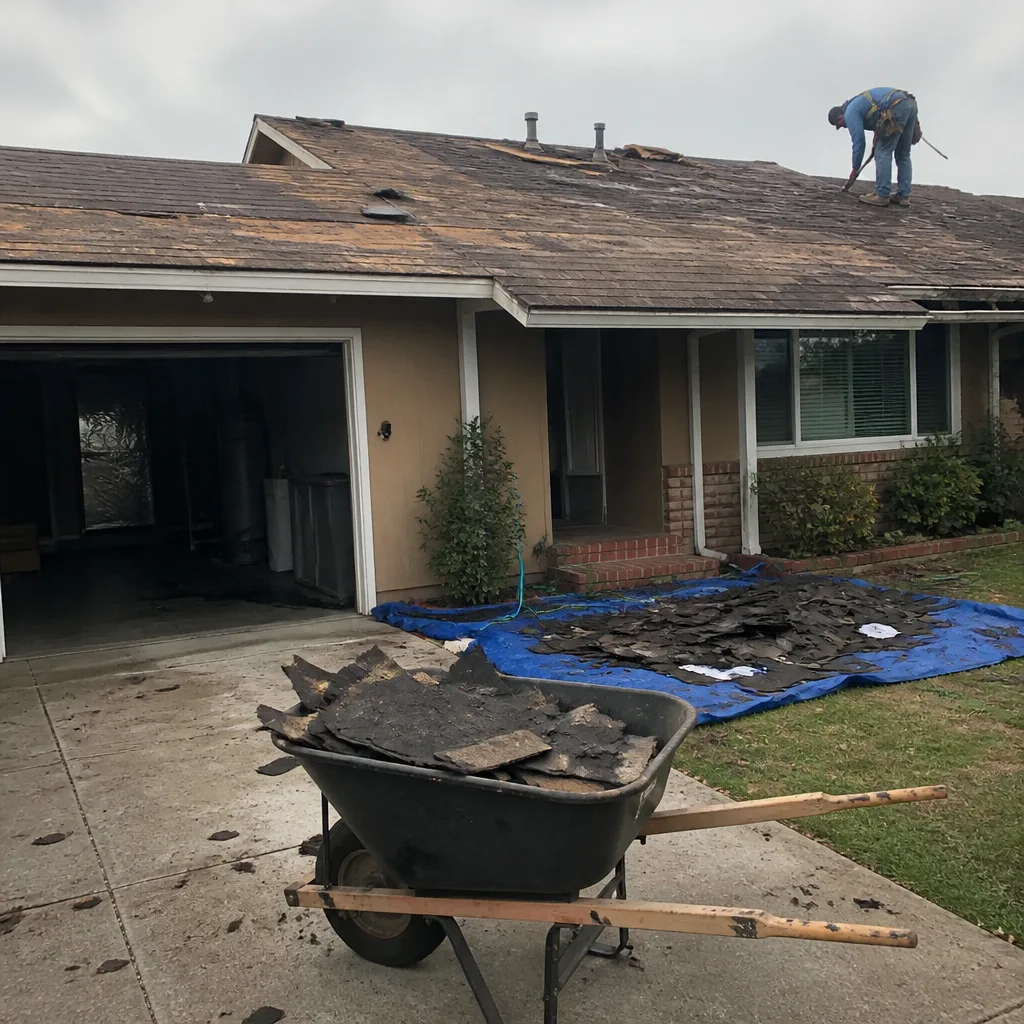 Before
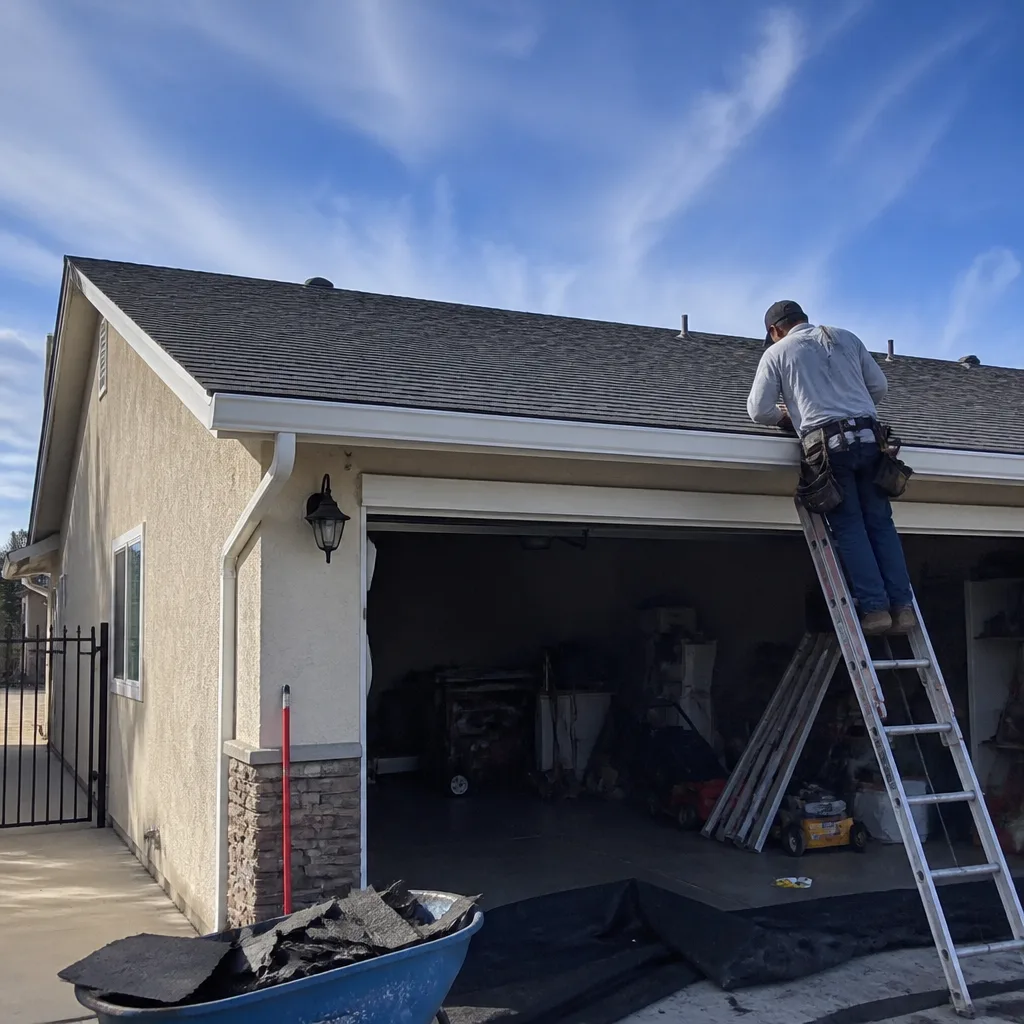 After
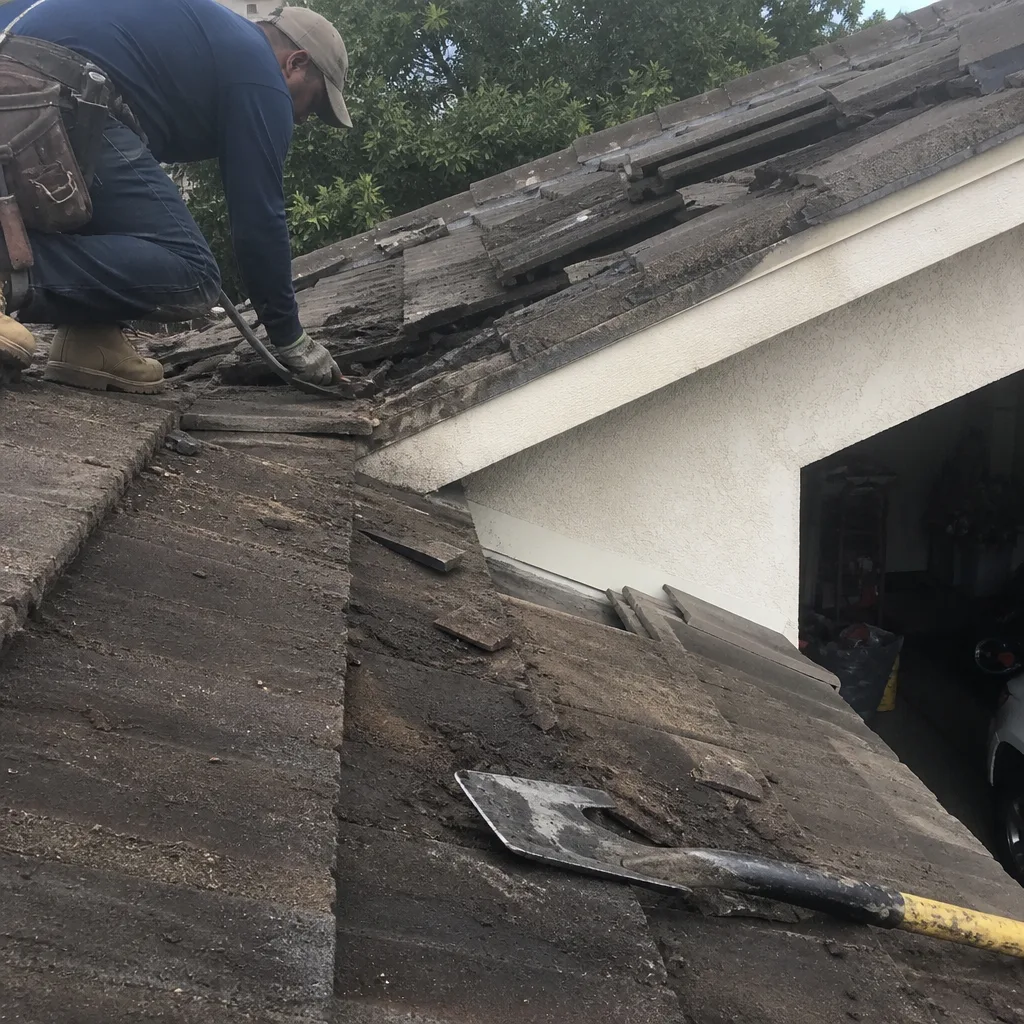 Before
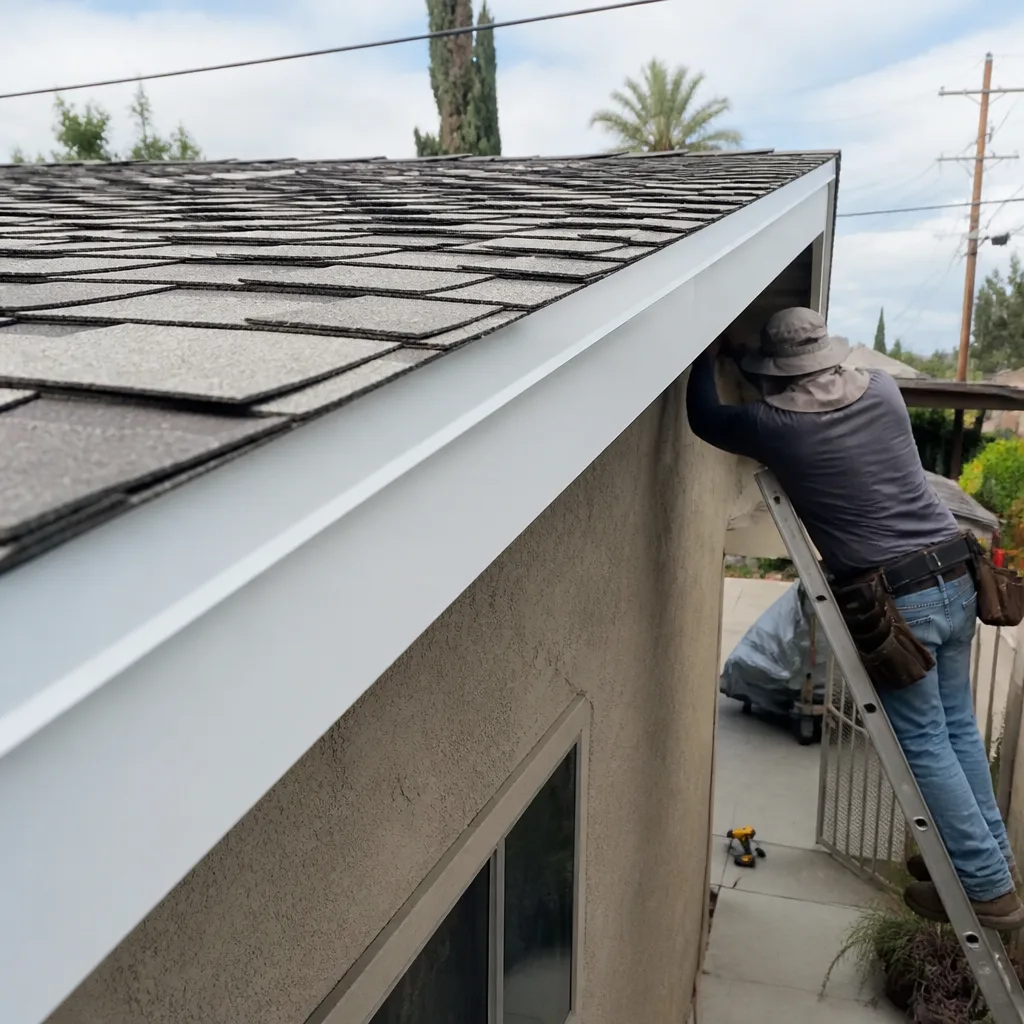 After
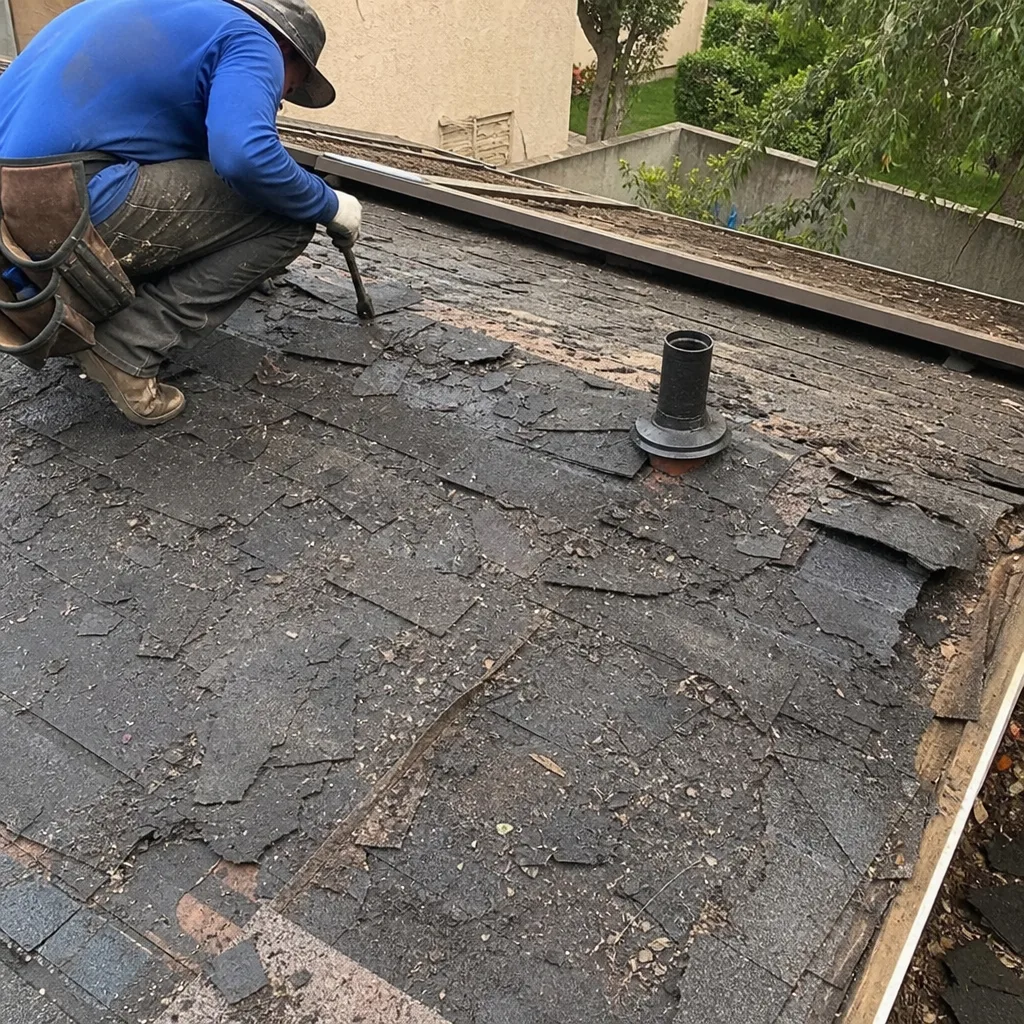 Before
 After
When to Call a Professional
If you’ve noticed water stains on a ceiling, granule buildup in your gutters, shingles curled at the edges, or daylight visible through the attic boards, you need a professional assessment. These are the early signs of a system that’s failing from the deck up, and every month of delay adds cost. If your roof is over 20 years old and you’re seeing multiple of these signs, the conversation is likely one about replacement rather than repair. If a single storm lifted a handful of shingles and the rest of the roof is sound, a targeted repair is the right first move. Crown Line Roof Repair offers free estimates in Garden Grove – call (844) 966-3891 and we’ll tell you what’s actually wrong, what it costs to fix, and whether replacement makes sense. No pressure, just a straight answer.
Frequently Asked Questions
A full roof replacement in Garden Grove in 2026 typically runs $14,000 to $28,000 for an average 1,800-square-foot home, with architectural shingles landing around $20,000 to $24,000. The final number depends on deck condition, shingle tier, roof pitch, and whether the estimate includes permits and disposal. Call (844) 966-3891 for a free estimate on your specific roof.
Garden Grove roofing permits for a single-family reroof typically run $250 to $600 including plan check and inspection, calculated based on project valuation. The contractor should pull the permit in their name and include the fee in the estimate. If a contractor suggests skipping the permit, treat that as a warning sign.
A $4,000 gap on the same home usually comes down to omitted line items: deck replacement allowance, dumpster fees, permit fees, or flashing replacement. The cheaper estimate is not necessarily dishonest, but it is solving for a smaller scope. Normalize the estimates line by line before comparing totals.
Architectural shingles from manufacturers like CertainTeed, GAF, or Owens Corning typically last 22 to 30 years in Garden Grove, with south-facing slopes at the lower end due to UV exposure. 3-tab shingles last 12 to 18 years, and premium designer lines from Boral or Tamko can last 30 to 50 years.
Repair makes sense when the problem is isolated to flashing, a valley, a pipe boot, or wind-damaged shingles on a roof less than 15 years old. Replacement makes sense when granule loss is widespread, leaks appear in multiple locations, or the decking shows systemic rot. A standalone inspection gives you the diagnostic answer before you commit to either path.
Deck replacement is the most commonly underestimated line item. Most homes built before the 1990s in Garden Grove have decking that has absorbed decades of moisture around vents, valleys, and chimneys. An estimate with no deck allowance is not solving for the roof you actually have. Ask how many sheets are included before you sign.
The Bottom Line
A fair 2026 roof cost in Garden Grove is the sum of explicit line items: tear-off, deck allowance, underlayment, shingles matched to the home’s existing system where possible, flashing, ridge cap, permits, and labor that accounts for the roof’s actual pitch and access. The cheapest estimate is rarely the best value, and the most expensive is rarely the best roof. The difference is transparency. Ask for an itemized scope, compare the same rows across every bid, and treat vague language as a cost that will surface later. A roof is a 25-year decision. The estimate should look like one.
Written by the team at Crown Line Roof Repair, serving Garden Grove since 2015.