
Last updated October 30, 2026
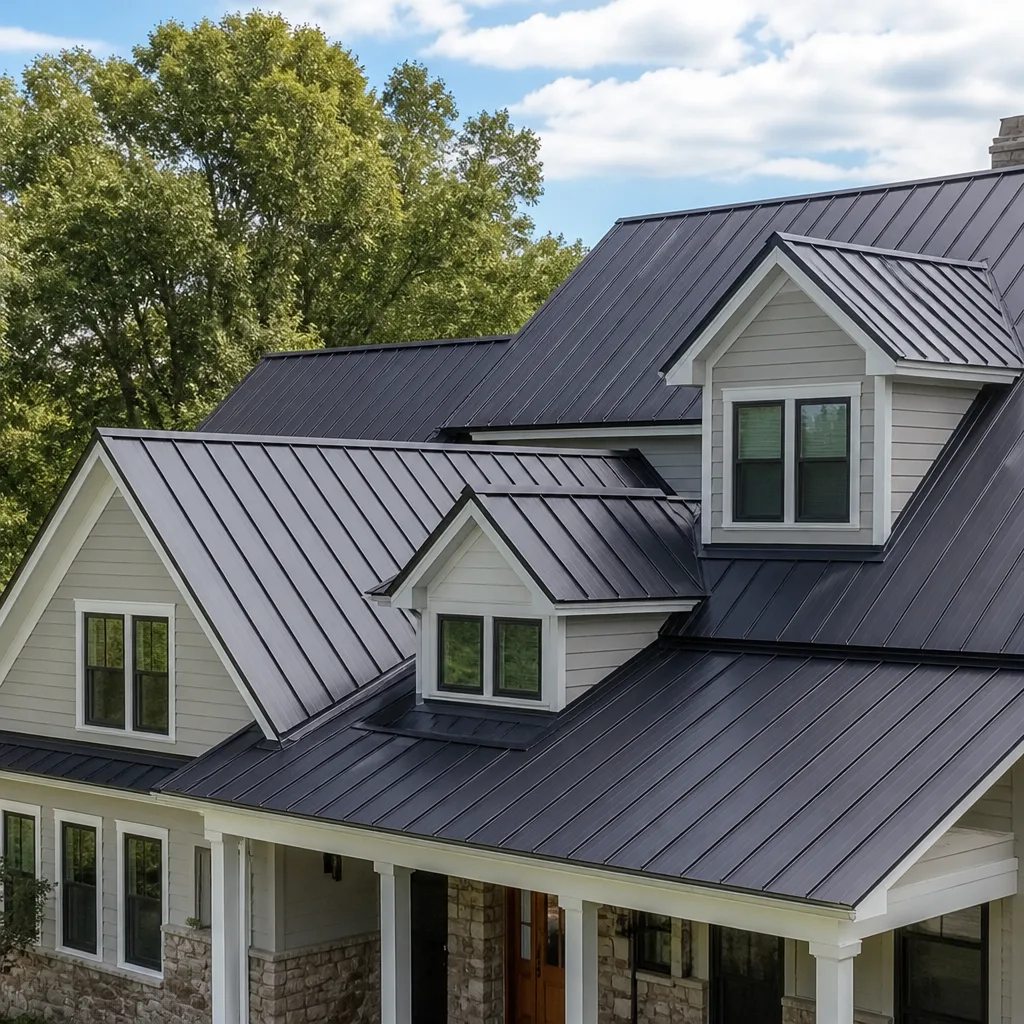 Metal roofing
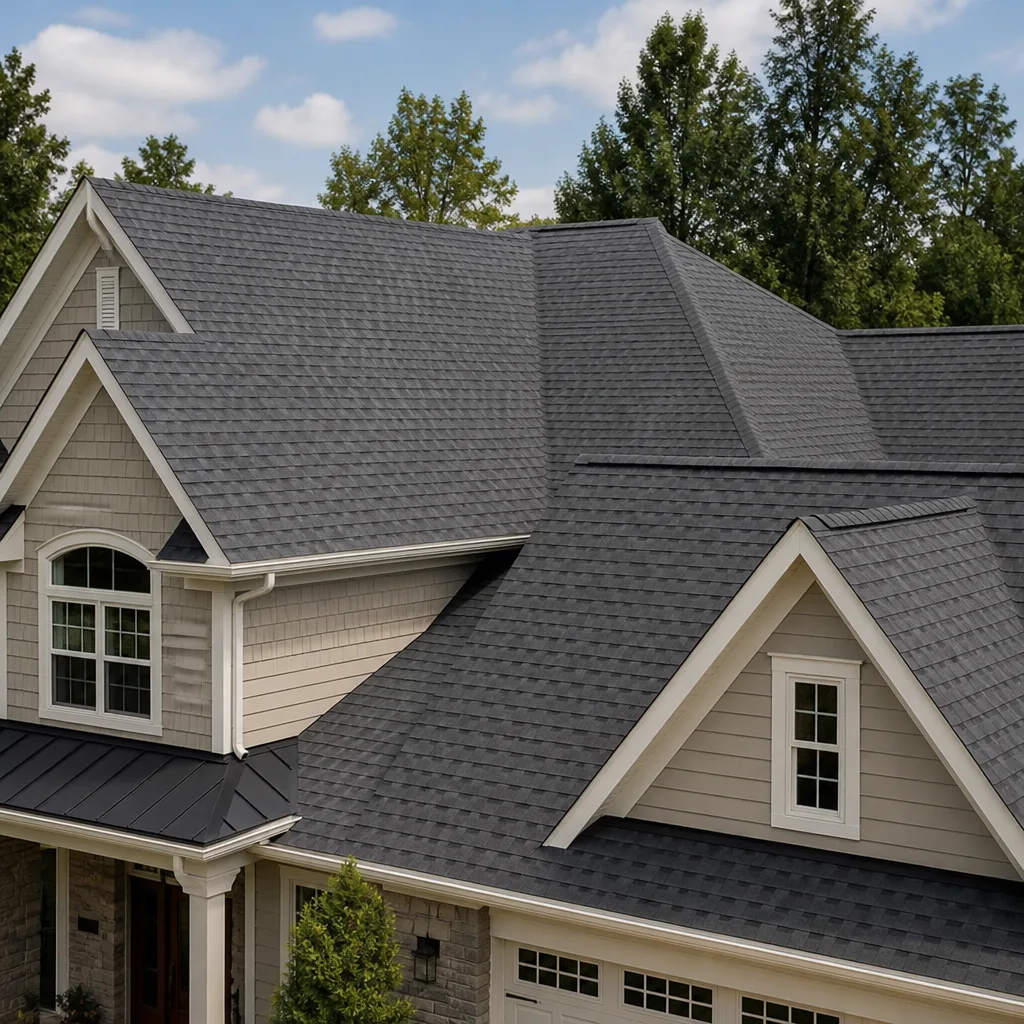 Architectural shingles
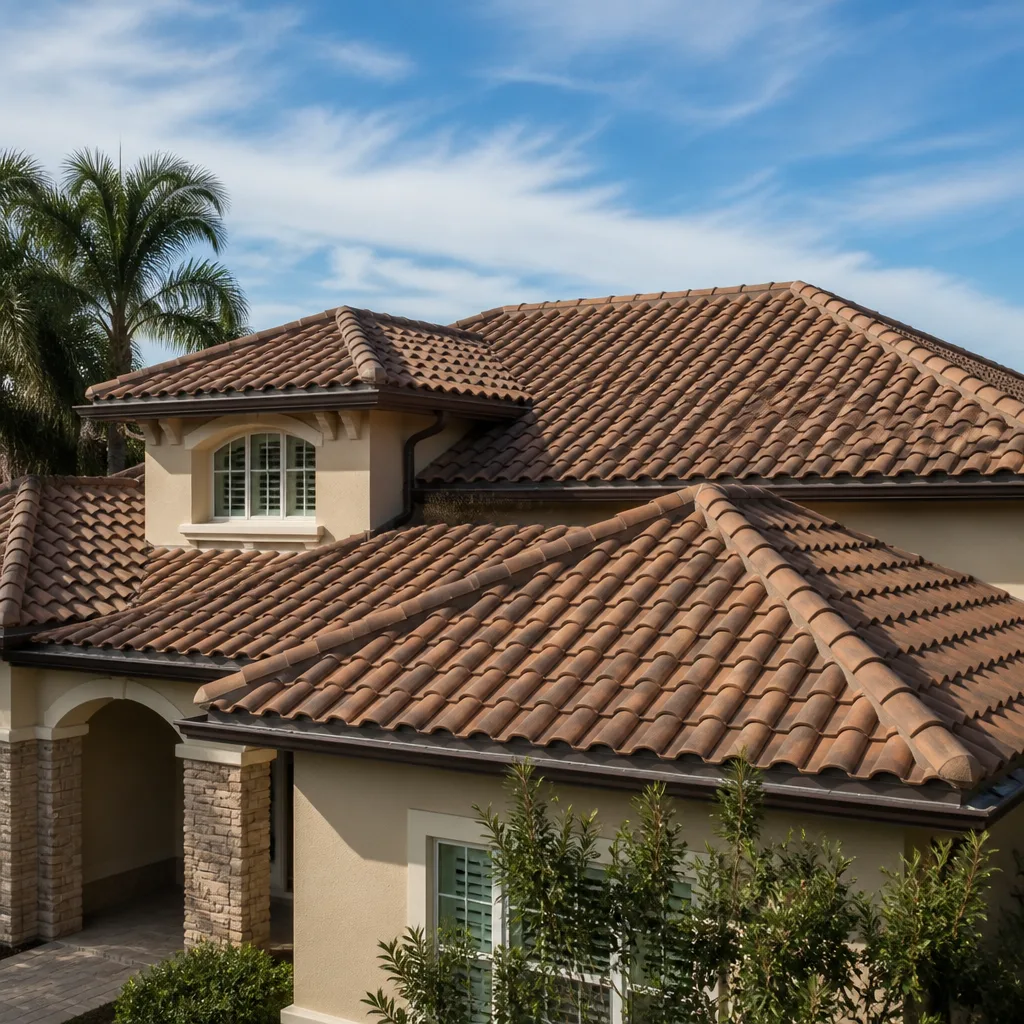 Tile roofing
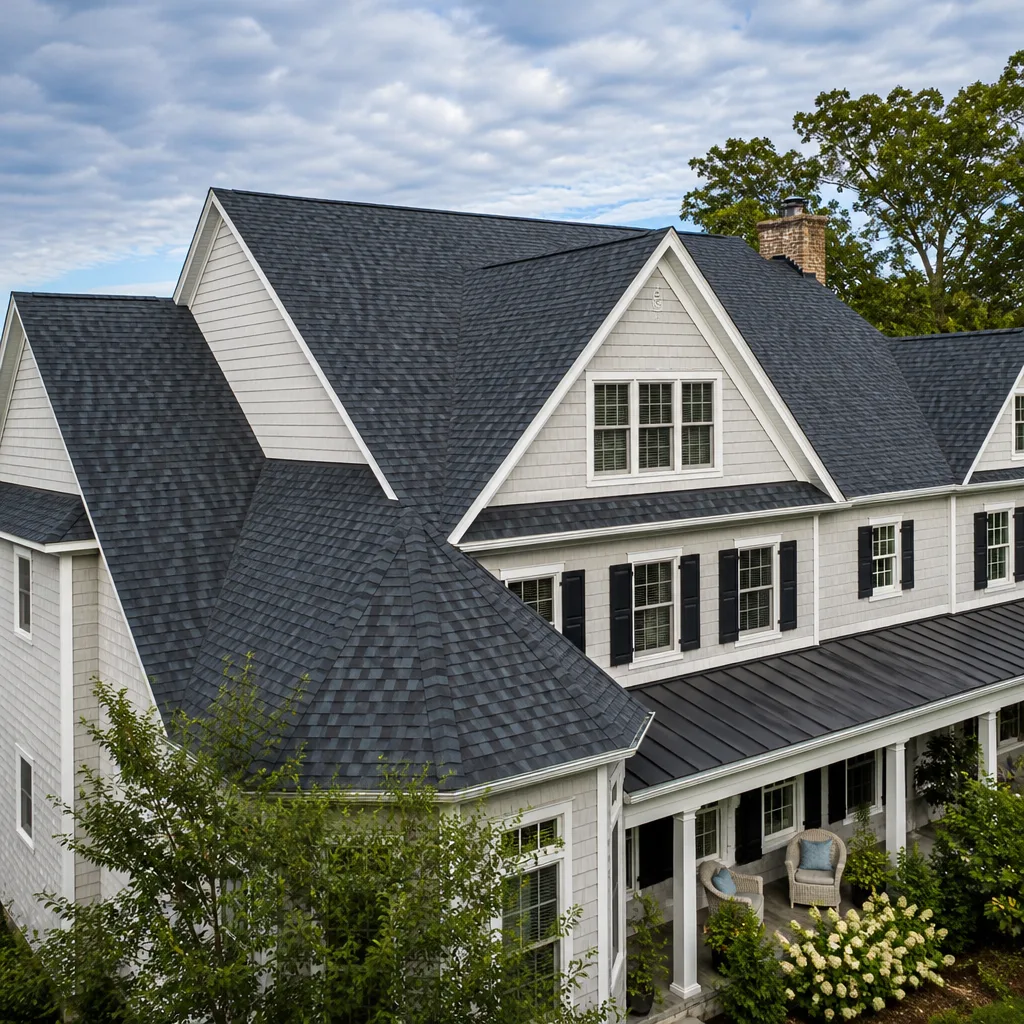 GAF
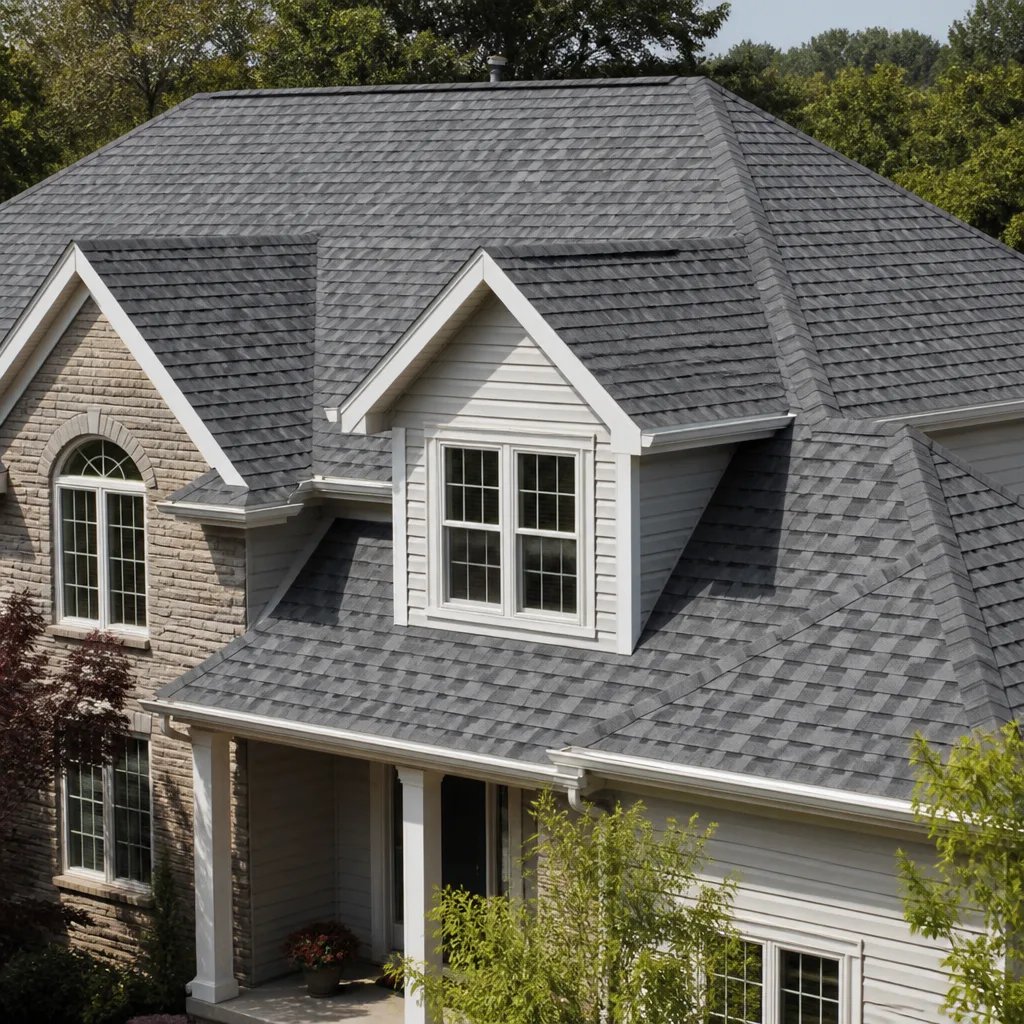 Owens Corning
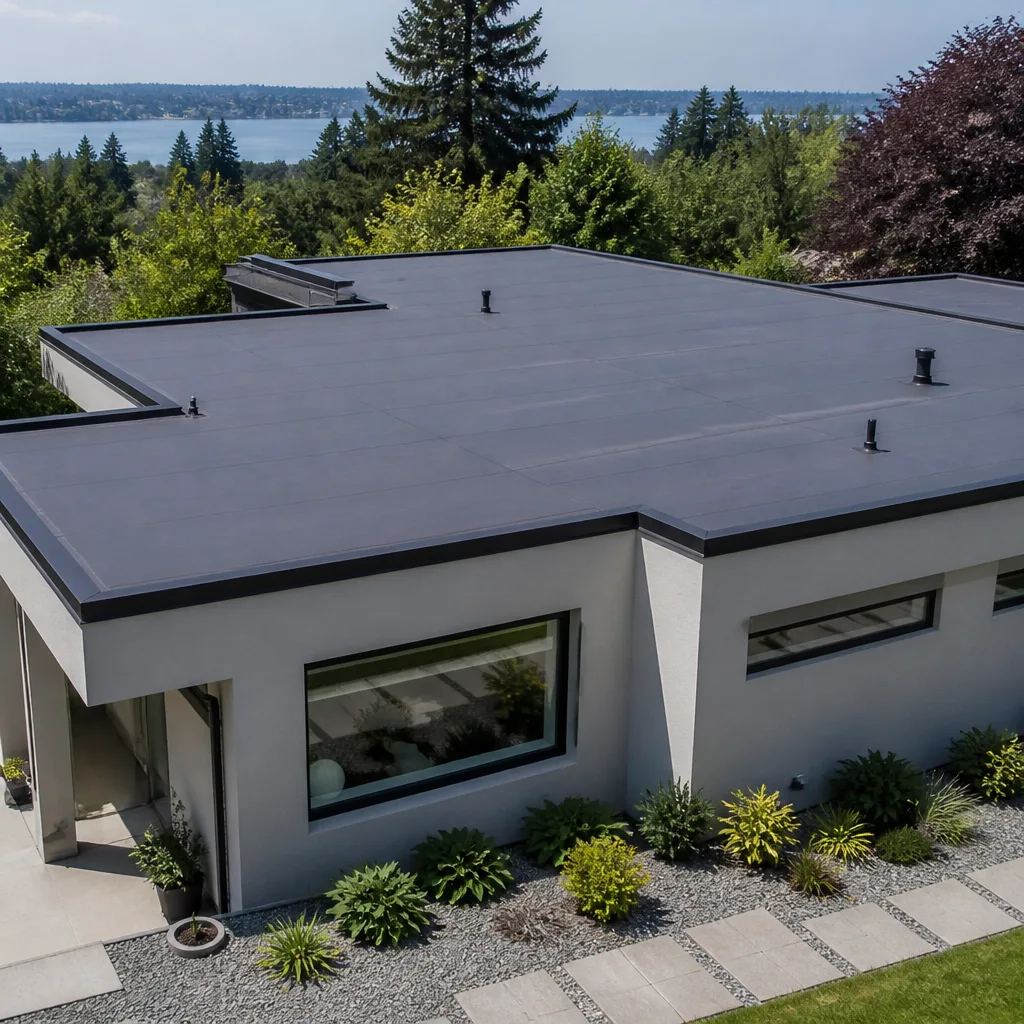 Flat & low-slope
Free roof inspection with deck photos before we talk money - GAF and Owens Corning certified installation
DIY vs Professional Roofing: The Garden Grove Homeowner’s Decision Guide
Most roofing guides start with the wrong question. They ask whether you can do it yourself when the question that actually matters is whether you should, given what’s at stake in Garden Grove specifically. California lets homeowners pull their own permits for roofing work on owner-occupied single-family homes. What the state doesn’t tell you is that your shingle manufacturer’s warranty probably disappears the moment an uncertified installer touches the roof, and your homeowners insurance carrier may deny a water-damage claim if the leak traces back to an unpermitted repair. This guide walks through the legal, financial, and practical line between DIY and professional roofing in Garden Grove so you can make a decision based on facts, not YouTube confidence, and points you to more guides & resources for ongoing maintenance.
Quick Answer
For most Garden Grove homeowners, DIY roofing is appropriate for surface-level tasks like clearing gutters, caulking minor flashing gaps, and documenting shingle condition, but professional work is the safer choice for anything involving underlayment, structural decking, valleys, penetrations, or full replacement. California law allows homeowner self-performance on permitted projects, but Orange County inspection requirements and manufacturer warranty fine print create real financial risk for unlicensed work. The decision isn’t DIY versus professional as a philosophy. It’s task-by-task, and the line is clearer than most guides admit—see our Roof Repair Troubleshooting: Common Problems and How to Fix Them for help identifying what you’re dealing with.
Styles & brands we work with
Table of Contents
- What California Law Actually Says About DIY Roofing
- Orange County Permits and Inspections: What Garden Grove Requires
- Manufacturer Warranty Void Conditions: The Fine Print DIY Guides Skip
- Tasks That Are Genuinely Homeowner-Appropriate
- Tasks That Require a Licensed Contractor
- The Real Cost Comparison: DIY Materials vs. Professional Total
- Insurance Implications: How DIY Repairs Affect Claims
What California Law Actually Says About DIY Roofing
California Business and Professions Code Section 7048 contains a homeowner exemption that permits an owner-builder to perform work on their own residence without holding a contractor’s license. This applies to owner-occupied, single-family homes, and it covers roofing work including full replacement. The law requires that the homeowner actually live in the home and perform the work themselves, or hire workers under their own direction as an owner-builder. You cannot hire an unlicensed handyman to act as your contractor and still claim the exemption.
What the exemption does not do is exempt you from building codes, permit requirements, or the legal obligation to disclose unpermitted work when you sell the home. Garden Grove sits within Orange County’s jurisdiction for building permits, and the county enforces California Residential Code Chapter 9, which governs roof assemblies. If you install a roof that doesn’t meet current code, the liability is yours alone. A licensed contractor carries the legal responsibility for code compliance. An owner-builder carries it personally.
There’s also a practical consideration most guides overlook. The owner-builder exemption assumes you have the competence to perform the work correctly. If a subsequent buyer discovers substandard roofing work, they can pursue legal action against you for failure to disclose known defects, even if years have passed. In Garden Grove’s competitive housing market, where many homes were built in the 1960s and 1970s and have undergone multiple roof systems, buyers and inspectors pay close attention to roofing quality. A DIY roof that looks amateurish can cost you at resale far more than the labor you saved.
Key Takeaways: California Law
- Owner-builder exemption allows DIY roofing on your primary residence, but you assume full legal liability for code compliance.
- The exemption does not waive permit requirements in Orange County or Garden Grove.
- Unpermitted work must be disclosed at sale, and defective DIY work can expose you to legal claims from future buyers.
- Hiring an unlicensed worker to do contractor-level work voids the exemption, not the requirement.
Orange County Permits and Inspections: What Garden Grove Requires
Orange County requires a building permit for roof replacement when the project includes structural changes, new sheathing, or replacement of more than a specified percentage of the roof covering. Minor repairs that don’t alter the structure, such as replacing a few damaged shingles or resealing a small flashing area, typically fall under exempt work. The distinction matters because if you perform work that requires a permit and skip it, the county can issue a stop-work order and require you to expose the completed work for inspection, which often means tearing off finished roofing to show the underlayment.
For permitted roof work in Garden Grove, the county requires at least two inspections: one after the old roof is stripped and new underlayment is installed, and a final inspection after the roofing material is complete. If you’re doing this as an owner-builder, you schedule those inspections yourself and you must be present. A licensed contractor manages this process as part of the job. The inspection itself verifies that fasteners, underlayment, flashing, and ventilation meet current code requirements.
Here’s the specific sequence for a permitted roof replacement in Garden Grove, as handled by Orange County:
- Submit a permit application with roof plan details, including material type, slope, and ventilation calculations.
- Pay permit fees, which are calculated based on project valuation and typically range from several hundred to over a thousand dollars for a full replacement.
- Strip the existing roof and replace any damaged decking before the first inspection.
- Call for a first inspection after underlayment is installed but before shingles go on. This inspection catches decking problems and underlayment errors while they’re still visible.
- Install the roofing material and call for the final inspection.
- Receive final approval, which becomes part of the home’s permanent permit record.
Miss any of these steps as an owner-builder, and you own the correction. We’ve seen Garden Grove homeowners tear off perfectly good shingle work because the underlayment inspection was skipped and the county wouldn’t sign off without seeing it. That’s a real cost that never appears in DIY material estimates.
Manufacturer Warranty Void Conditions: The Fine Print DIY Guides Skip
Every major shingle manufacturer writes its warranty terms with one assumption: professional installation. GAF, for example, requires that shingles be installed by a contractor who meets its certification standards for the strongest warranty coverage to apply. CertainTeed and Owens Corning publish similar certified-installer requirements. When a homeowner installs shingles themselves without manufacturer certification documentation, the warranty typically reverts to a limited material-only coverage that excludes labor, excludes installation errors, and in many cases applies only a prorated material credit based on the shingle’s remaining expected life.
The practical consequence is this: if you install your own roof and a manufacturing defect appears, the manufacturer may offer you a fraction of the shingle’s value with no labor coverage. If a certified contractor installs the same roof, the manufacturer backs both materials and workmanship through the contractor’s certification path. The shingle itself costs the same either way. The warranty protection is dramatically different.
Here’s what warranty language typically requires for full coverage across major brands:
- Certified installer documentation: GAF requires installation by a GAF-certified contractor for the Golden Pledge or Silver Pledge warranty tiers. Without this, coverage drops to a basic material warranty.
- Complete system installation: Atlas and Tamko warranties reference full-system installation including their branded underlayment, starter strips, and ridge cap. A partial DIY installation using mismatched components voids the system warranty.
- Ventilation compliance: Boral and others require that attic ventilation meet current code and manufacturer specs. In Garden Grove’s climate, where summer attic temperatures routinely exceed 140 degrees, inadequate ventilation is both a warranty issue and a shingle lifespan issue.
- Professional repair documentation: If a roof is repaired by a homeowner and the repair fails, the manufacturer will not cover the resulting damage. The repair is considered an installation error, which warranty language explicitly excludes.
Crown Line Roof Repair holds certifications across seven major manufacturers precisely because warranty continuity matters in Garden Grove. When we repair a roof with GAF shingles, the repair is documented with GAF-compatible materials and methods so the original warranty isn’t compromised. That’s a specific, verifiable benefit of professional work that most DIY cost comparisons never price in.
Tasks That Are Genuinely Homeowner-Appropriate
We’re not here to tell you that every roofing task requires a contractor. Some tasks are safe, legal, and genuinely appropriate for a Garden Grove homeowner, especially if you’re comfortable on a ladder and understand basic roof safety—tasks you can track with our Roof Repair Maintenance Checklist for Garden Grove Homeowners. The key distinction is whether the task affects the roof’s water-shedding integrity or is purely observational and maintenance-level.
Here’s a realistic list of tasks you can handle yourself:
- Gutter clearing and inspection: Garden Grove’s mature tree canopy means gutters fill with leaves and debris on a seasonal cycle. Clearing them yourself is safe with a stable ladder and a partner, and it prevents the most common type of water intrusion we see: backup under the fascia.
- Surface inspection and documentation: Walking a low-slope roof or viewing from a ladder with binoculars to photograph shingle condition, check for missing granules, and document visible damage. This is especially useful after the Santa Ana winds of fall and early winter, which can lift shingles on Garden Grove homes.
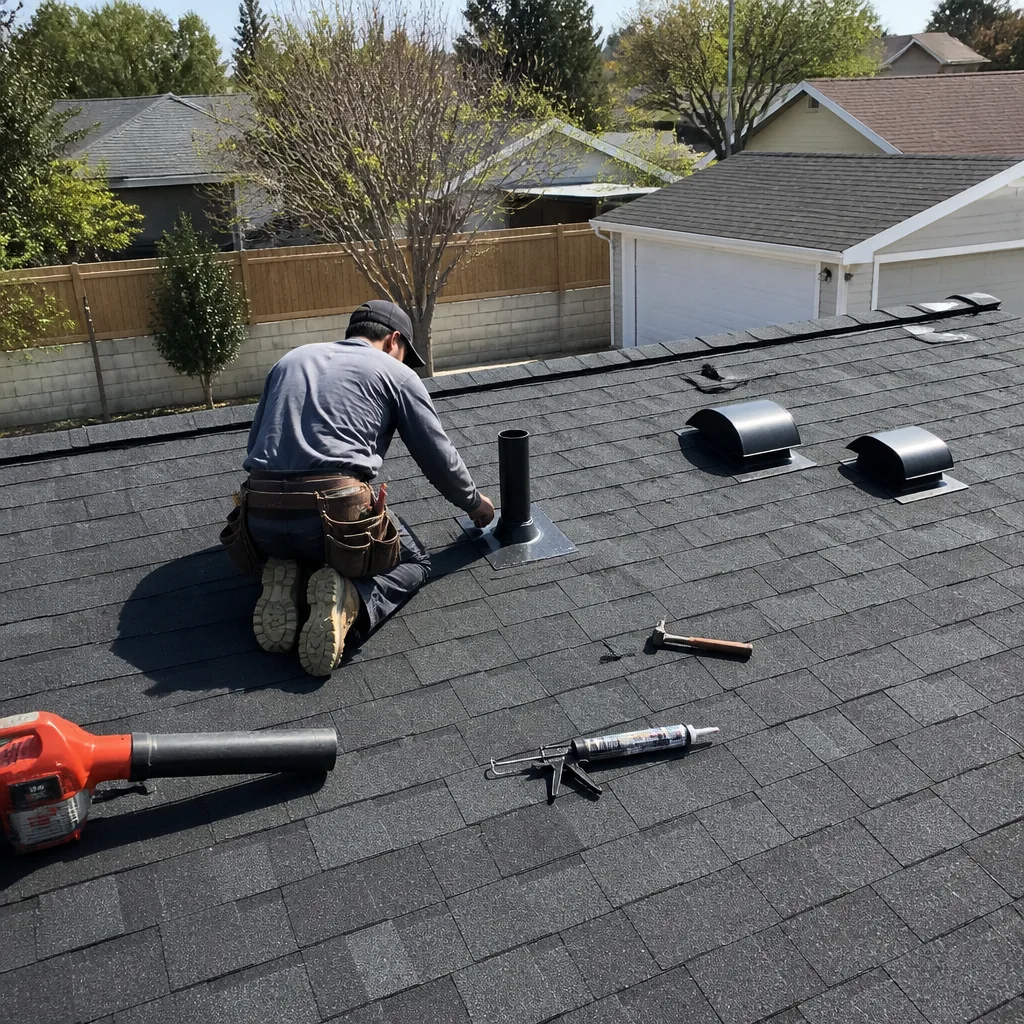
- Minor caulking at penetrations: Small gaps around vent pipes or flashing where caulk has dried and pulled away can be resealed with a roofing-grade sealant. This is a stopgap, not a permanent repair, but it can buy you time.
- Debris removal: Branches, tennis balls, and accumulated pine needles should be removed before they trap moisture against the roof surface. Garden Grove’s many mature trees make this an ongoing task, not a one-time project.
- Visual inspection from the attic: After heavy rain, going into the attic with a flashlight to look for water staining on the underside of the decking, especially around vents and chimneys, is a smart habit that costs nothing.
None of these tasks require a permit, none affect the structural integrity of the roof, and none void a manufacturer warranty when done carefully. They also generate the most useful information for a professional: patients who describe exactly what they’ve seen make our inspection process faster and more focused.
Tasks That Require a Licensed Contractor
The line between DIY and professional roofing usually comes down to water management and structural loading. Once you’re changing how water flows off the roof or altering the decking that carries the roof’s weight, you’ve crossed into work that should be done by someone who has done it hundreds of times across different roof systems.
These are the tasks we consistently advise Garden Grove homeowners to leave to a licensed contractor:
- Complete roof replacement: This requires a permit in Orange County, involves structural decking inspection, and is simply too large a project for owner-builder performance in most cases. Errors here are five-figure errors.
- Underlayment replacement: The waterproof barrier beneath the shingles is the actual waterproofing system. Installing underlayment incorrectly, especially at eaves and valleys, creates leaks that may not appear for months.
- Valley repair or replacement: Valleys carry more water than any other roof area. A poorly detailed valley will leak in the first Garden Grove rainstorm, and valley work almost always requires opening up adjacent shingle courses.
- Structural decking repair: If the plywood or OSB decking has rotted, replacing it is structural work that affects the roof’s load-bearing capacity. This requires inspection and, in many cases, engineering sign-off.
- Flashing replacement at chimneys, skylights, or walls: Flashing is the most common leak point on Garden Grove homes, and improper flashing installation is the most common cause of recurrent roof leaks we see. This work requires understanding how water moves around penetrations and transitions.
- Skylight installation or replacement: Skylights create a penetration through the entire roof assembly. Improper curb flashing leads to interior water damage that insurance may not cover if the installation was unpermitted.
What these tasks have in common is that they change the roof’s water-shedding or structural performance. The cost of a mistake isn’t just the repair. It’s often interior damage, mold remediation, insulation replacement, and in some cases, structural repair to ceilings and walls.
The Real Cost Comparison: DIY Materials vs. Professional Total
DIY roofing cost calculators show you a materials number and a professional number and leave it there. The real comparison includes everything a homeowner actually pays when they do it themselves, especially in Garden Grove where permit fees, disposal costs, and correction work have concrete numbers attached to them.
Here’s a realistic comparison for a typical 1,400-square-foot Garden Grove single-story home with a moderate 5:12 roof slope:
- DIY materials cost: Architectural shingles for this roof typically run $2,800 to $4,200 at Garden Grove-area supply houses, including underlayment, ridge cap, fasteners, and drip edge. This is the number most guides use for the DIY column.
- Tool rental and equipment: A roofing nail gun rents for $60 to $90 per day. Add a shingle removal tool, roofing shovel, harness, and the total for a full replacement weekend project can hit $300 to $500.
- Permit fees: Orange County permit fees for a 14-square roof replacement typically range from $500 to $900 depending on project valuation. This is a cost both DIY and professional projects pay, but DIY guides rarely list it in the DIY column.
- Dumpster rental and disposal: The tear-off from a 1,400-square-foot roof produces several tons of old shingles and felt. A 10-yard dumpster in Garden Grove runs $400 to $600 including disposal fees, and you’ll likely need 2 loads.
- Your labor value: A DIY roof replacement on this house takes a competent homeowner 2 to 3 full weekends, about 60 to 80 hours total. Value your own time at anything above minimum wage and the labor cost is substantial.
- Correction cost risk: If the work fails inspection, you’ll pay for further material, additional permits, and possibly professional correction. A common failure we see is underlayment laps in the wrong direction, which requires partial tear-off and redo. That can add $1,500 to $3,000 to the project.
Against this, a professional replacement for the same Garden Grove home typically runs $10,000 to $16,000 total, including materials, labor, permits, disposal, and warranty documentation. The gap between DIY and professional isn’t just the labor line. It’s the difference between your materials-only estimate and a completed, inspected, warrantied roof. Roof replacement pricing in Rowland Heights and surrounding Orange County communities follows the same pattern: the professional price includes risk transfer and warranty protection that DIY never can.
For repairs rather than replacements, the calculation is different and often favors professional work more decisively. A professional repair to flashing or a few damaged shingles typically costs $400 to $900. The DIY version might cost $80 in materials but if the leak persists, the eventual correction and interior damage claim can reach thousands. Roof repair work in Rowland Heights follows the same logic we apply in Garden Grove: fix it once, fix it right, and document it.
Insurance Implications: How DIY Repairs Affect Claims
This is the section most DIY roofing guides skip entirely. Your Garden Grove homeowners insurance policy is a contract, and like all contracts, it has exclusions and conditions. When water damage occurs inside your home, the insurance adjuster’s first question is where the water came from, and the second is whether the homeowner’s own actions or inactions caused the entry point.
Here’s how a DIY roof repair typically plays out in a claim scenario. You notice a small leak and patch it yourself with roofing cement or a few replacement shingles. The patch fails during the next rain, water enters the attic, and now you have ceiling damage, insulation saturation, and possible mold. You file a claim. The adjuster finds that the leak originated at the DIY repair point. The carrier may deny coverage on the grounds that the damage resulted from faulty maintenance or improper repair by the homeowner, citing the policy exclusion for repeated seepage or ongoing water intrusion that the homeowner failed to adequately address.
Even when the claim isn’t denied outright, the subtractions can be significant. The carrier may cover the interior damage but deny replacement of the roofing itself because the roof damage predates the covered event. Or they may issue a partial payment that doesn’t include the repair work required to prevent recurrence. None of this happens when a licensed contractor performs the repair, because the repair is documented, the materials are specified, and the liability for workmanship transfers to the contractor.
There’s also the prior-damage question. If you file a claim for storm damage and the adjuster sees evidence of previous DIY repairs that were never disclosed, that discovery can complicate the entire claim. A professional repair history, especially with photo documentation and invoices, strengthens your position. The team at Crown Line Roof Repair home maintains that documentation as standard practice.
One more point that’s specific to California: if you perform unpermitted roofing work and then experience a fire or structural failure related to that work, your carrier may deny the entire claim on the grounds that the property was modified without required permits. The insurance contract doesn’t just cover what happens; it conditions coverage on the property being maintained and modified lawfully.
How Professional Evaluation Changes the Decision
Here’s something most DIY-versus-professional articles don’t tell you: the decision often shouldn’t be made before you know what’s actually wrong with the roof. A homeowner who sees a water stain on the ceiling assumes the roof needs replacement. In our experience across Garden Grove neighborhoods, the actual cause is often something much smaller: a cracked pipe boot, a failed chimney cricket, or a valley that’s collecting debris. A standalone roof inspection in Rowland Heights or Garden Grove gives you a factual diagnosis rather than a guess, and the diagnosis changes the DIY calculus.
A professional inspection documents what’s wrong, what’s aging, and what’s still sound. It separates the roof into areas that need attention now, areas that will need attention within a few years, and areas that are fine. That granularity is exactly what a homeowner needs to decide whether a specific repair is within their skill level or whether the scope should go to a contractor. It’s also what you need if you’re comparing quotes, since the scope of work should be based on observed conditions, not a salesman’s assumptions.
Crown Line Roof Repair offers roof inspection as a standalone service, with no repair or replacement obligation attached. The purpose is diagnosis, not sales. You can take the inspection report and do with it what you want, including doing the work yourself. That separation of assessment from pressure is intentional, and it aligns with our repair-first approach: we’ll fix what’s fixable before recommending replacement.
Brand Fluency: Why It Matters for Garden Grove Homes
Garden Grove’s housing stock spans many decades and many roof systems. Some homes have original wood shake from the 1960s. Many have composition shingle from the 1980s and 1990s. Newer remodels feature architectural shingles from any of several manufacturers. Each brand has its own system compatibility requirements, and each ages differently in our climate.
We work across all seven major shingle manufacturers: GAF, CertainTeed, Owens Corning, IKO, Atlas, Tamko, and Boral. That breadth matters because partial repair work, like replacing a damaged field section or a hip line, should match the existing shingle system as closely as possible. Mismatched shingles create visual discontinuities and can compromise the manufacturer’s system warranty on the original installation. When we repair an Atlas roof, we source Atlas-compatible materials. When a Boral tile roof needs spot repair, we work with Boral’s system specifications. This isn’t brand loyalty. It’s material fluency, and it’s what allows a repair-first recommendation to be technical sensible.
The popular opinion is that a good roof is a good roof and brand doesn’t matter. The truth is more nuanced. Brand matters when it comes to repair matching, warranty continuity, and expected lifespan in our specific climate. A shingle that performs well in the Pacific Northwest’s persistent rain may not be ideal for Garden Grove’s UV exposure and Santa Ana wind cycles. Brand-agnostic material sourcing means we recommend what fits the roof, the home’s architecture, and the warranty picture, not what’s most profitable or easiest to source.
Local Factors That Change the Math: Garden Grove’s Climate and Code Environment
Garden Grove’s climate creates specific roofing demands that generic DIY guides don’t address. We get relatively little rain, which means roofs here degrade more from UV exposure, heat cycling, and wind than from moisture. That changes the types of repairs needed and the type of maintenance that’s most valuable.
Our specific conditions include:
- Santa Ana winds: Each fall and winter, these dry, gusty winds from the northeast regularly reach 40-60 mph. They lift shingle edges, strip granules, and tear at flashing. Post-Santa Ana roof checks are a good habit for any Garden Grove homeowner.
- High summer UV: Garden Grove averages 280-plus sunny days annually. Shingle granule loss is the leading aging signal we see, and once granules are gone, the asphalt beneath degrades quickly. This is a safety issue too, since granule loss makes roof walking slippery.
- Coastal influence without coastal exposure: We’re far enough inland to avoid salt-air corrosion of flashing and fasteners that coastal communities face, but close enough to get morning marine layer moisture cycles. This mild moisture cycling affects sealant lifespan around penetrations.
- Mature tree canopy: Older Garden Grove neighborhoods, especially those near the historic downtown area, have dense mature trees that drop leaves, branches, and occasional limbs onto roofs. Debris accumulation is a primary cause of the valley backup leaks we repair most often.
None of these factors changes whether DIY is legal. But they change how quickly a small problem becomes an expensive problem, which is exactly the variable that should inform your DIY-versus-professional calculation.
See the difference
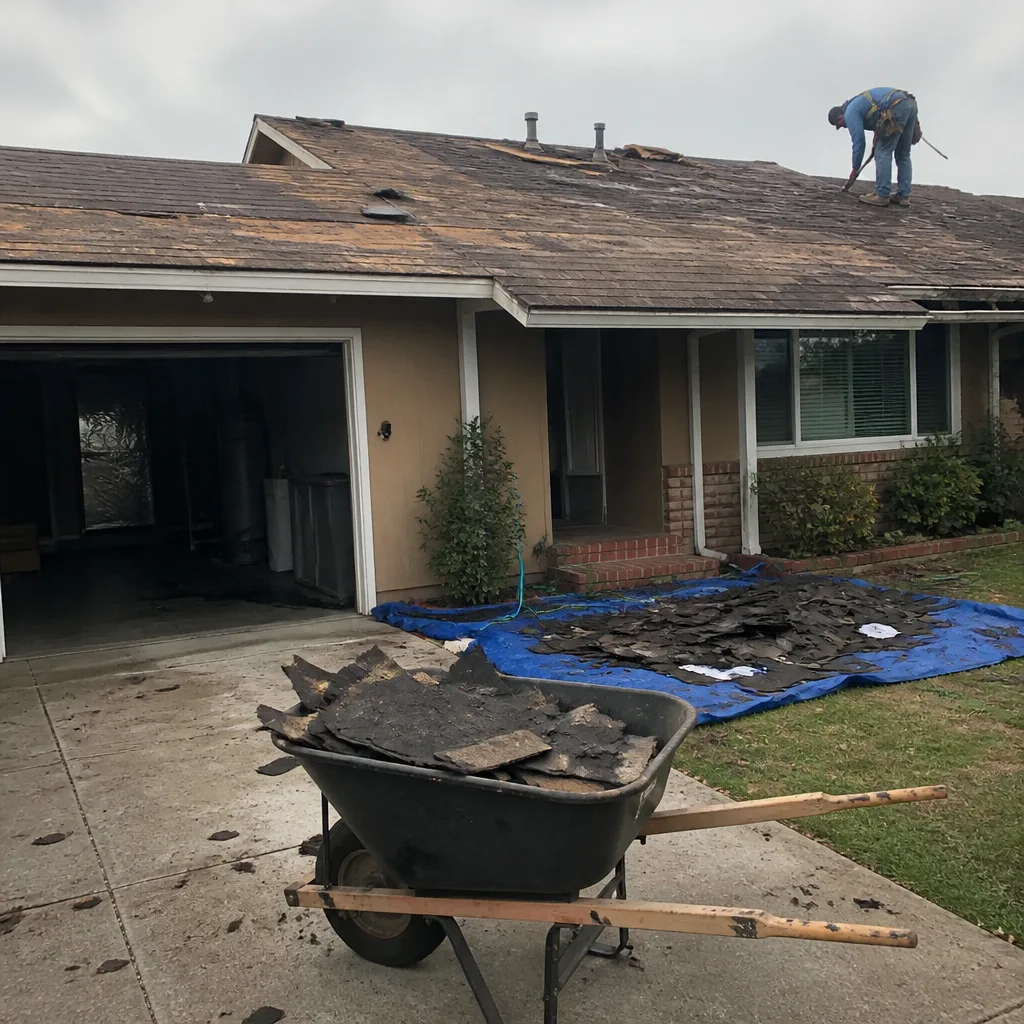 Before
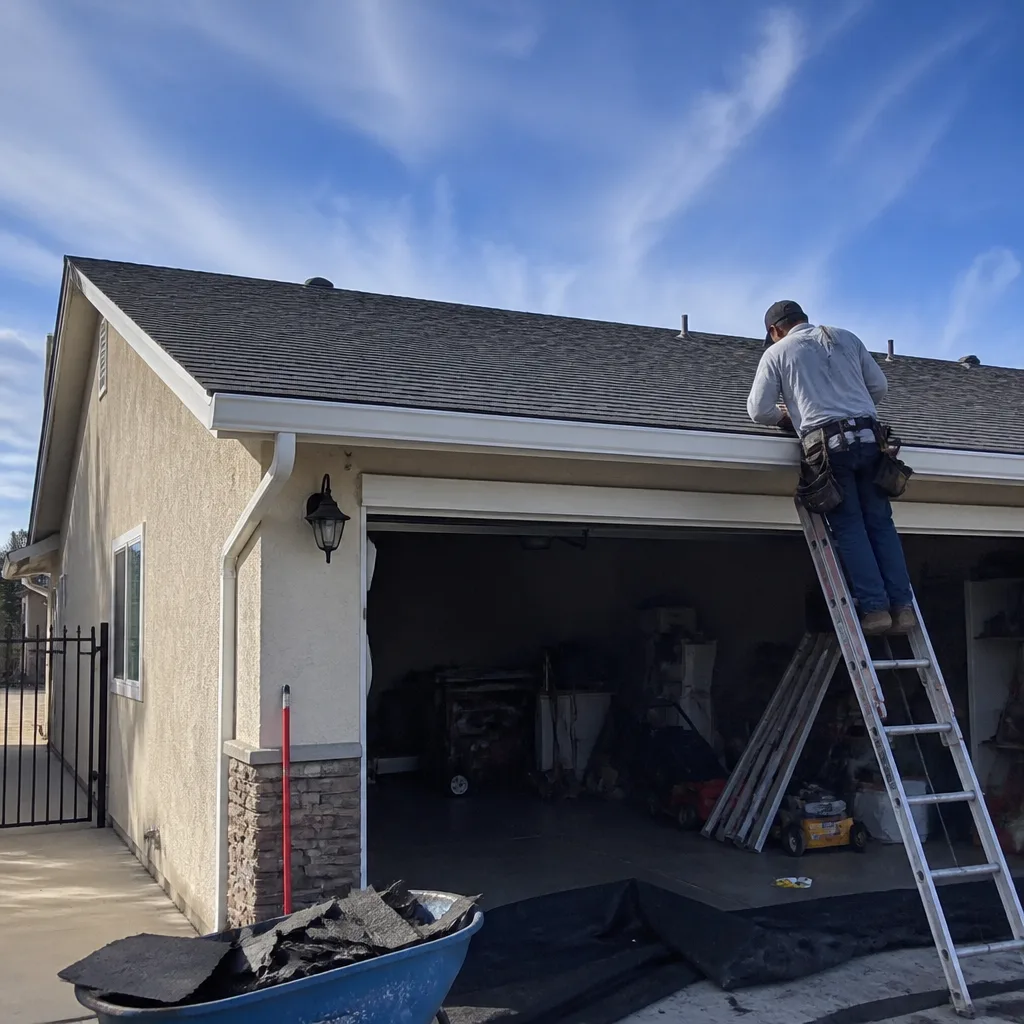 After
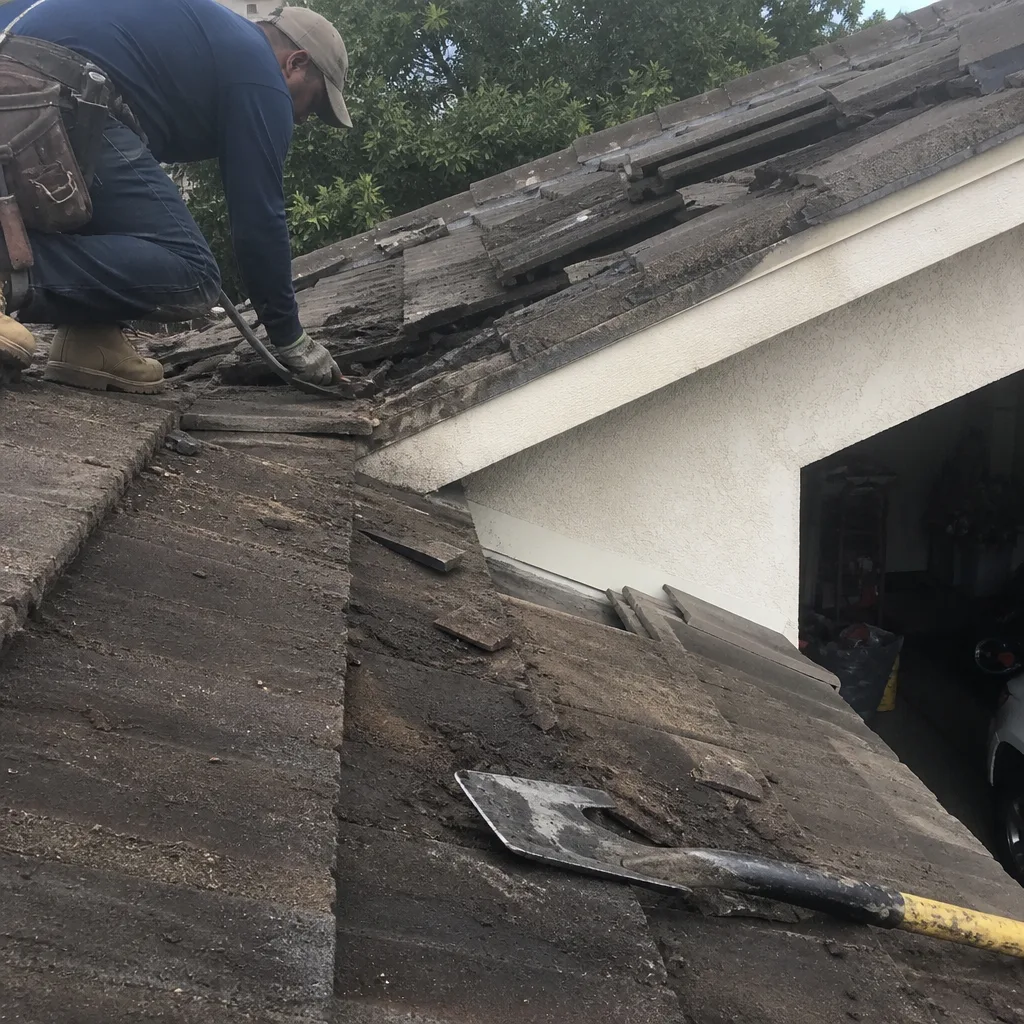 Before
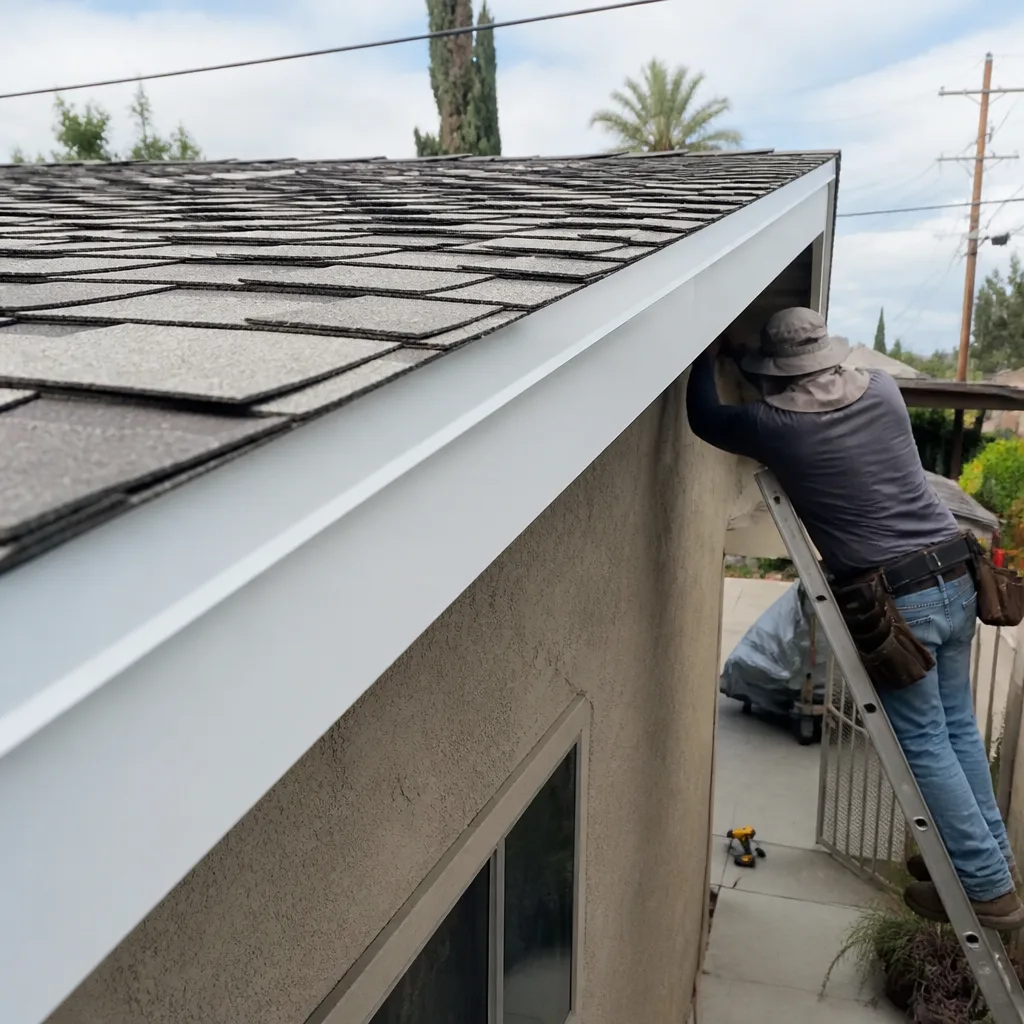 After
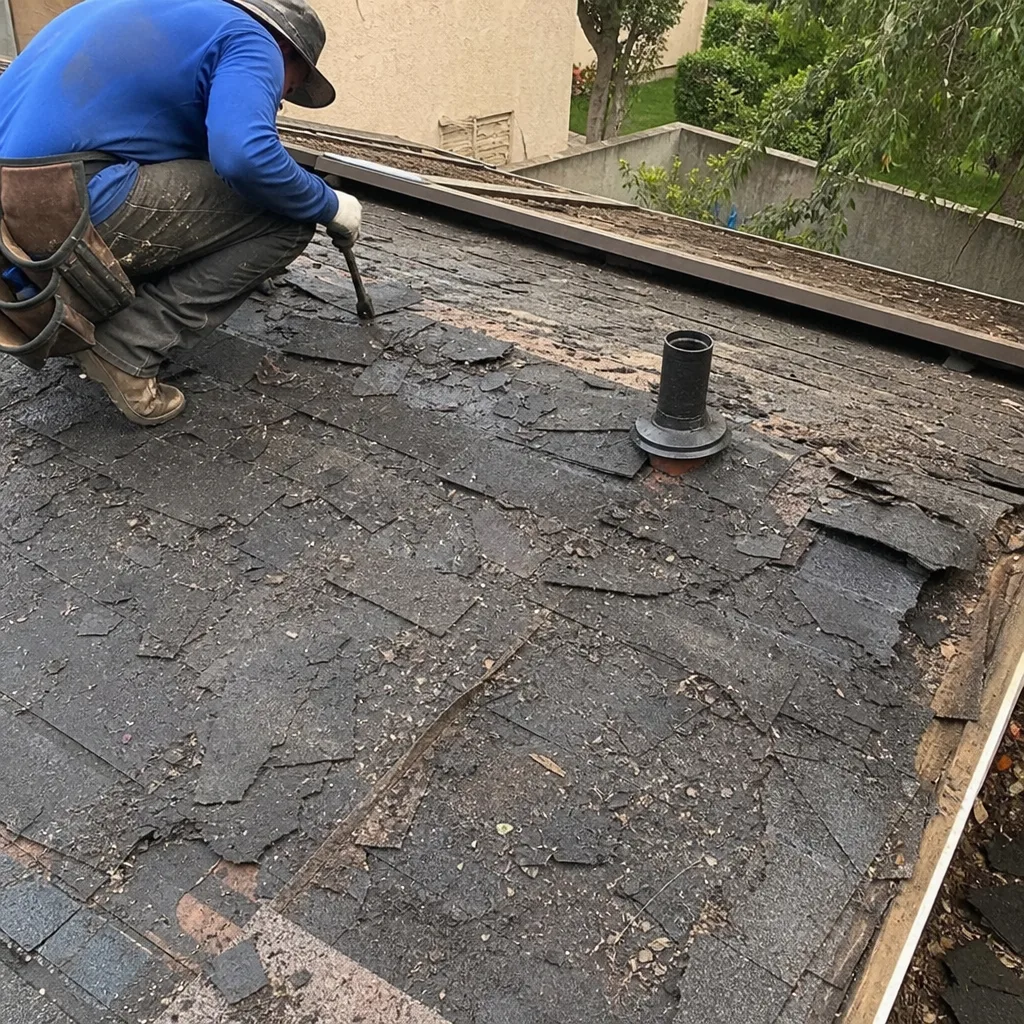 Before
 After
Common Mistakes to Avoid
- Skipping the permit on a full replacement: This is the costliest mistake we see. Unpermitted roofs create disclosure problems at sale, insurance complications, and a legal obligation to correct code violations that may have been hidden for years.
- Assuming shingle warranty covers DIY installation: Full warranty coverage depends on certified professional installation with proper documentation. DIY installation typically drops coverage to a prorated material-only guarantee.
- Using the wrong fasteners or nailing pattern: Roofing nails must be the correct length and must penetrate the decking to a spec. Under-driven nails eventually back out and create rows of shingle bleed-through leaks. Over-driven nails cut through the shingle. Both are common DIY errors on Garden Grove roofs.
- Reusing flashing instead of replacing it: When shingles are stripped and replaced, the flashing at walls, chimneys, and step lines should be replaced with new metal. Reusing old flashing is a guaranteed leak source within a few years.
- Underestimating the safety risk: Roof work at heights is genuinely dangerous. A fall from a single-story Garden Grove roof can cause life-altering injury. Professional roofers use harnesses, roof jacks, and trained crews. A DIY weekend warrior with a ladder and no fall protection is taking a risk that no amount of money saved justifies.
- Starting without a diagnosis: Replacing shingles when the actual problem is a plumbing vent boot or a chimney cricket means you spend money and the leak returns. Start with a professional inspection, then decide what’s DIY-appropriate.
- Ignoring ventilation: Garden Grove attics need proper intake and exhaust ventilation. A DIY roof replacement that fails to add or maintain ventilation will shorten shingle life dramatically and may void the manufacturer warranty.
When to Call a Professional
Call a professional when the roof’s water-shedding function is involved: any leak that’s entering the home, any missing or lifted shingles after a wind event, any flashing separation at a chimney, wall, or skylight, or any crack or deterioration in the underlayment layer. Also call when you’re planning to sell a Garden Grove home and want the roof documentation clean for disclosure and inspection. And call when you’re not sure what’s wrong, which is more common than most homeowners expect. A professional inspection gives you the information you need to make a smart decision. Crown Line Roof Repair offers free estimates in Garden Grove, call (844) 966-3891 for a roof assessment with no obligation.
Frequently Asked Questions
Yes, California’s owner-builder exemption allows you to perform roofing work on your own owner-occupied home, including repairs and replacement. However, you must obtain any required permits from Orange County, ensure the work meets current building code, and personally supervise any workers you hire. The exemption does not waive permit requirements or code compliance.
A full roof replacement on a typical Garden Grove single-story home typically costs $10,000 to $16,000 including materials, labor, permits, disposal, and warranty documentation. The final price depends on roof size, slope, decking condition, material choice, and whether structural repairs are needed. Call (844) 966-3891 for an exact quote, estimates are free.
In most cases, yes. Major manufacturers including GAF, CertainTeed, Owens Corning, IKO, Atlas, and Tamko require certified professional installation documentation for full warranty coverage. DIY installation typically reverts to a limited material-only warranty with no labor coverage and excluded installation errors.
It can be denied. Insurance adjusters routinely trace leaks to their point of origin, and if the origin is a homeowner-performed repair that failed, the carrier may deny the interior damage claim citing improper maintenance or defect exclusion. Professional repairs transfer workmanship liability to the contractor and provide documentation that supports your claim.
Homeowner-appropriate tasks include gutter clearing, visual surface and attic inspection, removing debris, and resealing small, visible caulking gaps at vent pipes. These tasks don’t affect the roof’s structural integrity, don’t require permits, and don’t void manufacturer warranties when done carefully.
Yes, Orange County requires a building permit for full roof replacement and for repairs that involve structural changes or large sections of the roof covering. Minor repairs of a few shingles or small flashing areas typically don’t require a permit. Unpermitted replacement work creates serious problems at sale and can void insurance coverage.
The Bottom Line
The DIY-versus-professional question resolves to a simple standard: tasks that don’t affect water-shedding performance or structural integrity are appropriate for capable Garden Grove homeowners. Tasks that do affect those things should go to a licensed contractor, not because a professional does it better, but because the legal, insurance, and warranty structures around roofing are built on professional installation and documentation. Garden Grove’s climate, with its Santa Ana winds and high UV load, punishes roofing errors faster than more forgiving climates. The financially smart approach is to learn what’s actually wrong through a professional inspection, handle the maintenance tasks you’re comfortable with, and leave the water-management work to someone who carries the liability. If you’re weighing a full project, start with How to Hire a Roofing Contractor in Garden Grove: A Step-by-Step Guide. Seven major brands. One honest recommendation.
Written by the team at Crown Line Roof Repair, serving Garden Grove since 2015.